Between Light and Ink
Photography comes from Greek: phōs, light, and graphē, writing or drawing. Writing with light. Drawing with light.
I have always loved that definition, perhaps because long before I learned to draw with light, I was already drawing with everything else.
I have kept diaries since I was a child. There are dozens and dozens of them now, covering more than thirty years of my life, and in my first diary, when I was eight years old, there is already a drawing.
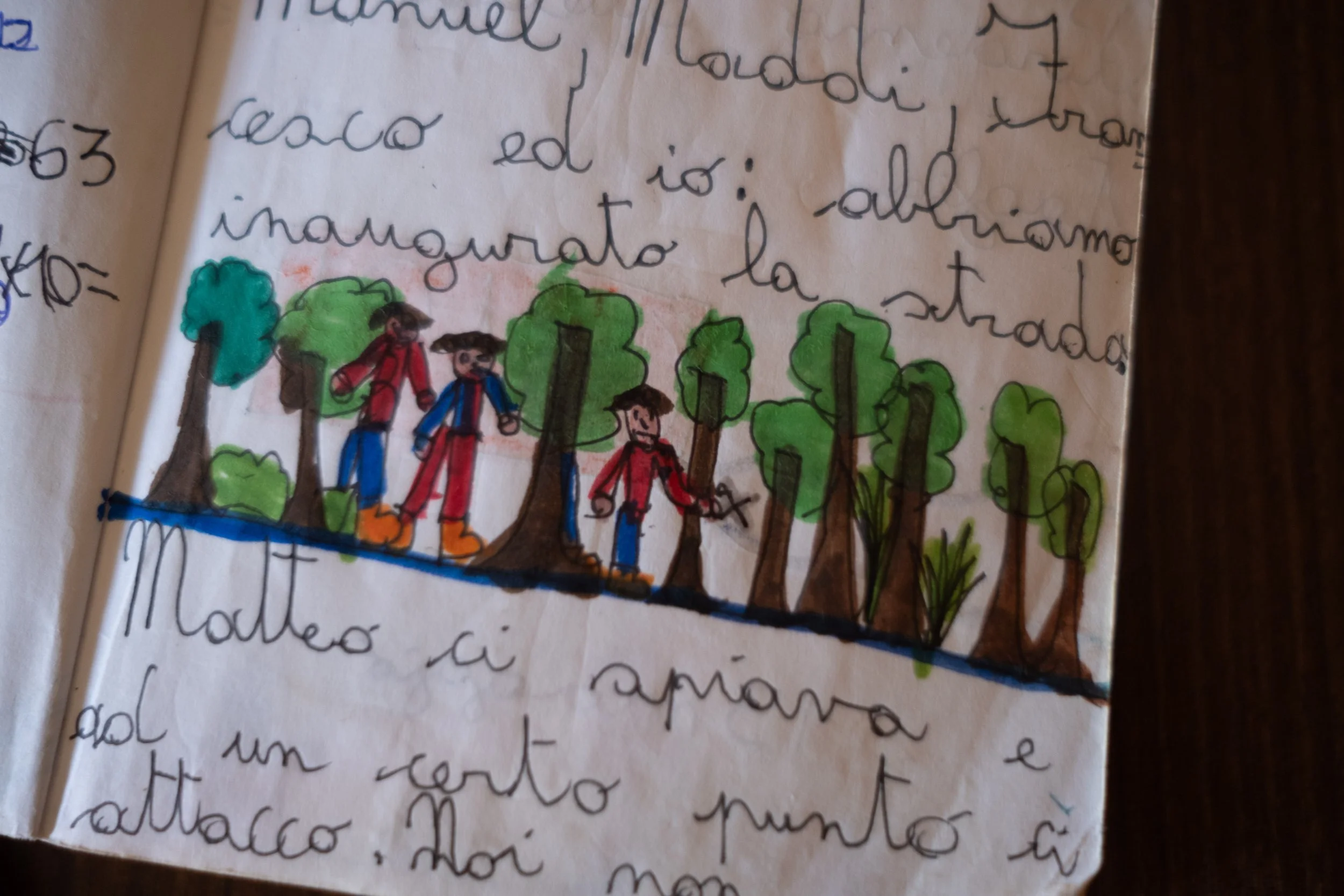
There are hundreds of them now.
I never really stopped.
Drawing has followed me through almost every version of myself and almost everywhere I have been. It has never become my profession and I have never really treated it as something that needed to become one. It simply remained there, inside my diaries, alongside whatever else was happening in my life.
Some drawings are careful and detailed, others are little more than sketches. I use ink, pencils, watercolours, whatever I have with me. Over the years I have slowly built my own travel drawing kit, changing it constantly as I discovered what I liked, removing things I never used, finding smaller tools and adding new ones. It is compact enough to disappear inside a backpack and familiar enough that opening it somewhere far from home feels strangely normal.
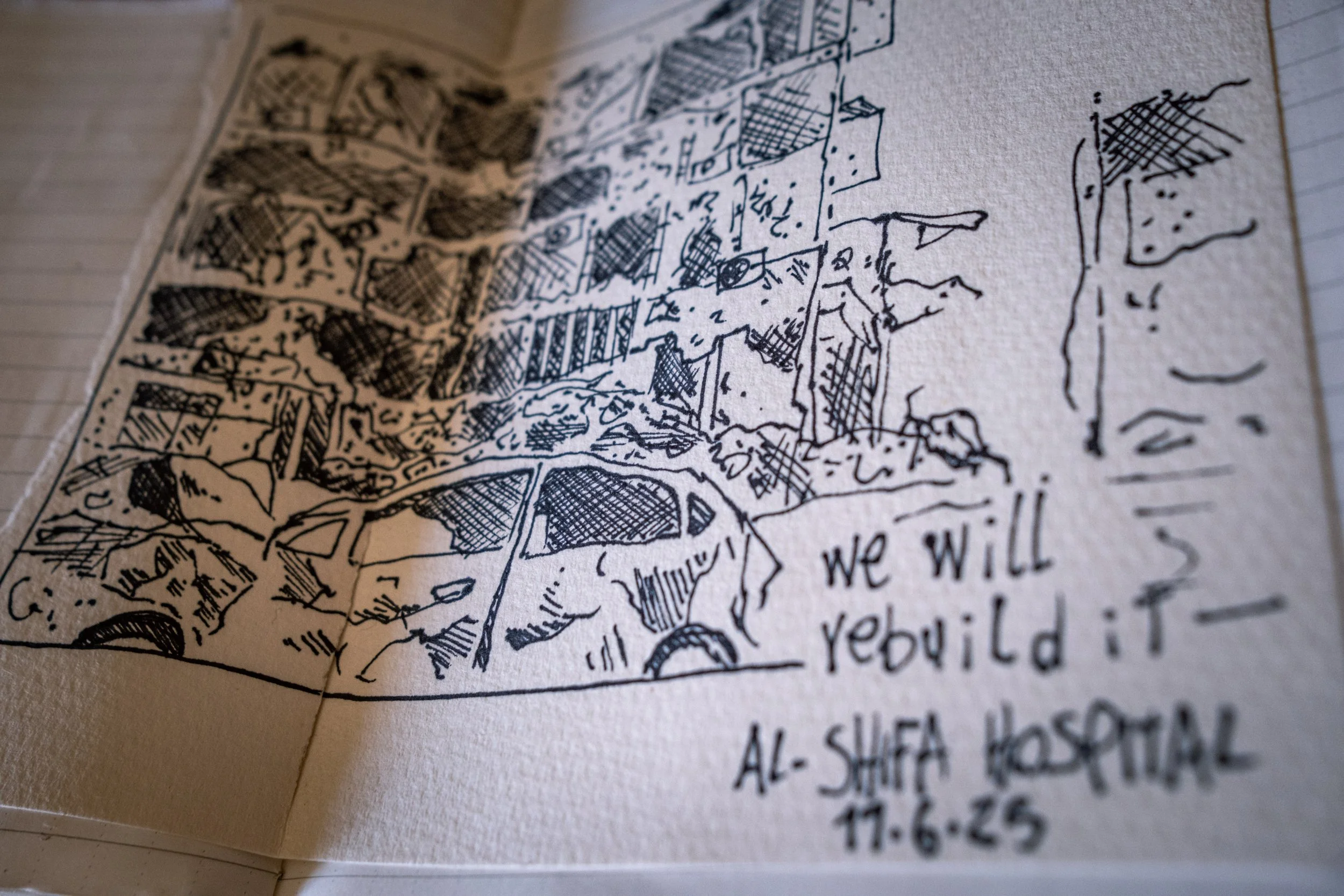
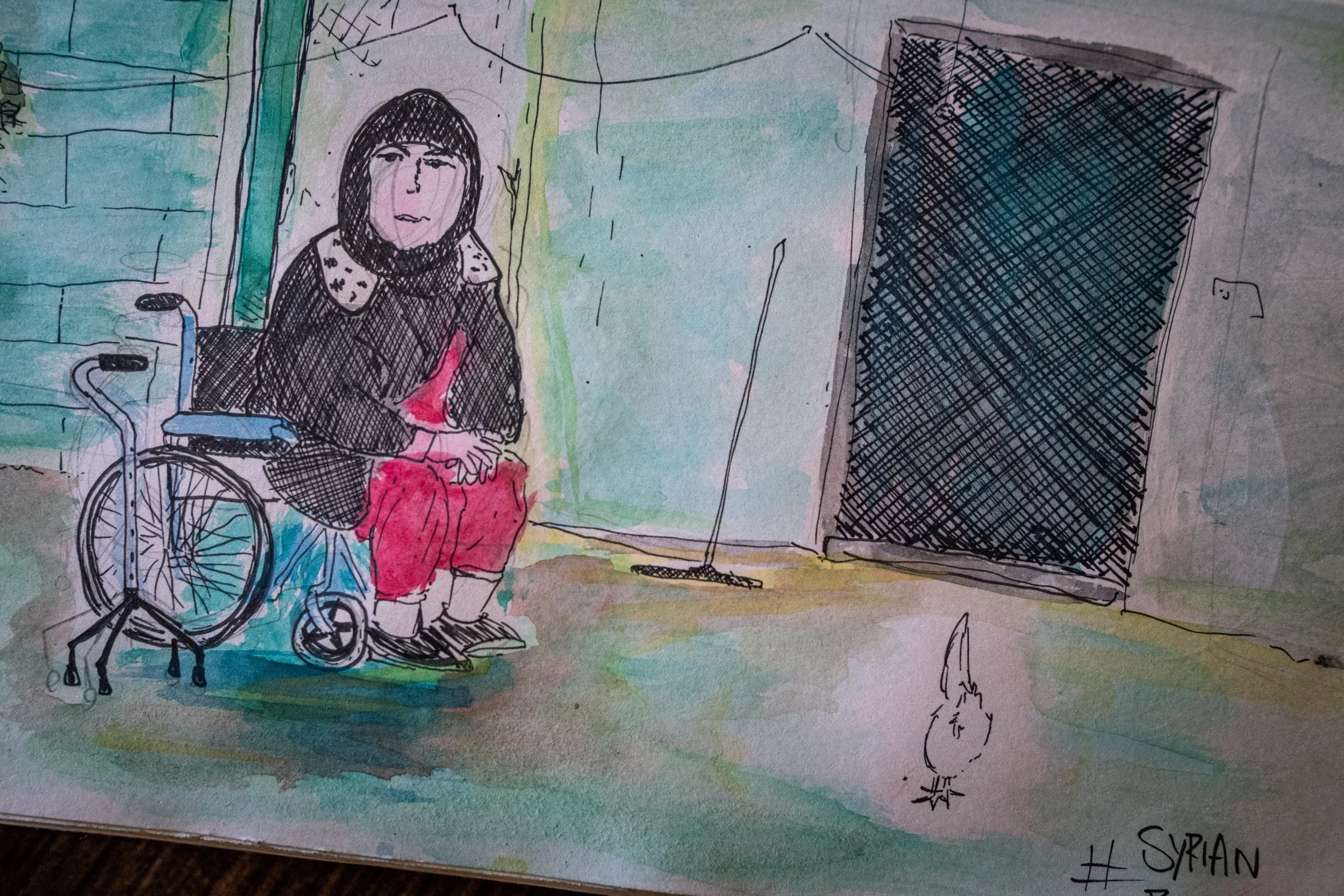
I have drawn in airports, hotel rooms, hospitals, refugee camps and places where there wasn't much of anything resembling a proper place to sit. I have drawn while waiting for someone, while killing time, at the end of very long days and simply because something in front of me made me want to open the diary.
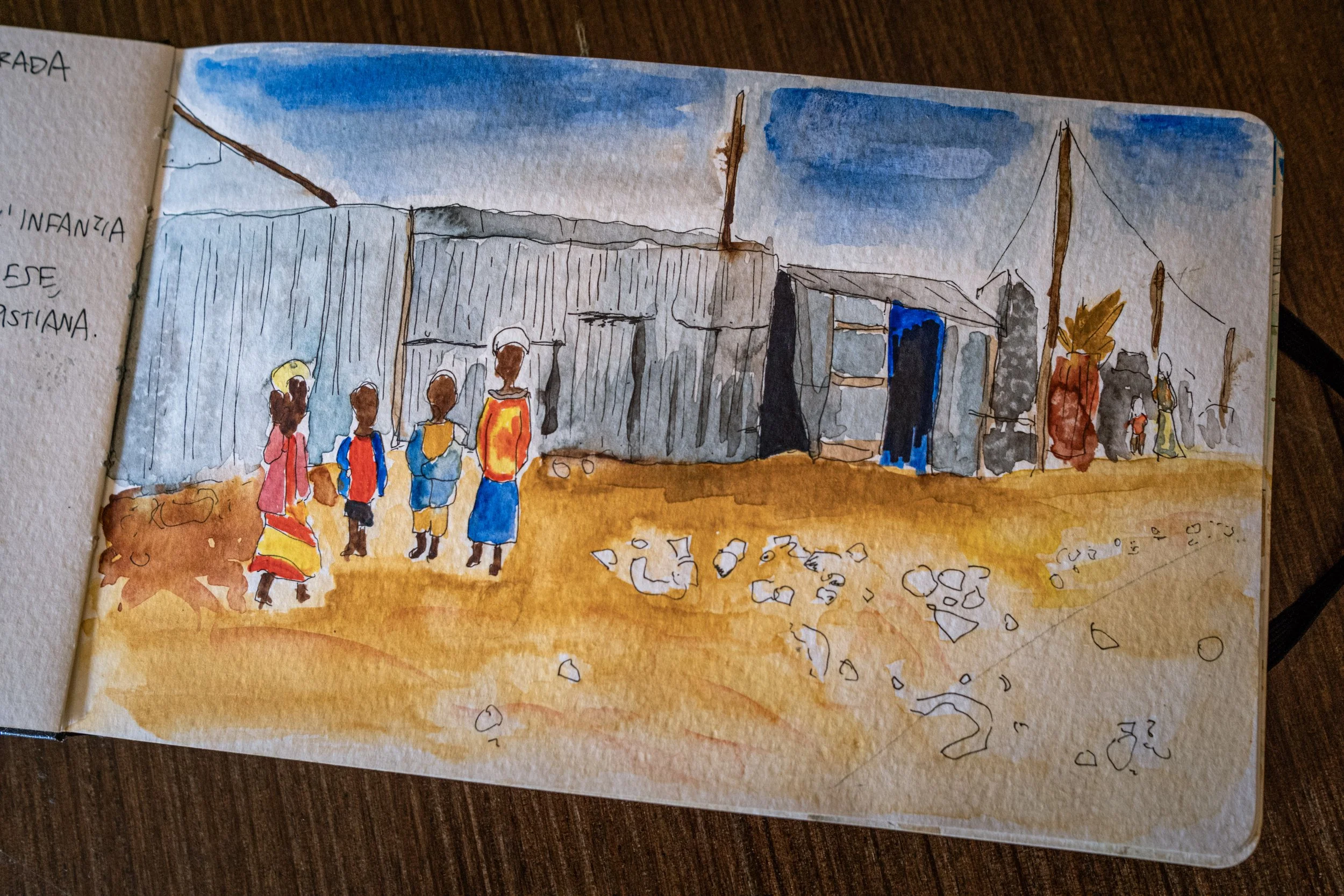
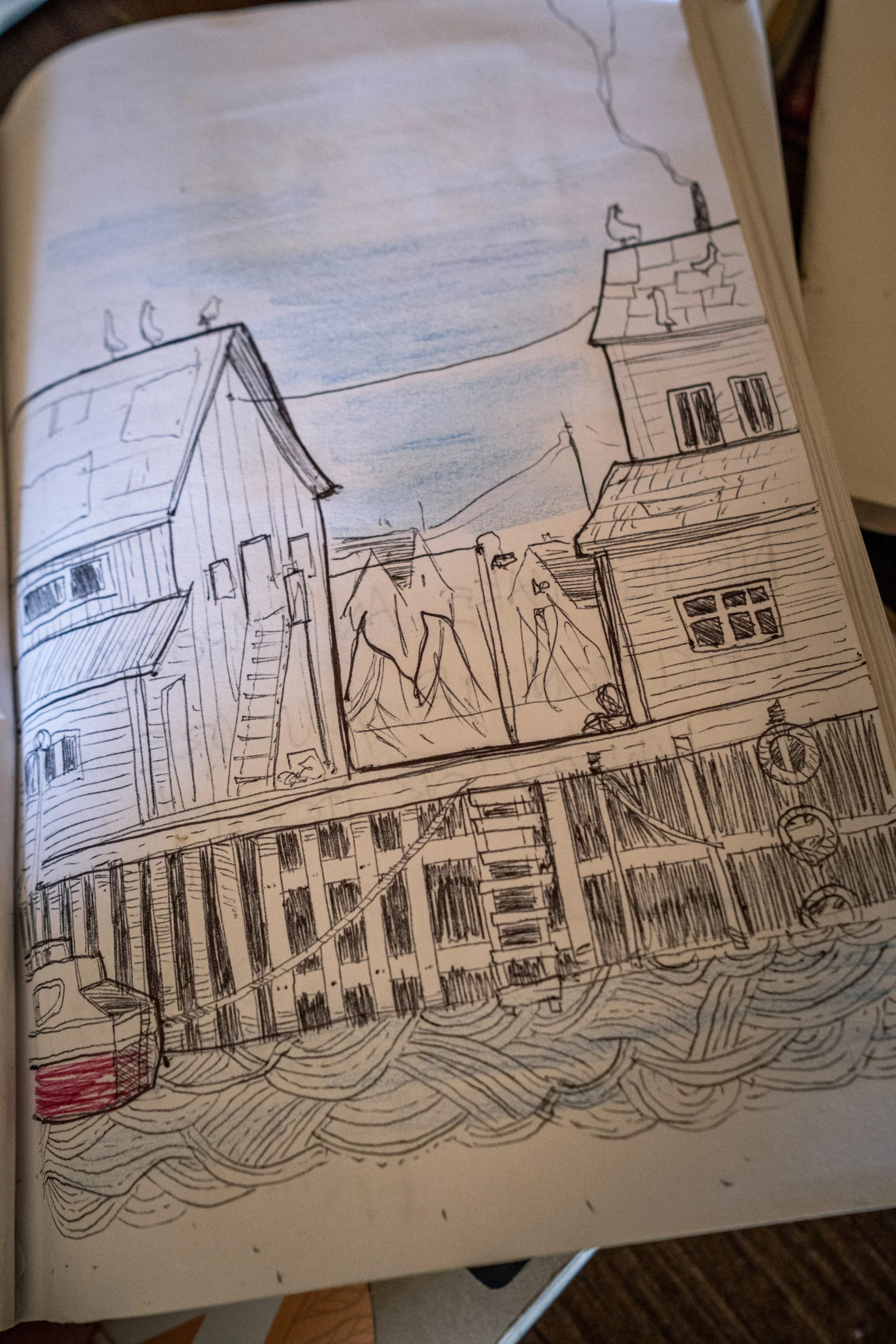
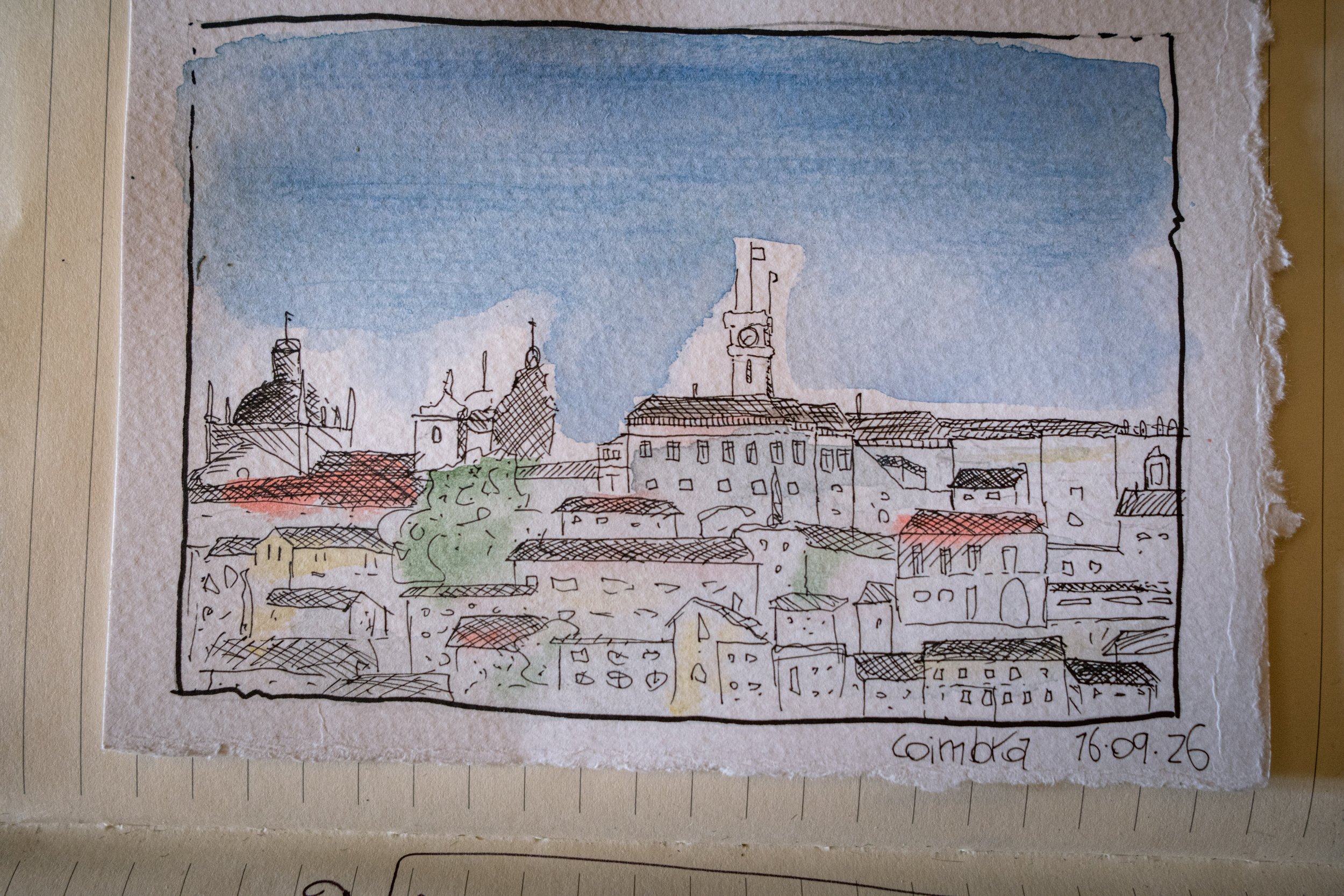
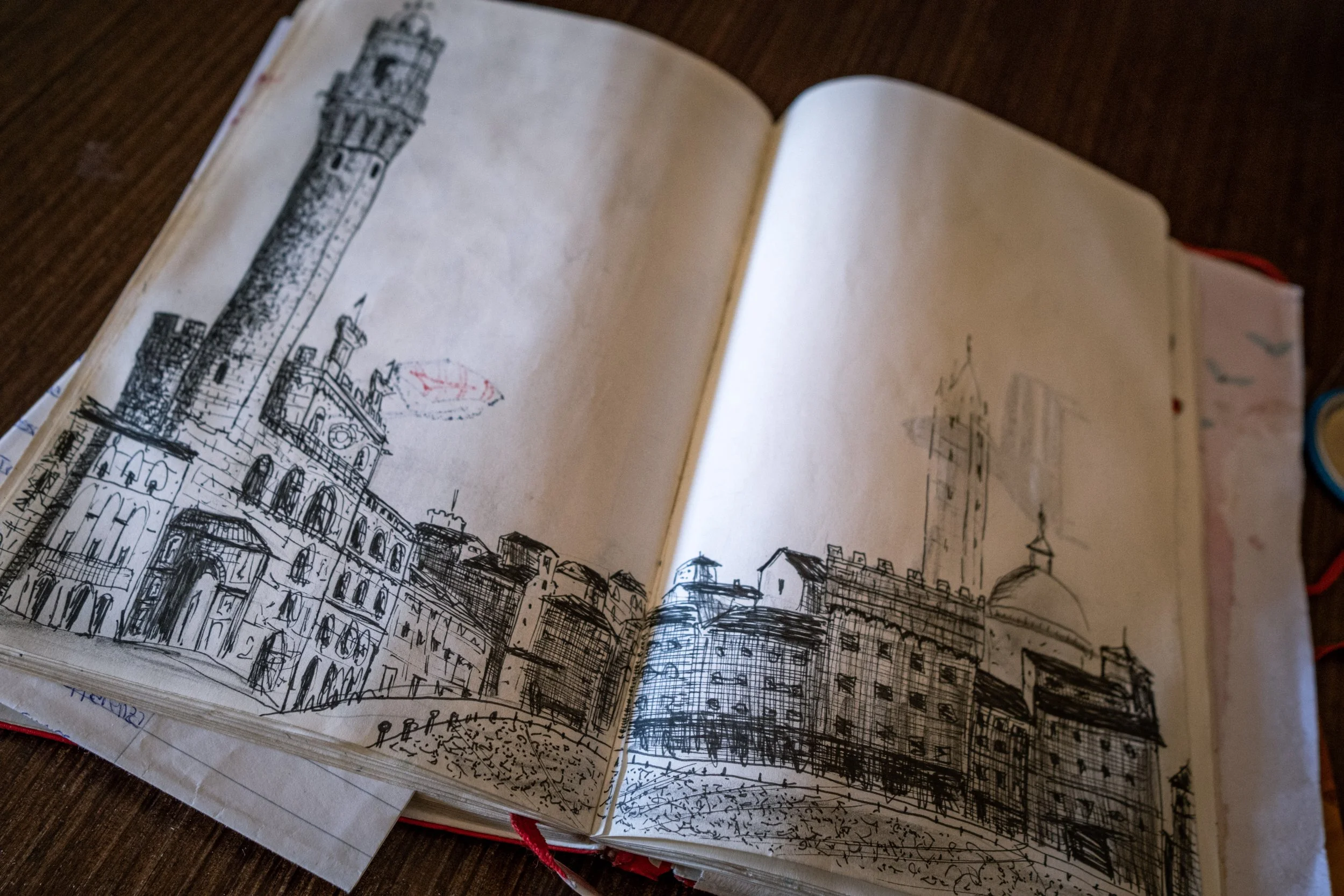
A large part of what ends up in my diaries still comes from the world around me. Buildings, people, streets, birds, landscapes, vehicles, hospitals, markets. Sometimes I sit in front of something and draw it directly. Other times I use a photograph I made earlier.
This often happens at night.
I can spend an entire day moving around and photographing, then later take out the drawing kit, open one of those images and begin drawing it. A moment that happened very quickly can suddenly occupy me for an hour or two.
It is one of the most relaxing things I do.
Drawing forces me to slow down and look at something for much longer than I normally would. If I am drawing a building, I begin noticing windows, cables, cracks, shadows and tiny structural details. If there is a person in the image, I notice their posture, their hands and the way their clothes fall. Things that were already there become visible to me only because I am trying to reproduce them with my hand.
Sometimes I discover details in my own photographs that I had never noticed before.
I was there. I took the photograph. I chose the frame. I may even have looked at that image many times afterwards, and still drawing it can reveal something that somehow escaped me.
That is one of the things I love about the process. Drawing makes me look again, but differently.
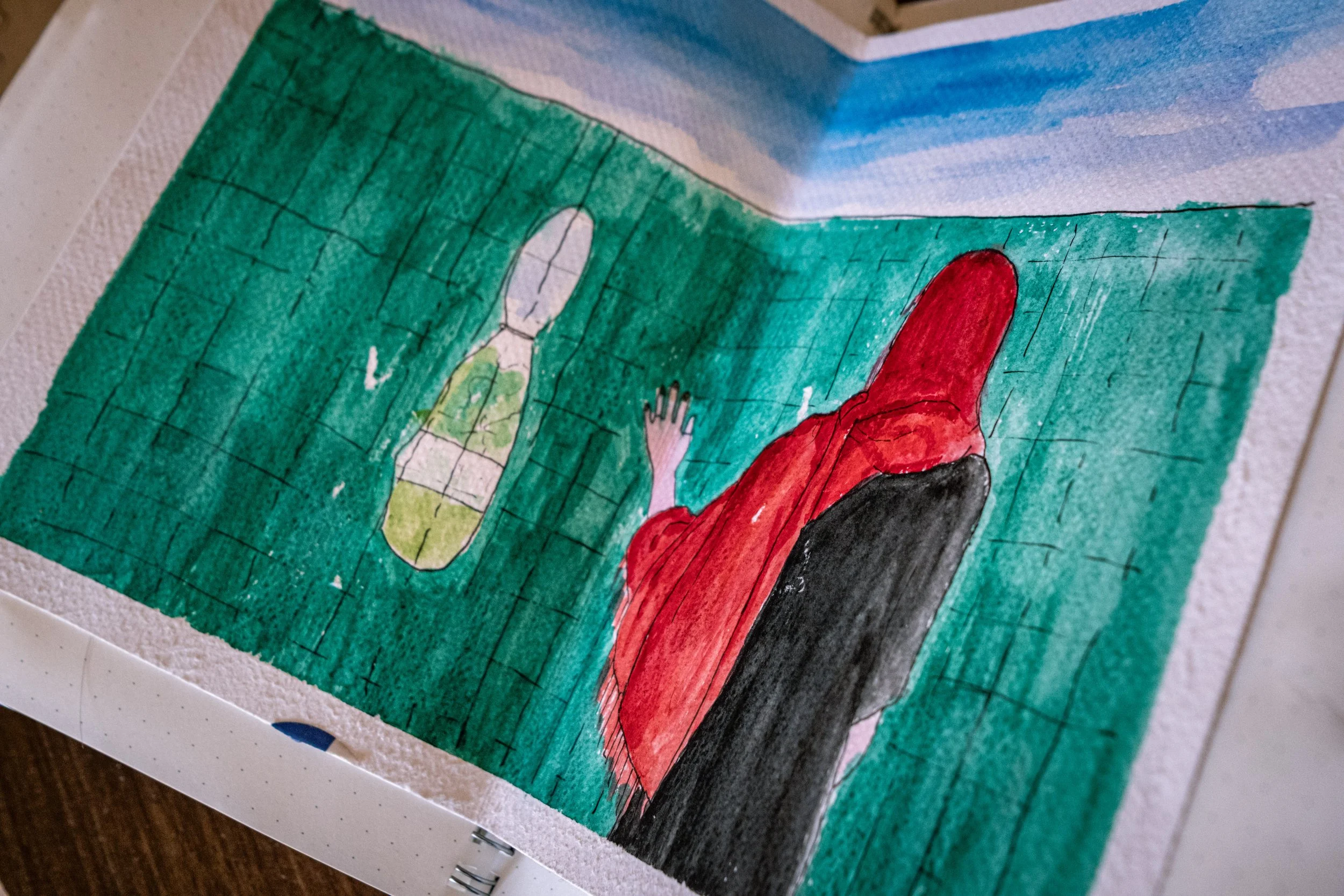
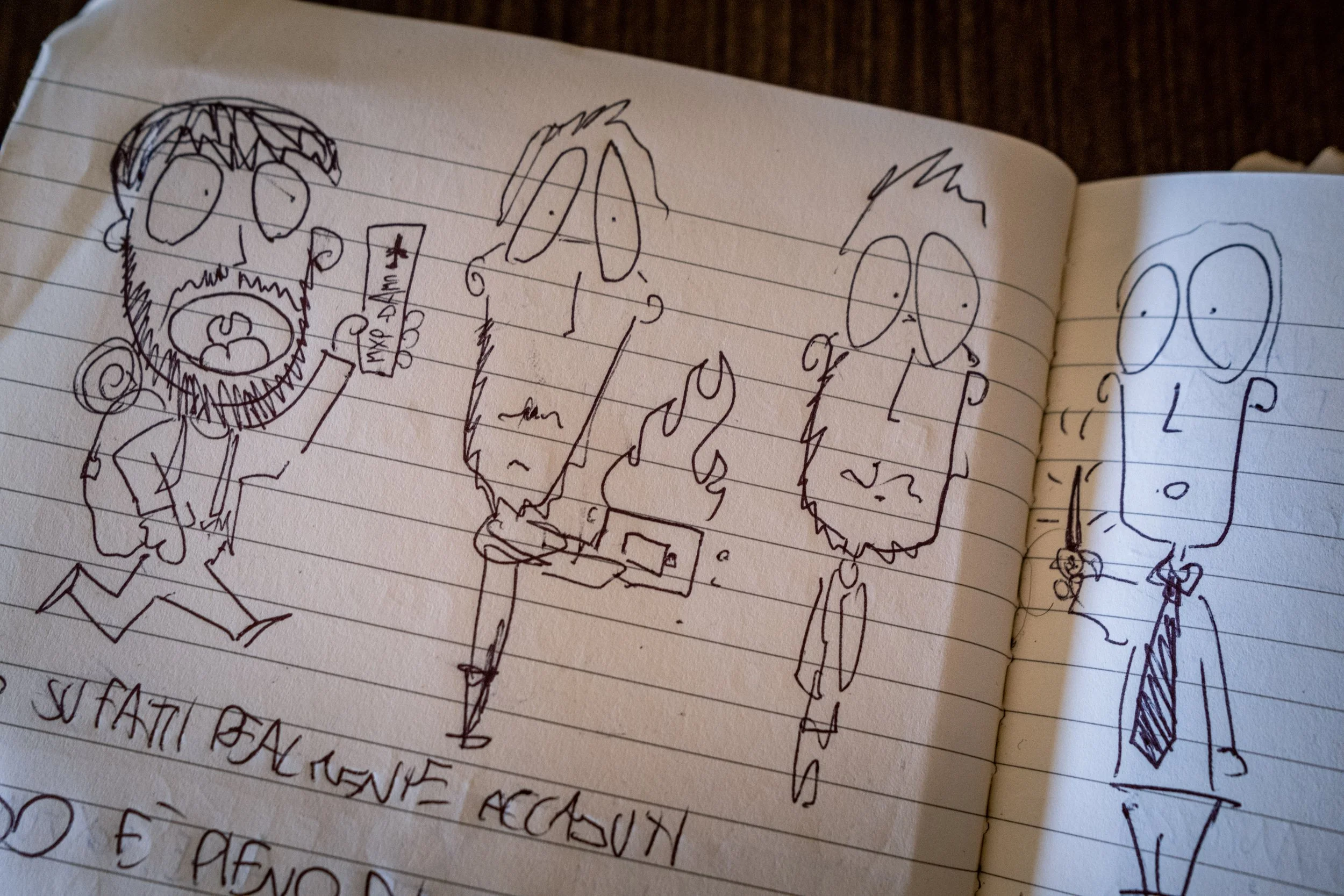
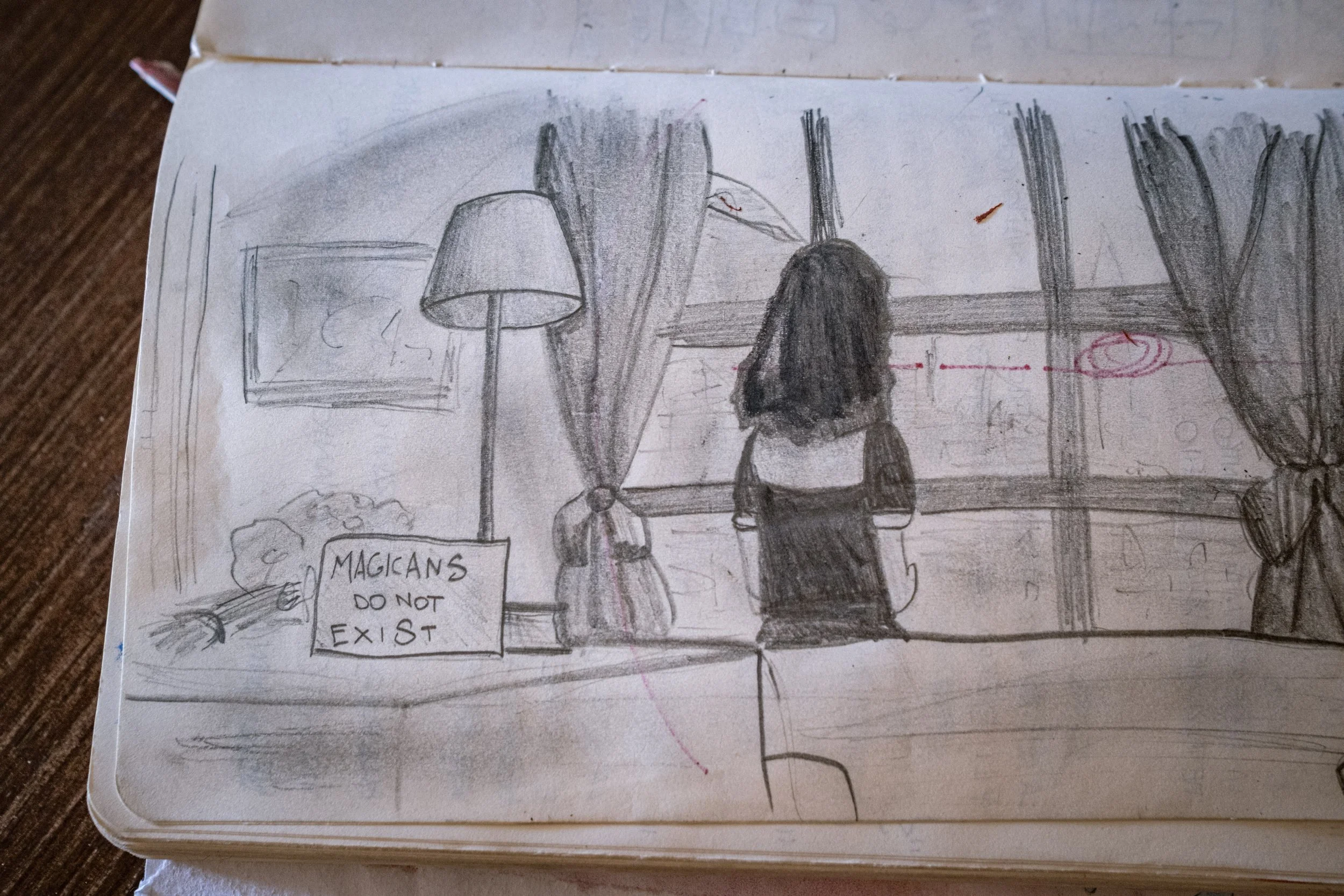
DRAWING WHAT ISN'T THERE
But not everything I draw begins with something I have seen.
Some drawings begin with how I feel.
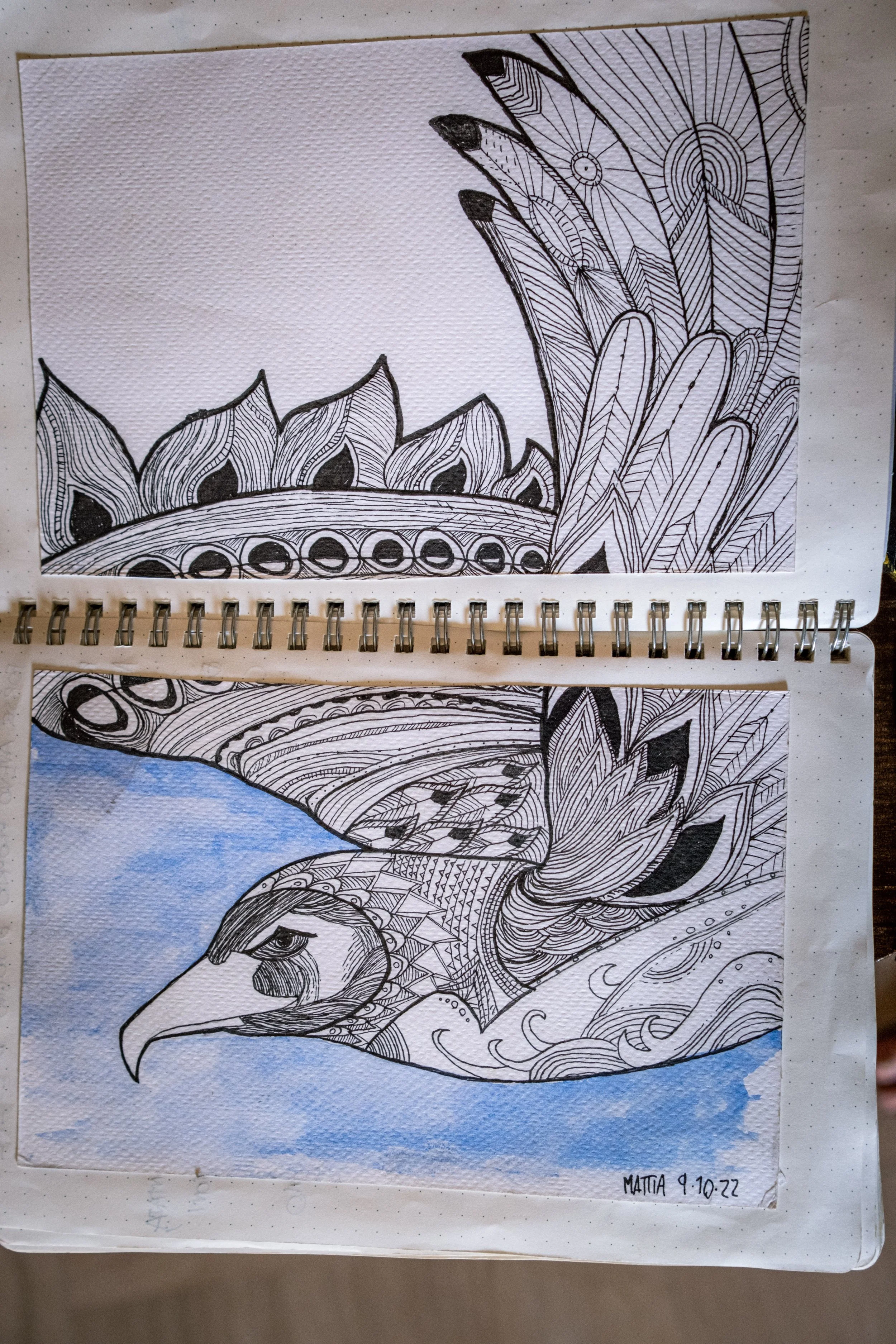
Those are harder to explain because there isn't necessarily a story behind them. There may not be a place, a person or even a recognisable object. Sometimes they are patterns or abstract shapes. Sometimes a visual idea appears and I keep working on it without knowing exactly what it represents.
I don't think every one of those drawings needs an explanation.
In fact, I probably prefer that they don't have one.
Words require me to decide what something means. Drawing can leave it unresolved.
I can put something on paper without naming it, explaining it or turning it into a coherent story. I can make something dark without deciding exactly what the darkness represents. I can draw something absurd because it amused me, or repeat a pattern for an hour simply because repeating it feels good.
Perhaps that is also why drawing relaxes me.
It gives my brain somewhere to go without demanding that it arrive at a conclusion.
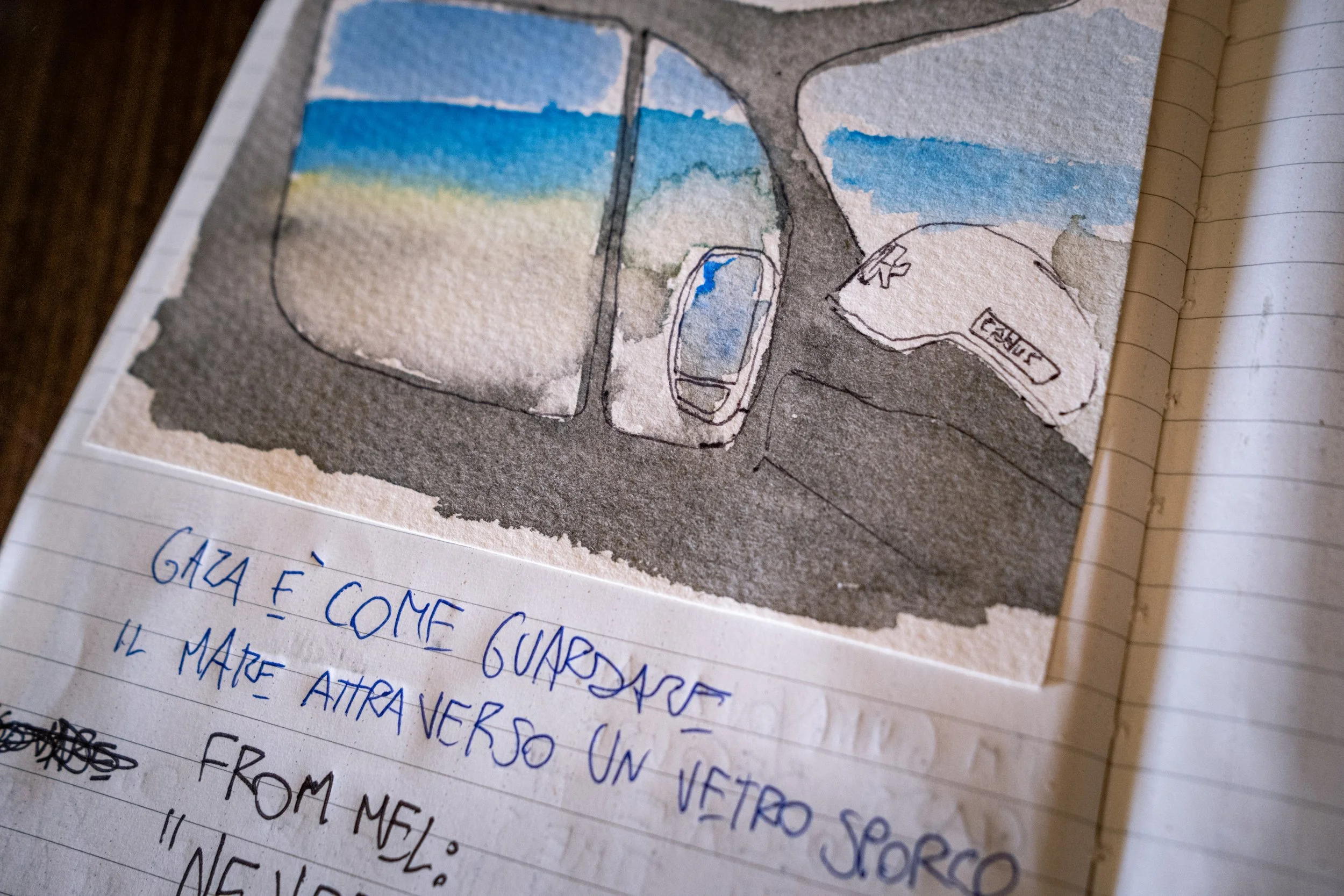
My diaries therefore contain both worlds. There are drawings that can be located precisely on a map and others that could not be located anywhere. A hospital, a street, a city or a refugee camp might be followed a few pages later by something completely abstract that existed only because of whatever was happening inside my head that day.
I don't separate them.
They belong in the same place.
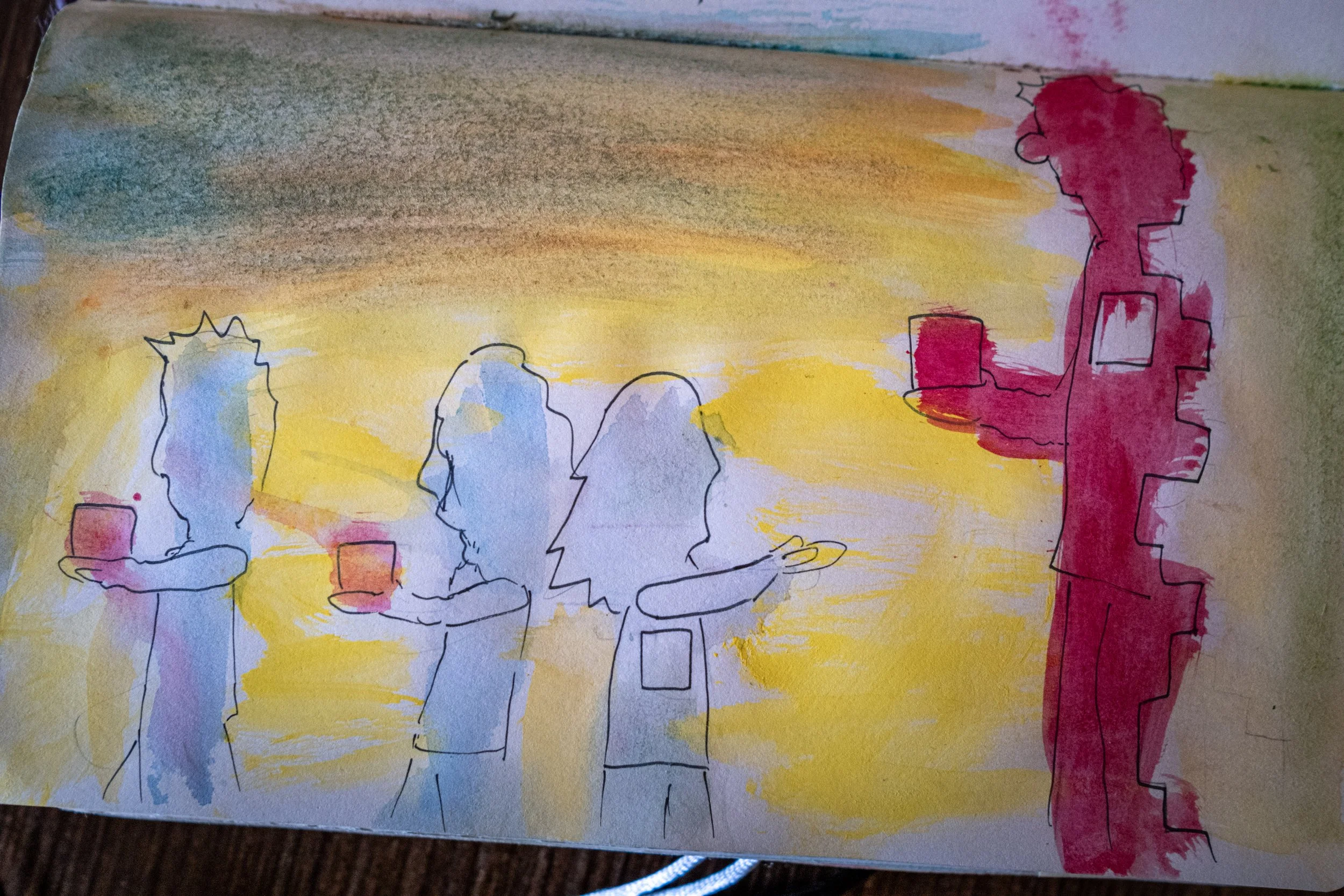
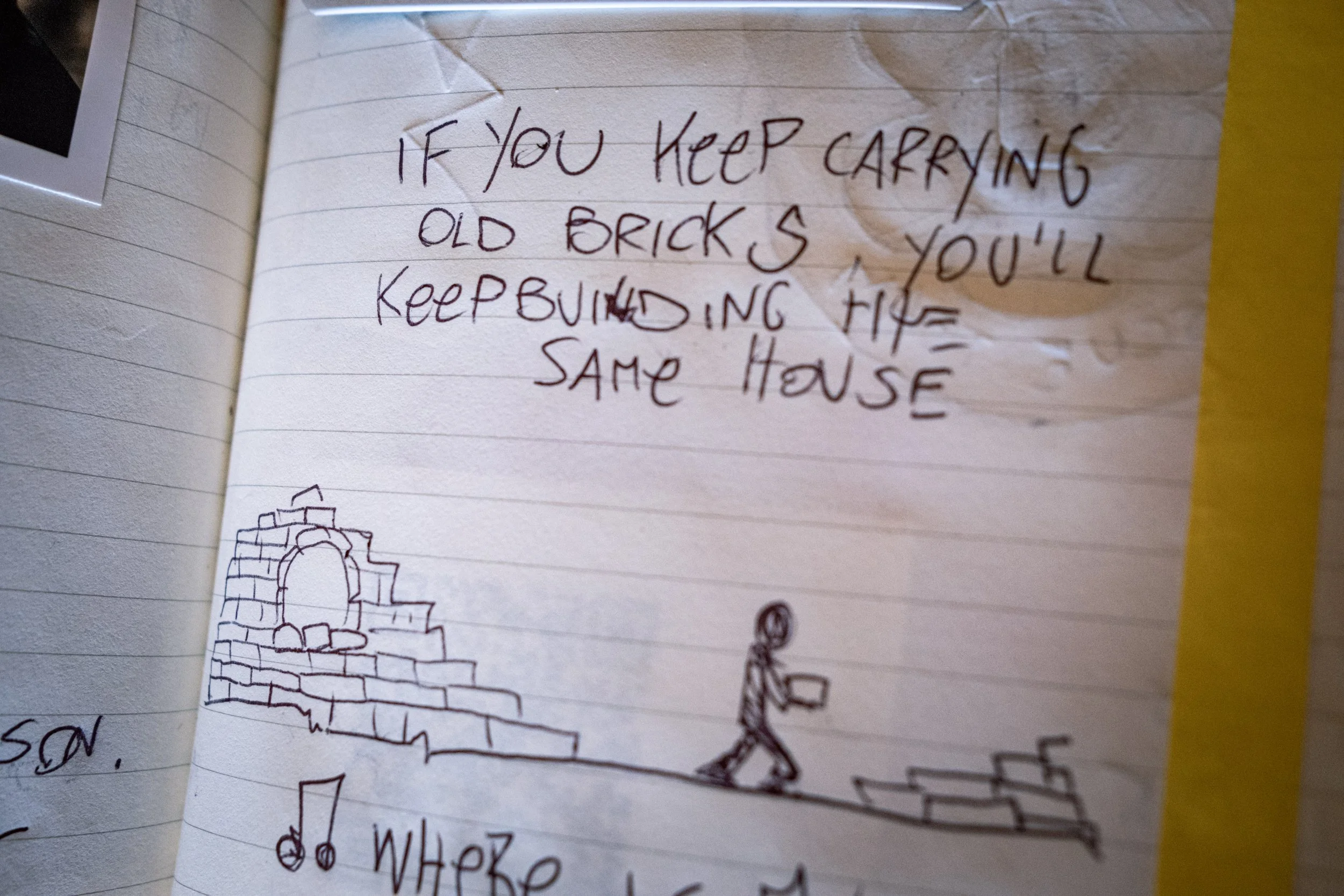
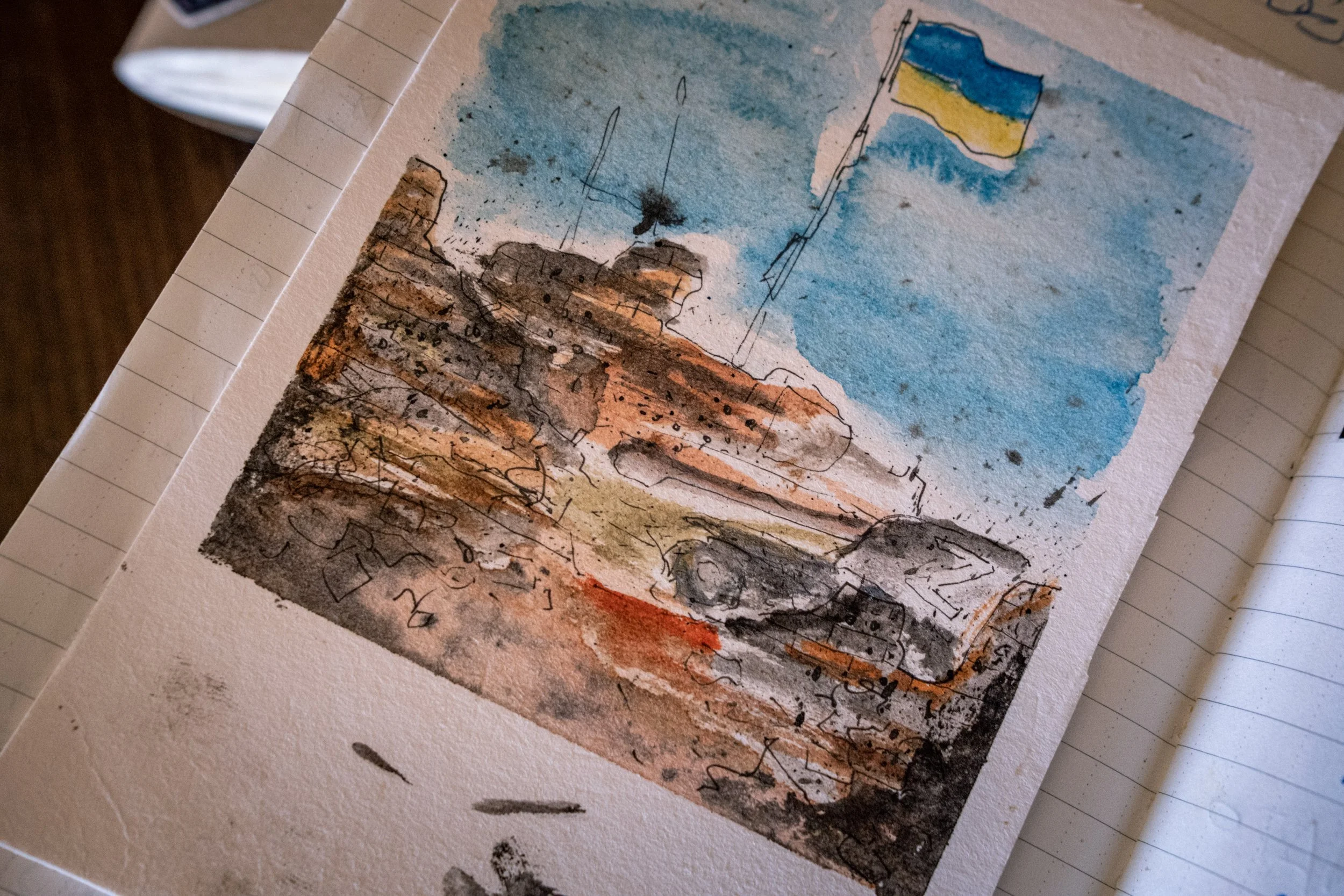
I never decided that I wanted to draw war. War simply entered the diaries because it became part of the places where I was living and working.
There are drawings from Syria, Ukraine and Gaza. Hospitals, ambulances, destroyed buildings, refugee camps, roads, vehicles and people. Some were drawn directly in those places, some from photographs and some later, from memory.
They are not reportage. I don't expect them to document anything in the way my photographs do. They are far too personal for that.
Sometimes drawing at the end of the day gives me a way to return slowly to something that happened very quickly. I can spend two hours drawing a scene that lasted only seconds when I experienced it. I follow the edge of a destroyed building, reconstruct a road, draw an ambulance, notice small objects around it and slowly become aware of details that disappeared in the speed of the original moment.
I don't want to pretend that drawing magically processes everything or turns difficult experiences into something understandable. It doesn't.
It simply helps me slow down.
And it relaxes me.
Sometimes that is enough.
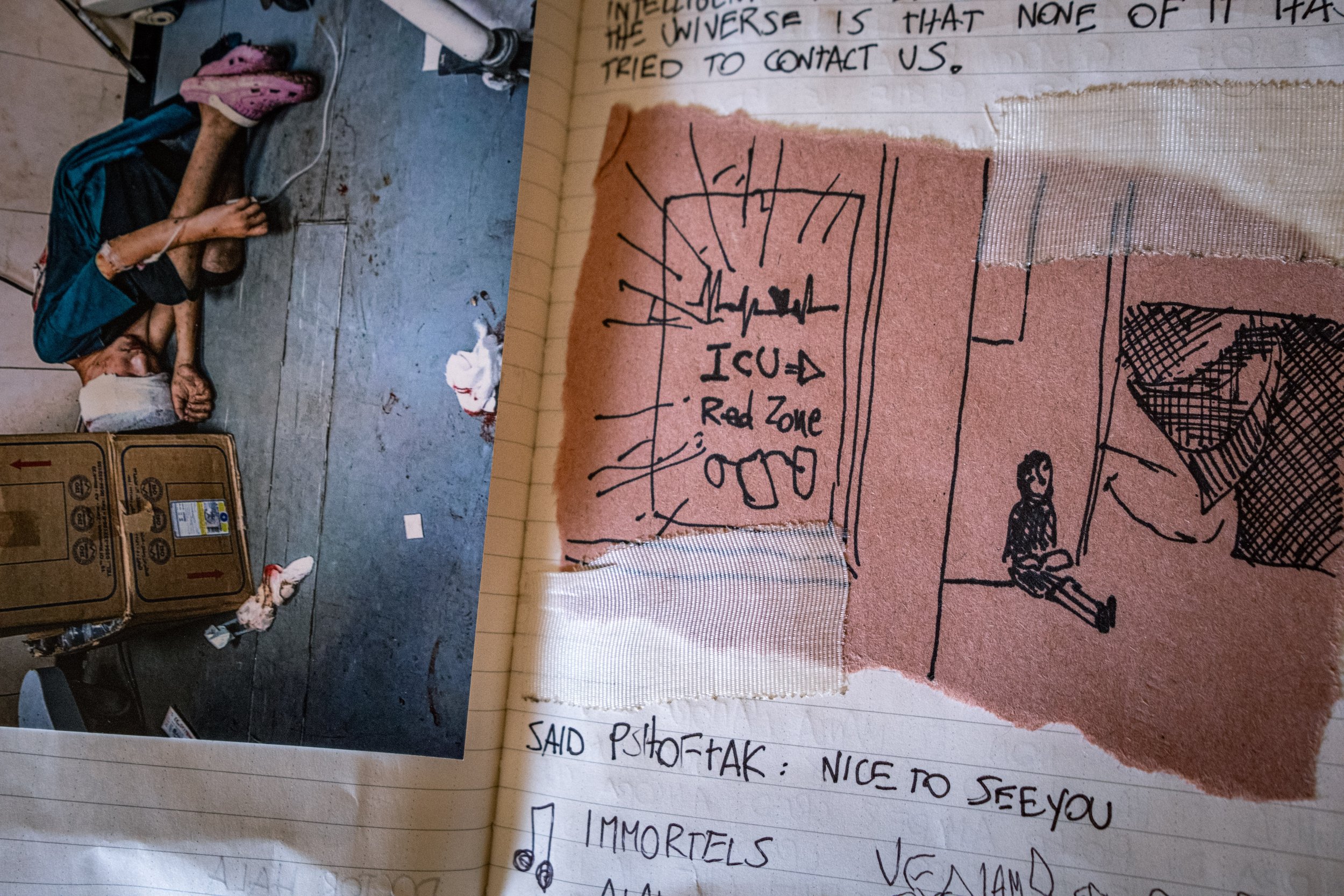
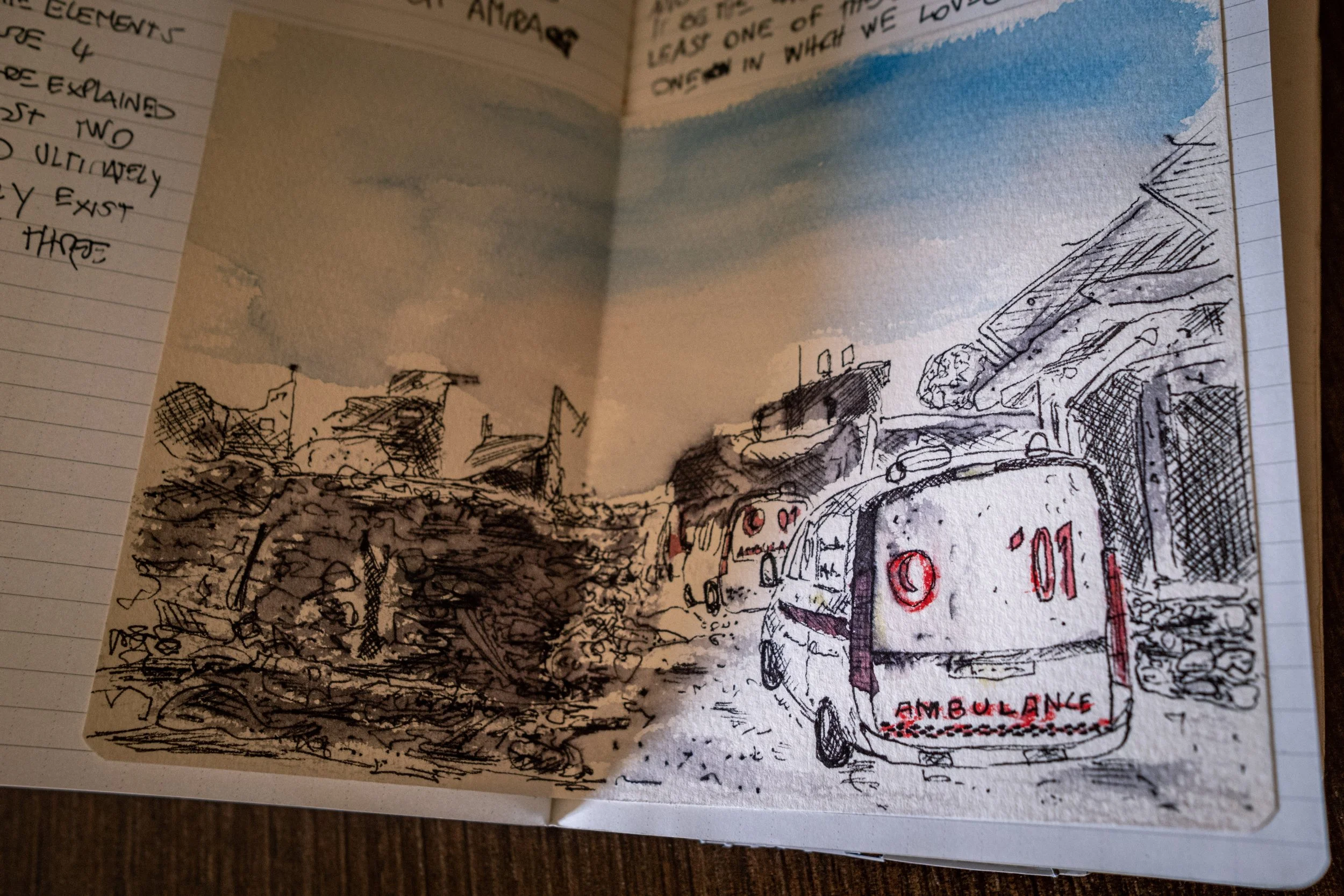
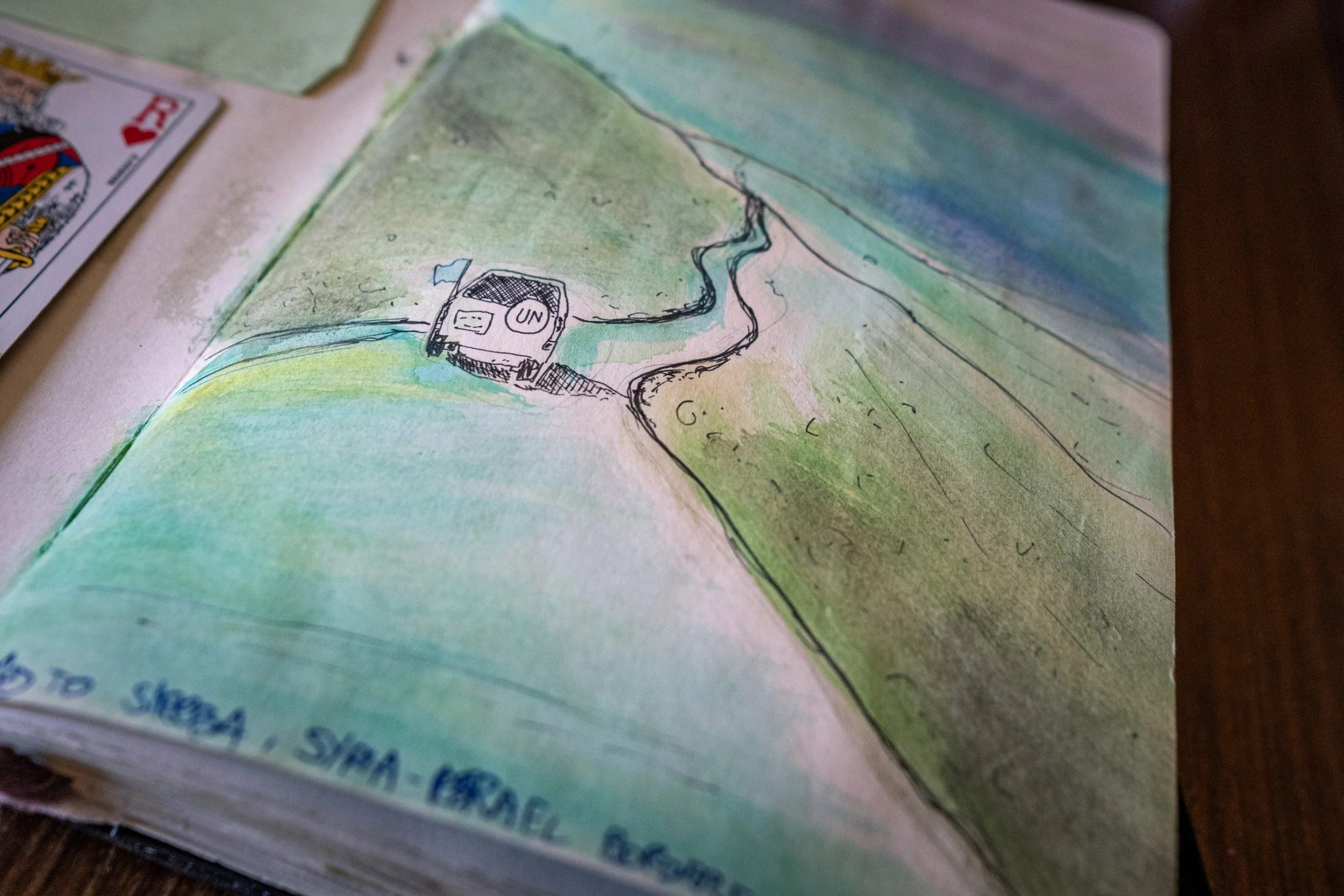
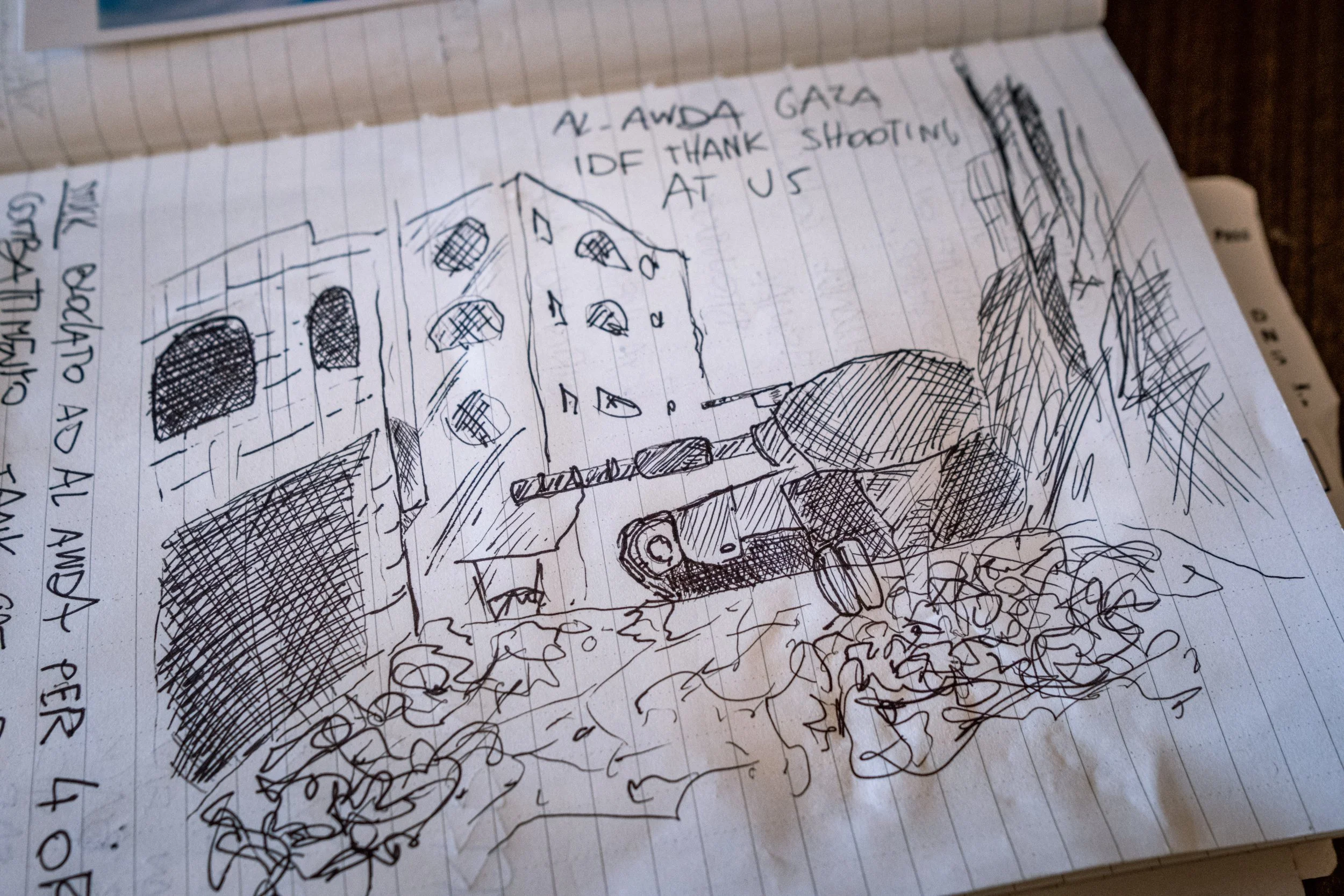
The diaries themselves have become objects I care about enormously. There are dozens and dozens of them now, and drawing is only one of the things they contain.
There are photographs, notes, tickets and small things I have collected over the years. There are drawings children made for me. There is a flower a little girl gave me in Lebanon on my birthday, still kept between the pages. There are pieces of paper that would mean absolutely nothing to anyone else but immediately return me to a particular person or place.
My own drawings live among all of this.
I like that too.
They were never separated and presented as “art”. They stayed where they were made, surrounded by handwriting, photographs, memories and things given to me by other people. Some pages are neat. Others are complete chaos. Some diaries have survived rain, dust, backpacks and years of travelling considerably better than others.
Together they form a strange record of the way I have looked at things for most of my life.
At eight years old, I was already putting drawings into a diary. I obviously had no idea where I would eventually go or what I would see. I didn't know that I would become a photographer, that cameras would become such an important part of my work, or that some of those diaries would eventually contain hospitals, ambulances and places destroyed by war.
But I kept drawing.
The materials changed. The subjects changed. My little travel kit became better. The world became much larger and occasionally much stranger than I had expected.
The basic gesture remained the same.
I open a diary and make a mark.
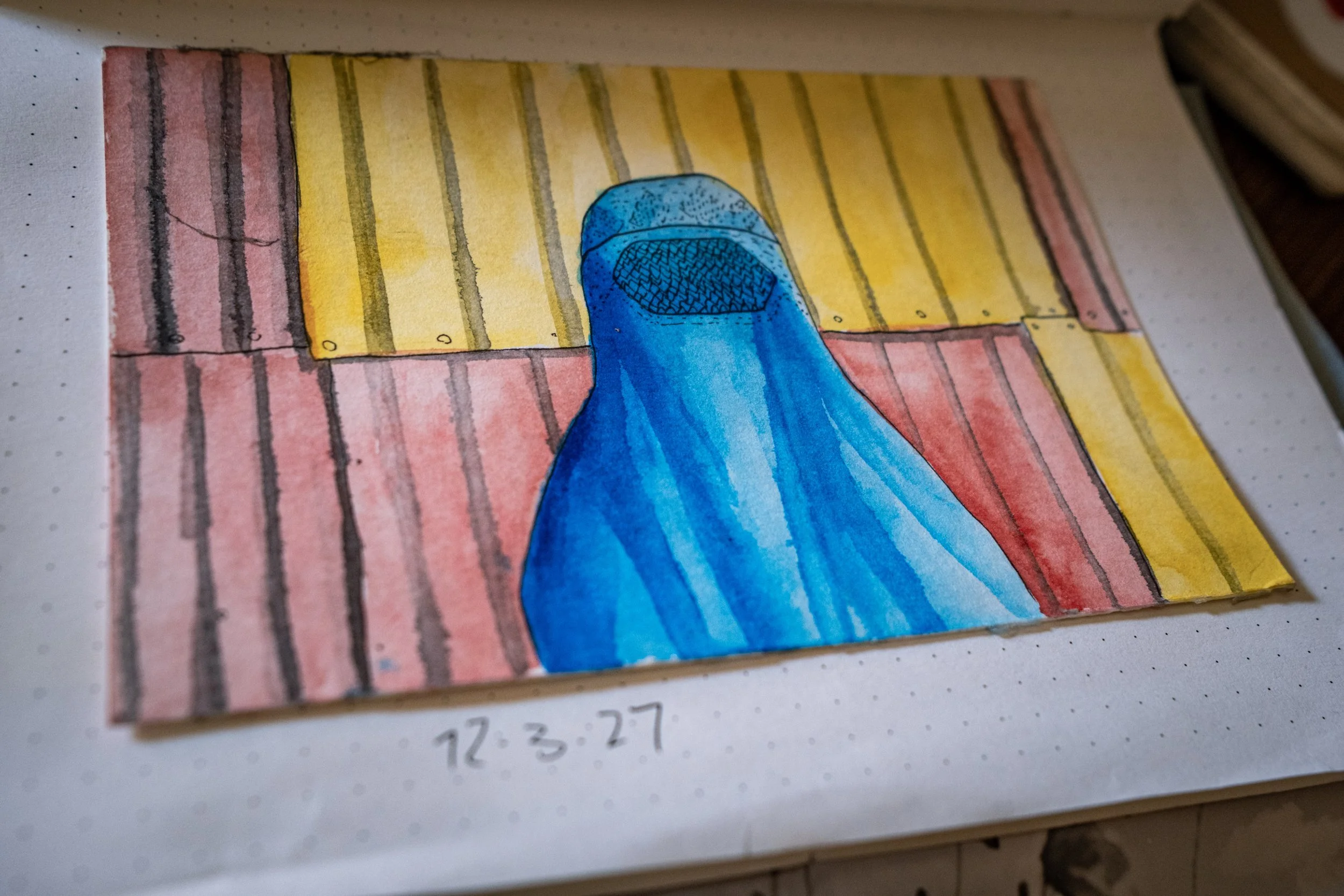
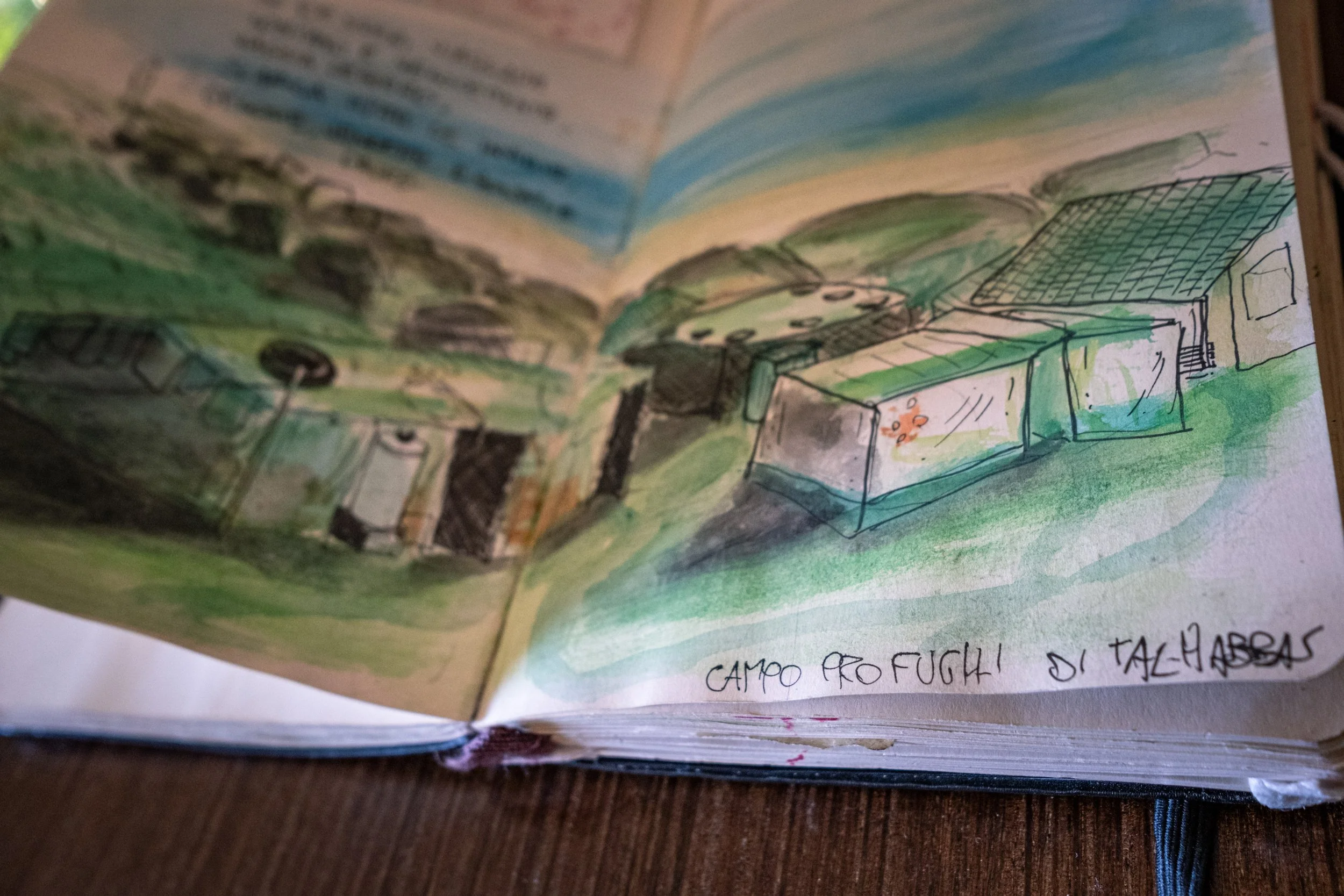
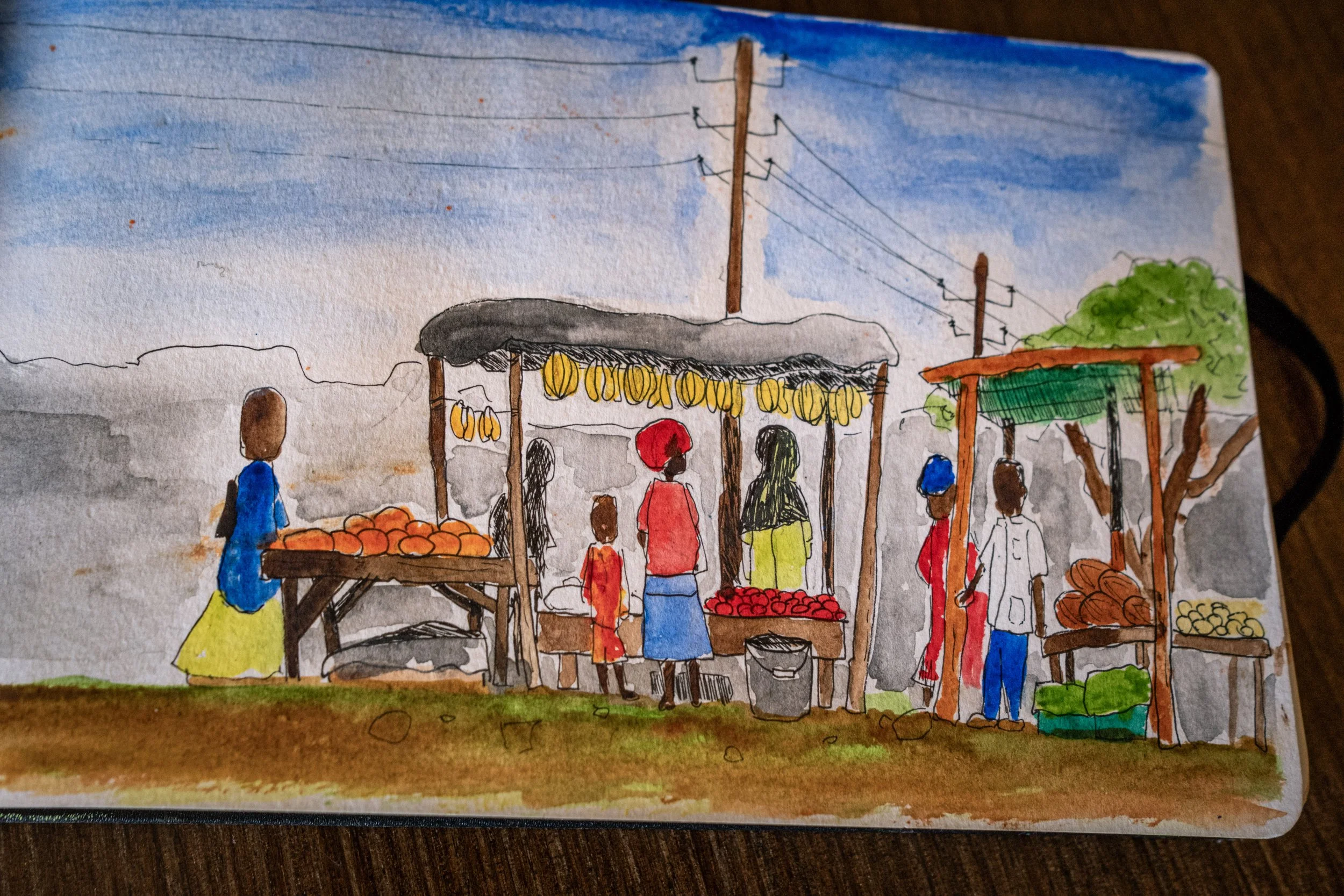
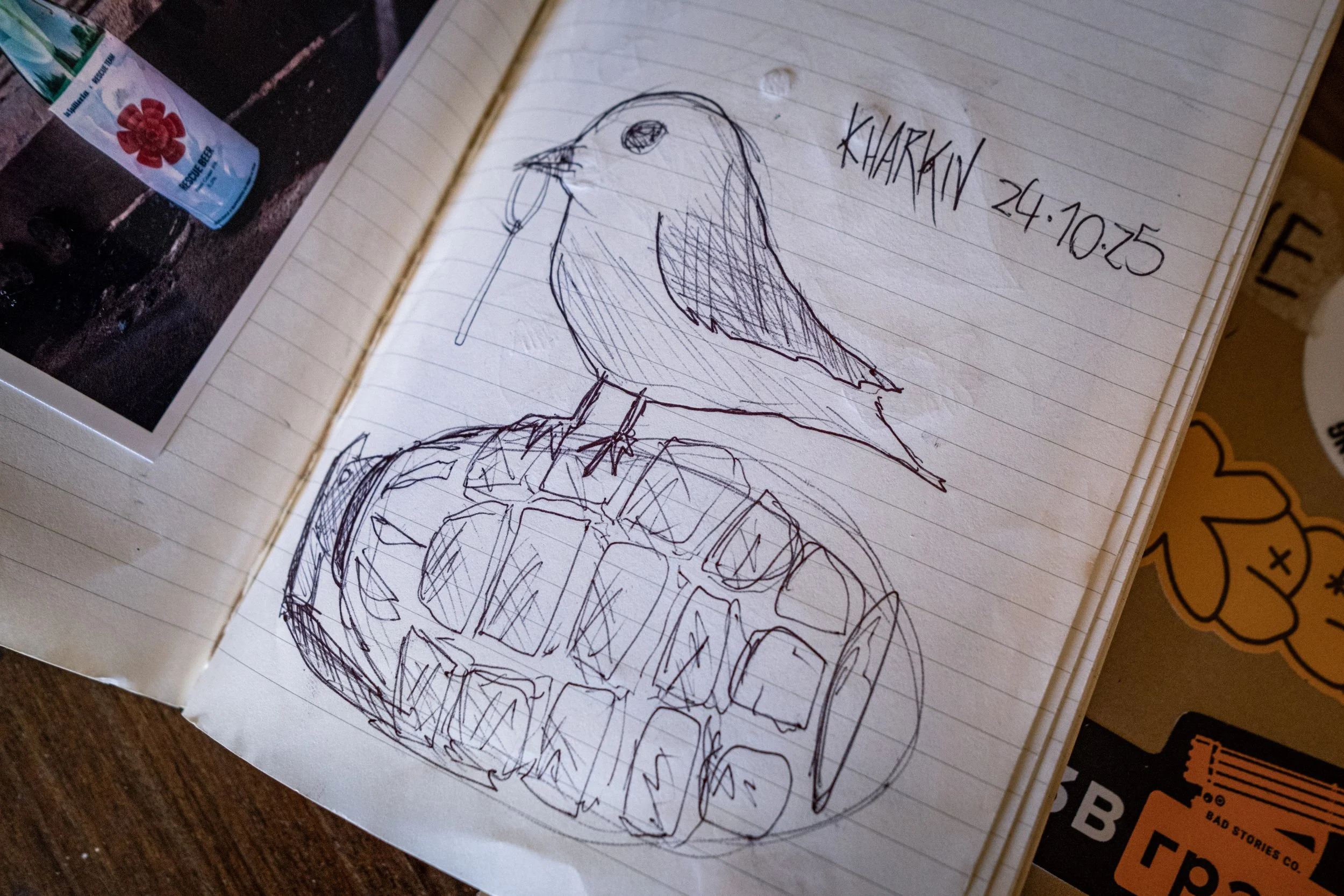
Sometimes I am drawing what is right in front of me. Sometimes I am returning to a photograph and discovering details I missed the first time. Sometimes I am drawing something that exists only in my head.
And perhaps that is why, after more than thirty years, I still carry my drawing kit wherever I go.
Photography taught me to write with light. Drawing taught me to tell stories.