Mattia Bidoli is an Italian documentary  photographer and humanitarian worker. He operates in active conflict zones and post-conflict environments, documenting war from within humanitarian operations and alongside civilian populations.
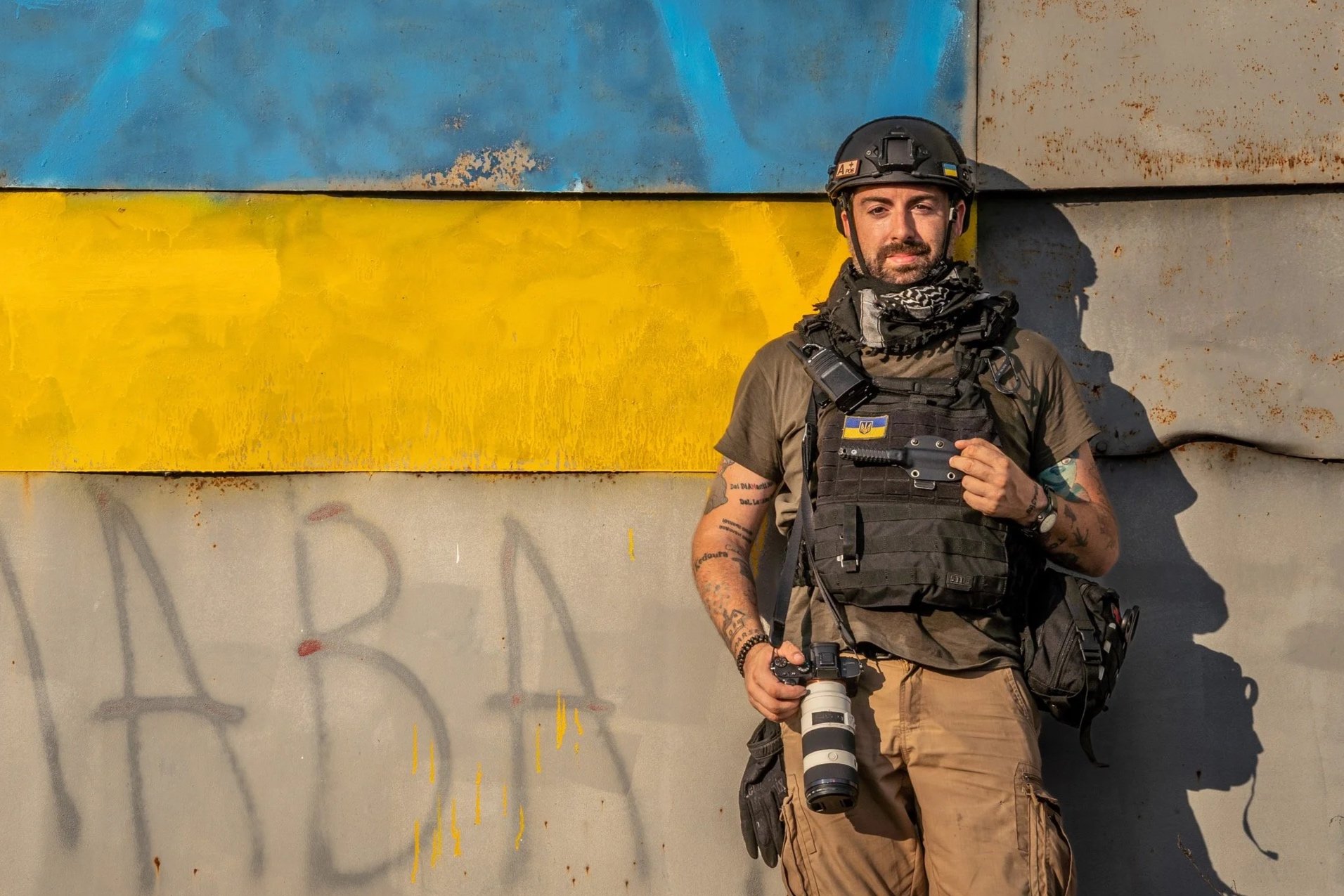
A man with tattoos on his arms, wearing a black helmet, tactical vest, and beige cargo pants, stands against a wall painted with blue, yellow, and gray sections. He holds a camera with a large lens in his right hand, and his shadow is cast on the wall behind him.

He has worked extensively across Gaza, Ukraine, Syria, Iraq, Lebanon, the West Bank and many other contexts worldwide, collaborating with international and local humanitarian organizations, including Doctors Without Borders, the World Health Organization, the United Nations, BASE UA, among many others.
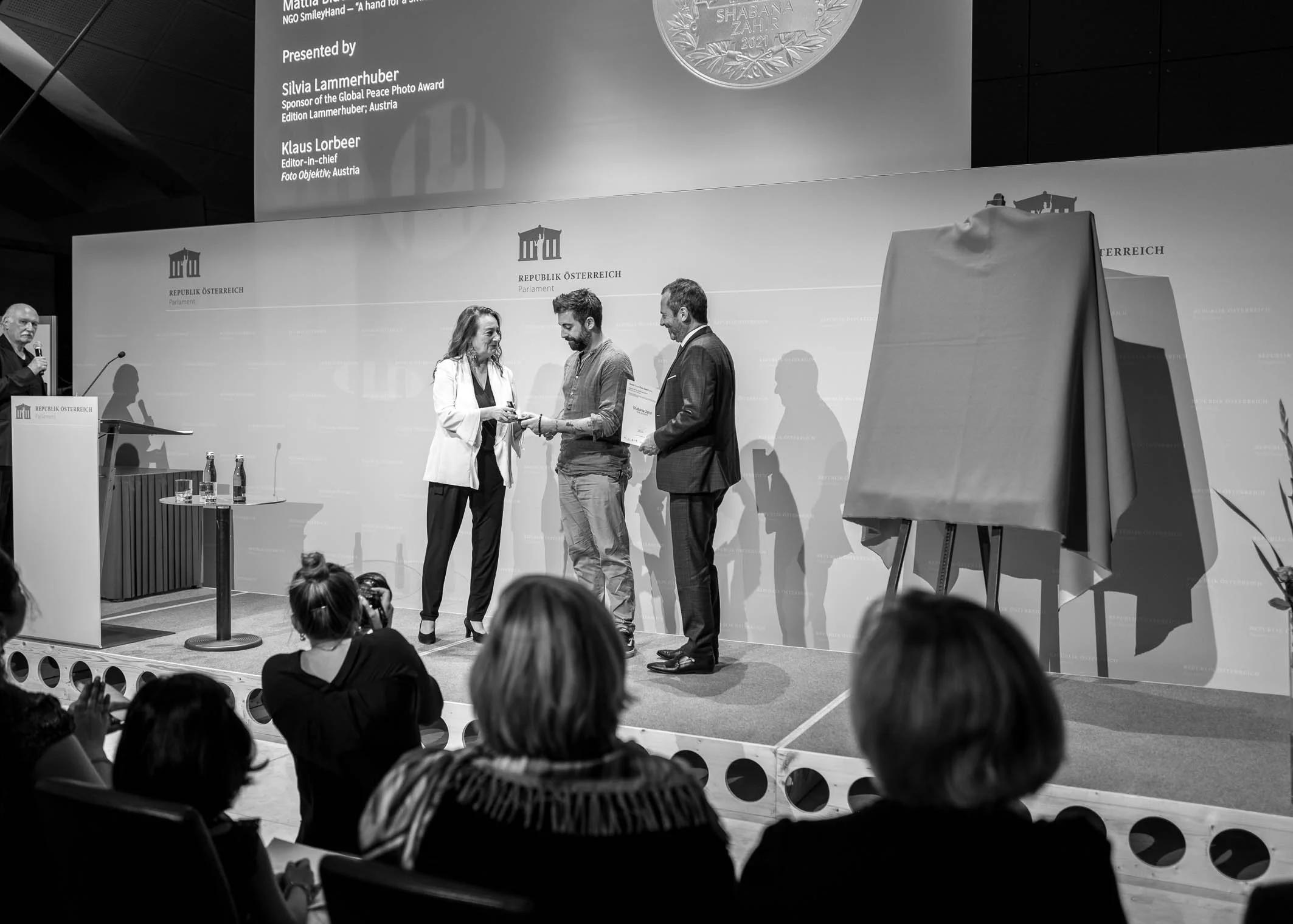
A black and white photograph of an award ceremony on a stage at the Austrian Parliament. A woman is handing an award to a young man while a man in a suit looks on. Audience members are seated in front, some taking photos. A large curtain covers an object on the right side of the stage.
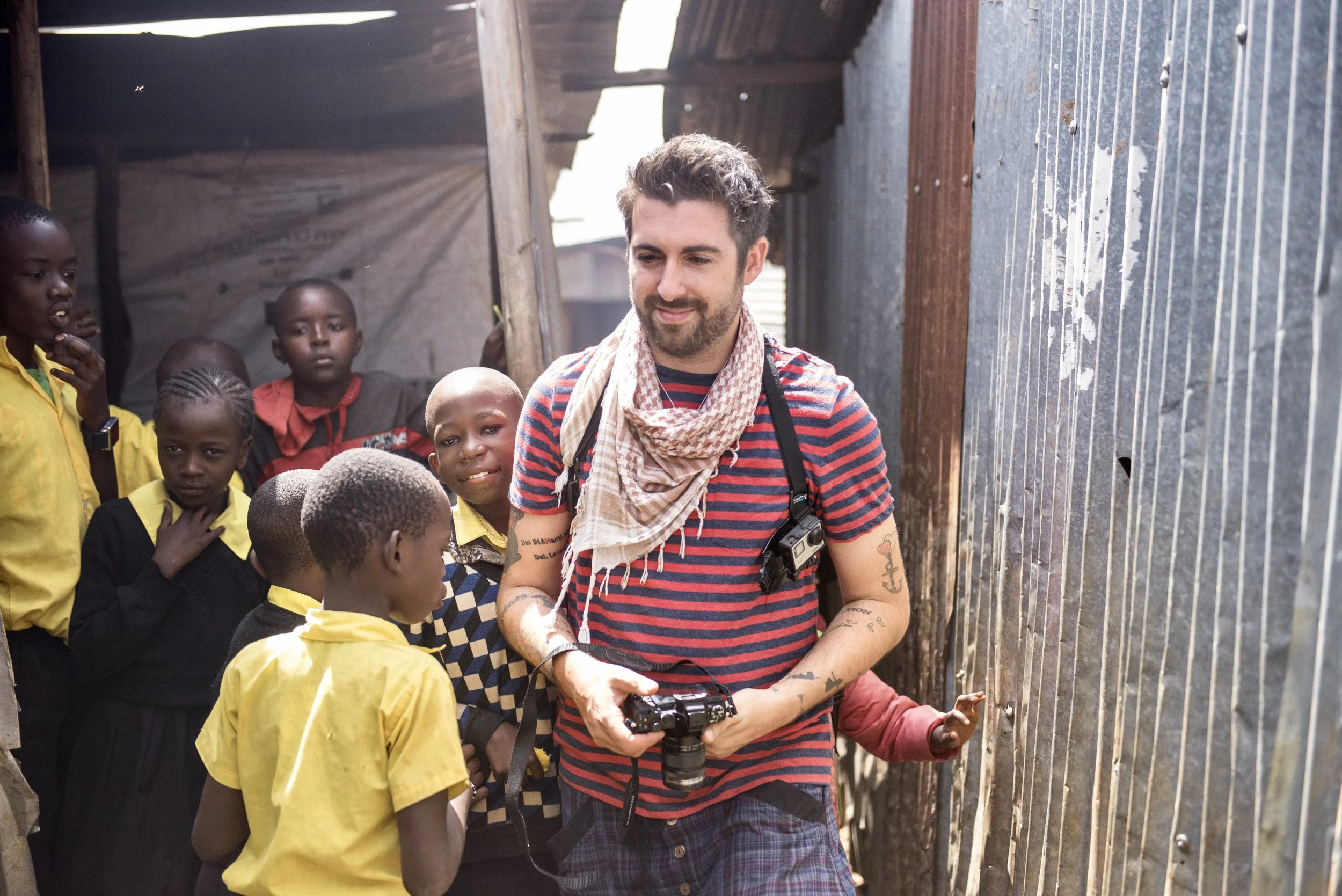
A man with a camera around his neck and tattoos on his arms walking through a group of children in a rustic outdoor setting, with some children looking curious and interested.

His work focuses on the human cost of conflict and the mechanics of survival, examining how war reshapes lives, relationships, and identities. Through sustained fieldwork, he documents humanitarian action on the ground, following and working with emergency teams and local responders. His approach goes beyond events to explore how individuals endure, adapt, and preserve dignity amid violence, displacement, and uncertainty.
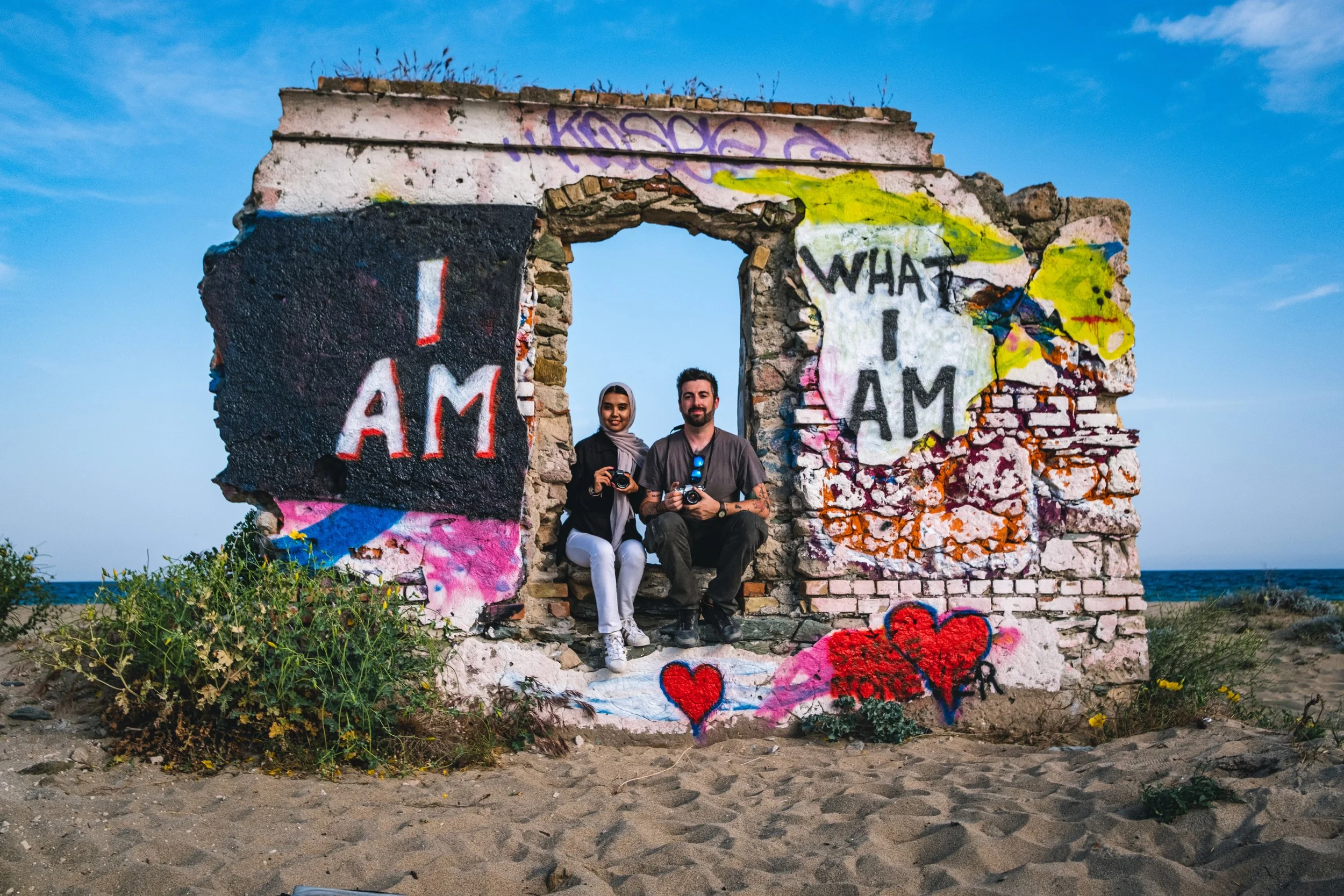
Two people sitting inside a graffiti-covered brick window frame on a sandy beach, with the ocean and sky in the background, holding cameras.

His photographs have been exhibited in galleries and institutions worldwide and published internationally, with his work featured by major media outlets including the BBC, TIME Magazine, la Repubblica, Der Spiegel, among others, forming a body of work that combines war documentation, humanitarian testimony, and ethical responsibility.