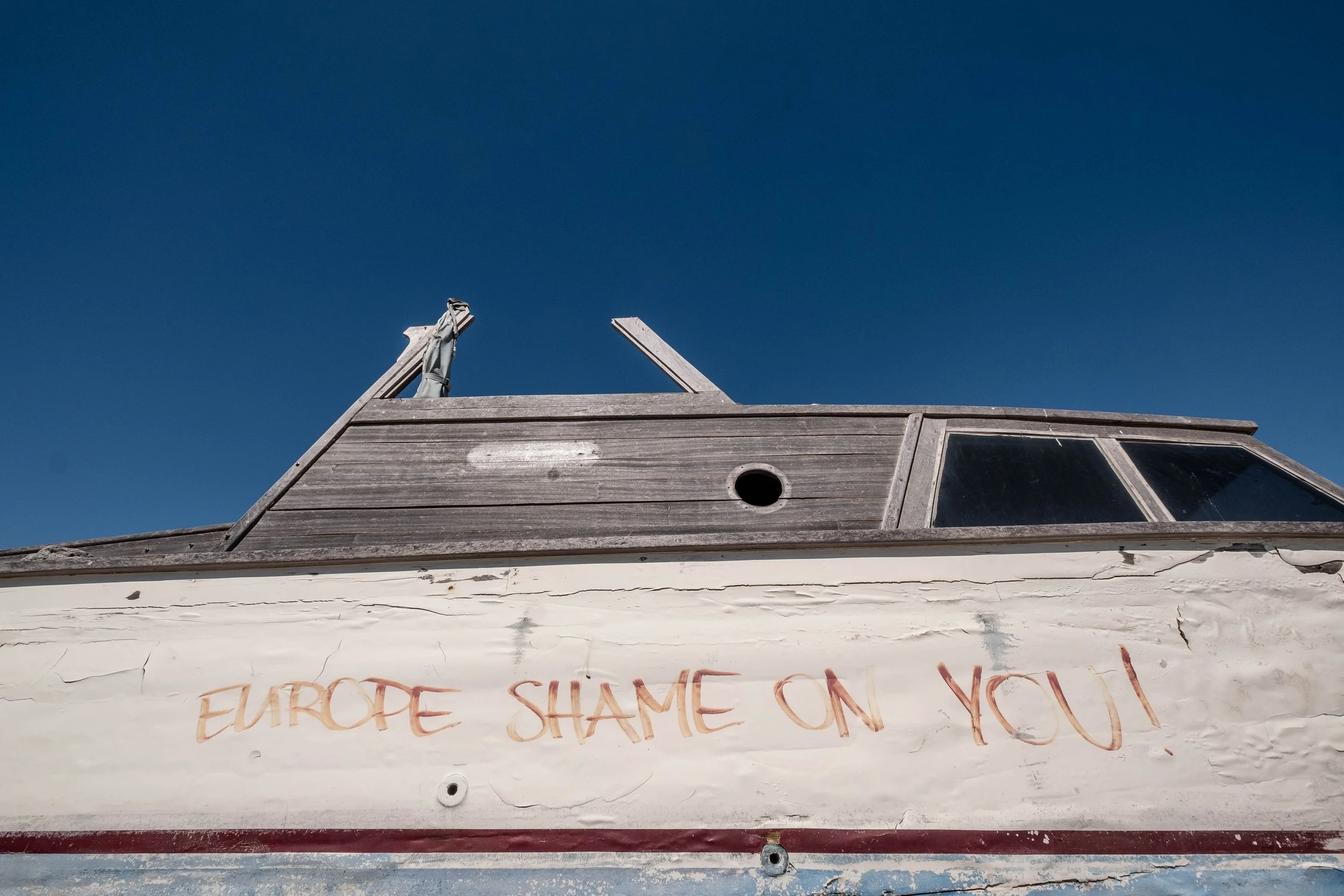
The Life Jacket Cemetery
There is a place in the north of the island of Lesbos, at the top of a mountain.
A place that would be beautiful to explore on a hike. The air that rises from the sea reaches all the way up there, magnificent, clean, almost light.
I have seen many cemeteries in my life.
White posts in perfect symmetry, blue crosses among birch forests, graves with small piles of bones edged with wooden crosses tied together with frayed twine, polished headstones lit by LED candles, rubble that once used to be houses.
But on the top of that mountain, I saw a cemetery I could never have imagined.
The air there is heavy. Dense. Silent. Still.
As if sadness were working overtime.
A hillside of orange stains, yellowed by the sun and by time.
Life jackets. Pieces of rubber boats. Burnt boats. Clothes. Personal belongings.
Practically everything one can carry when fleeing to reach a new country, even a travel guide to Austria.
All of it lies in enormous open-air piles.
The locals call it the life jacket cemetery.
It is a resting place for things that ended up in the sea or were left behind by refugees after reaching the shores of this Greek island.
“If you want to tell a story, you must love what you photograph and you must not be afraid to get dirty,”
the person who taught me how to see through a camera once told me.
I swallow the last bit of saliva left in my throat and climb onto the pile of jackets.
When I reach the top, I see that the heaps of life jackets have been dumped into a valley, a mountain formed inside an abyss.
I realize I am standing on a symbol of courage, of hope, but also of human fragility.
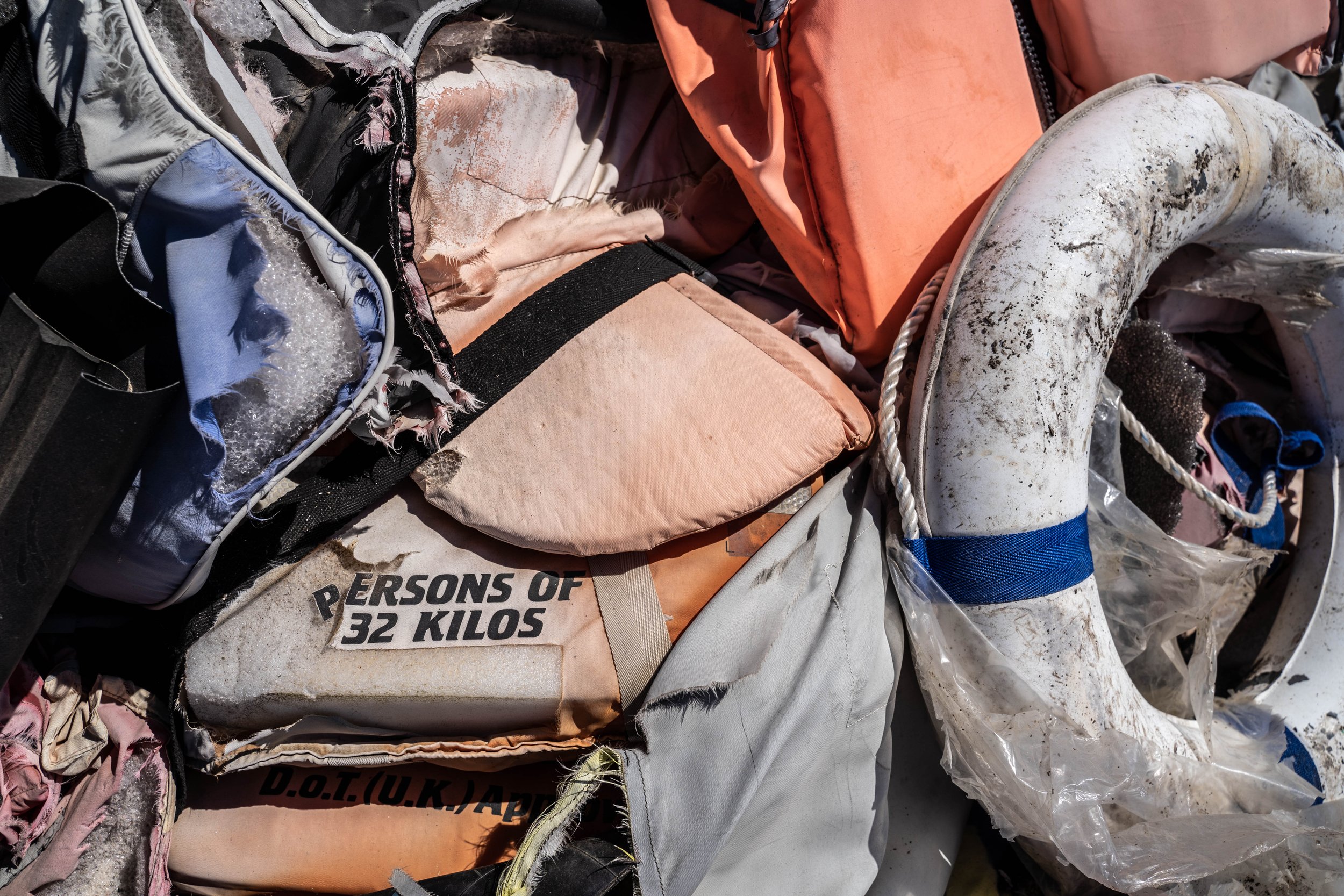
I grab a life jacket, a small one.
“One person: 32 kg,” it says on the label.
One of my nephews could fit inside it.
The jacket is light, like the first time I held my nephew in my arms when he was born.
How can a person come to entrust what is most precious in the world to something so light?
I step on small inflatable toys that make children look like Popeye, floating biceps now long deflated and abandoned, their smiling fish decorations barely visible.
I realize that every life jacket I see belonged to an individual.
A person with their own story, their own dreams, their own fears.
Like me.
I could have been inside that jacket.
My nephew could have been inside it.
I climb down from the pile, and a part of me remains forever caught in the buckles of those life jackets.
To myself I think, How long will it take before the earth mixes with the jackets, through storms, wind, and mudslides, until they turn to dust, until the life jackets become invisible?
How long before there is no difference between this mountain and the one next to it?
How long will pass before this horror is forgotten?
I know I will not forget.
I do not want to forget this place of restless rest.
I walk slowly back to the car, to return to the refugee camp, to return to those who survived the crossing.
Perhaps one day, hikers will climb to the top of this mountain and wonder why the air feels so dense, so hard to breathe.