War Photography Kit
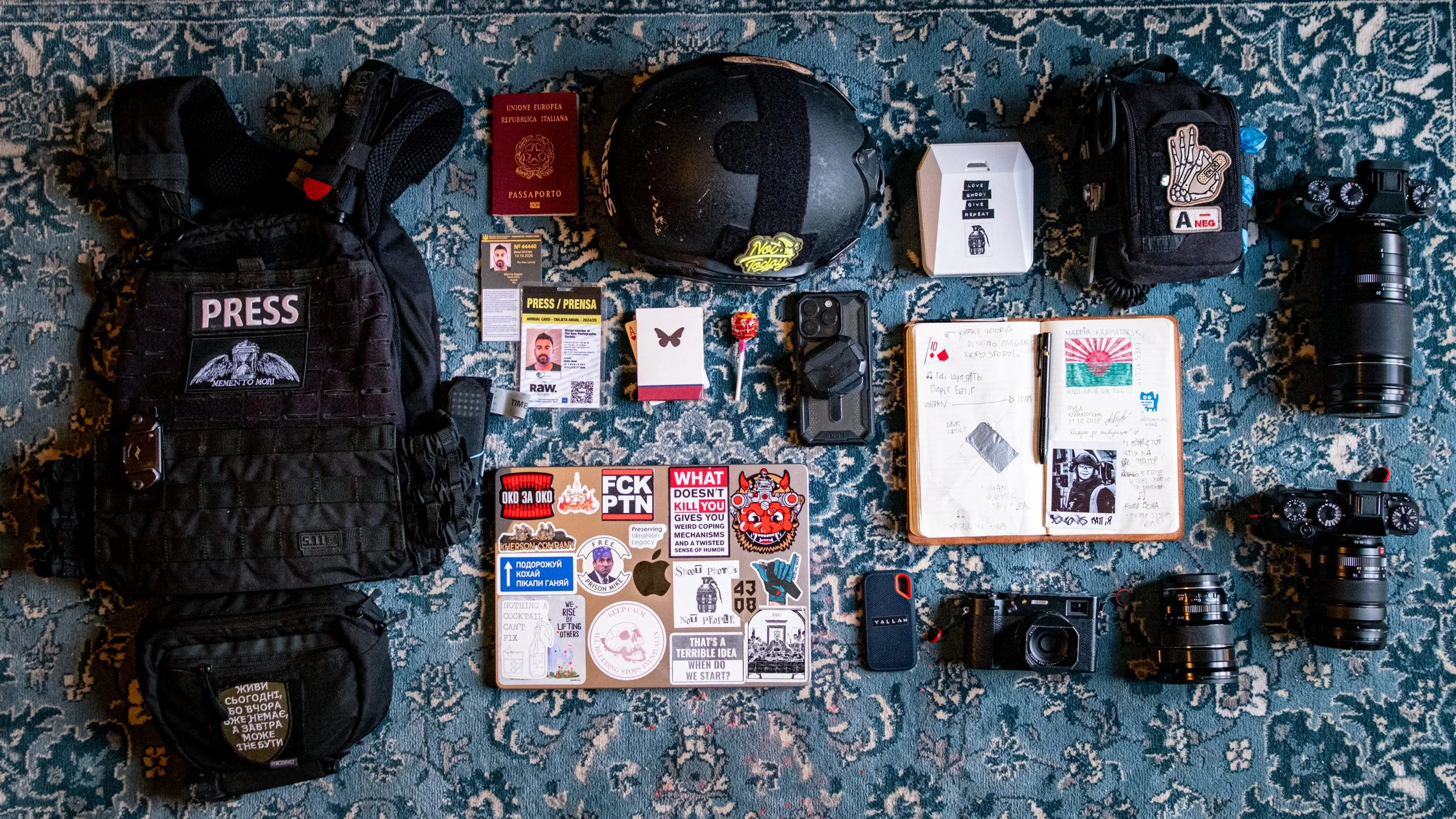
This is not a travel kit.
It is not a “lifestyle” setup.
It is a kit built for going to war.
Everything you see here is chosen for one reason only: to enter a conflict zone prepared.
In war, there is no room for improvisation. Equipment is not a matter of taste, aesthetics, or trends. It is a matter of reliability, clarity, and responsibility. When something fails, you don’t just lose a shot you lose time, safety, and you may lose your life.
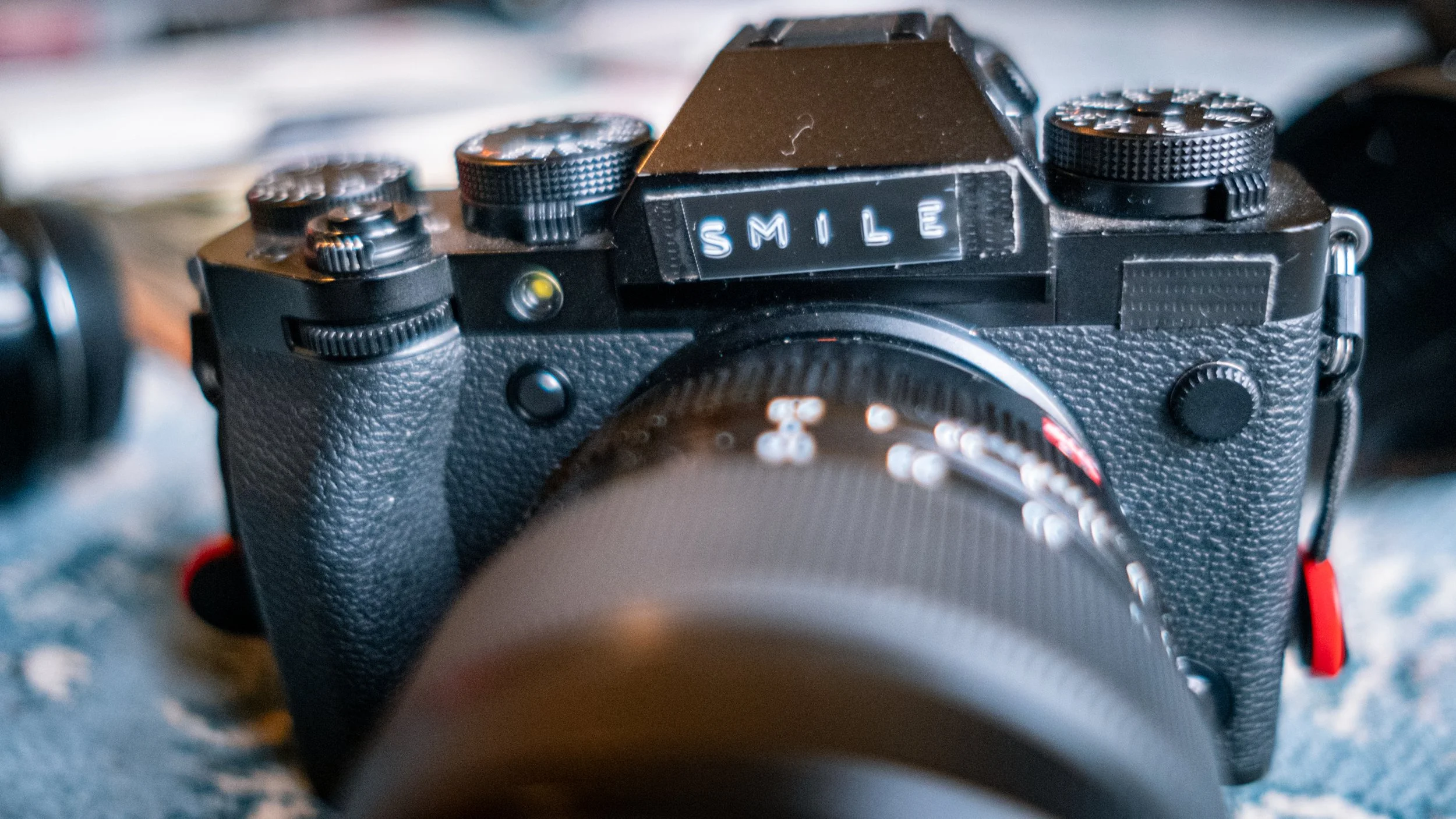
These cameras have been everywhere. They are built to take hits, to get scratched, to be used hard. They are not afraid of dirt or damage, because they are work tools, not objects to protect. Their reliability is not only technical: it lies in the fact that I know them completely, that they become an extension of my body and allow me to bring the work home even in extreme conditions.
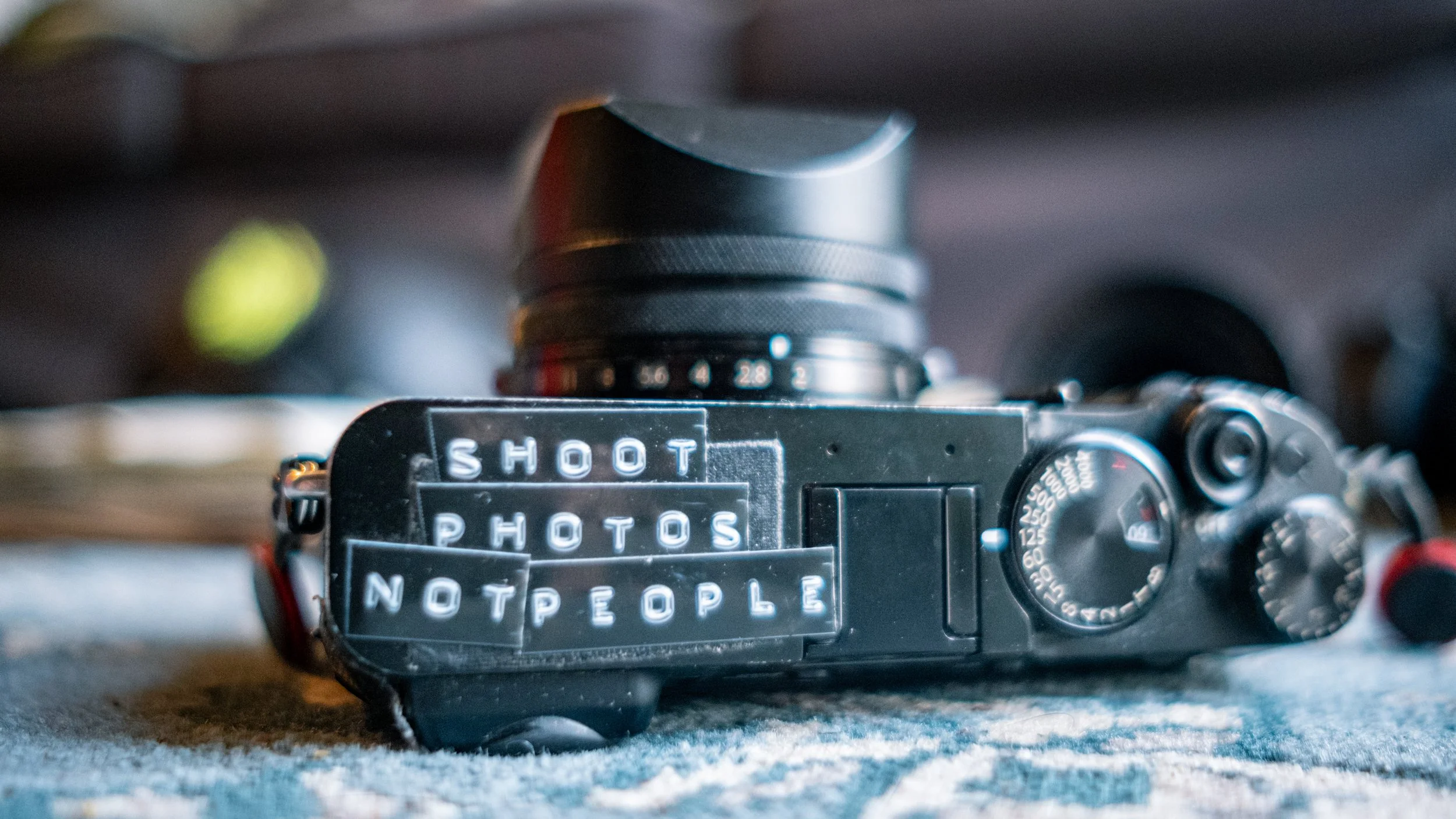
They also do not immediately “announce” a professional photographer. Especially the smaller camera allows me to move discreetly, to enter sensitive environments without creating distance or mistrust. In places such as refugee camps, a large and conspicuous camera would have made it impossible to get close to people in the same way. Discretion, in these contexts, is not an aesthetic choice — it is an operational and ethical necessity.
But a war photography kit is never just about photography.
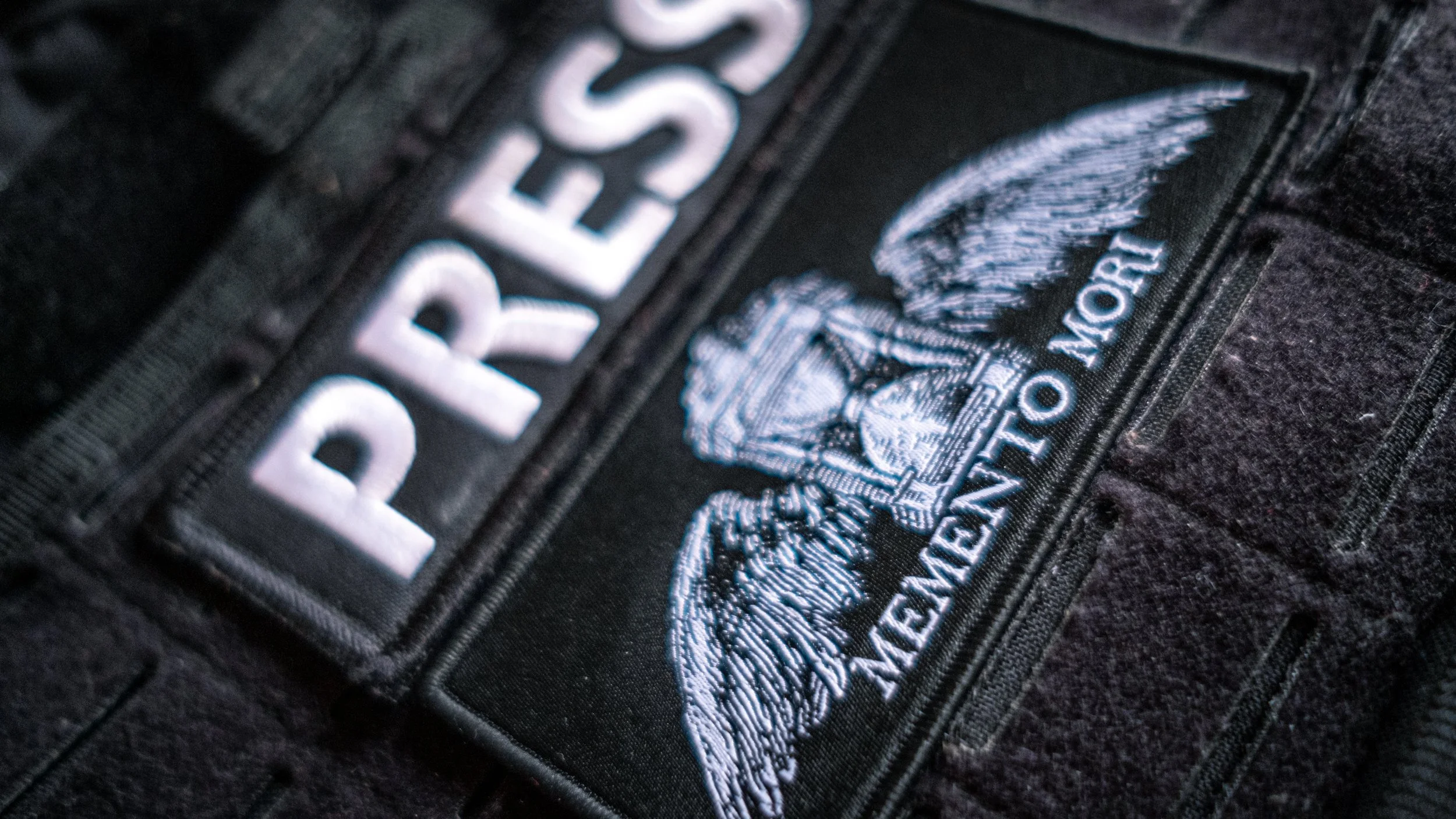
The press pass is essential. It is not an accessory and it is not a privilege. It is a responsibility. It defines who you are, why you are there, and how you are expected to behave. Carrying it means knowing rules, chains of command, risks, and limits. It means knowing when to take a photograph and when to lower the camera. Being “press” is not about access — it is about being accountable.
Documents, badges, and identification are not bureaucracy. They are part of survival.
A ballistic vest and helmet are essential components of an operational kit in a conflict zone. They are not symbolic elements or accessories: they are Personal Protective Equipment (PPE) designed to reduce the risk of severe or fatal injuries caused by bullets, shrapnel, and debris.
The ballistic vest protects vital organs in the chest and abdomen. Its effectiveness depends on several factors: the level of ballistic protection, correct sizing, proper plate positioning, and correct adjustment of the carrier. A vest worn incorrectly — too high or too low — compromises coverage of critical areas and significantly reduces protection.
Wearing ballistic protection does not mean feeling safe.
It means operating with awareness of risk and respect for the reality of the environment.
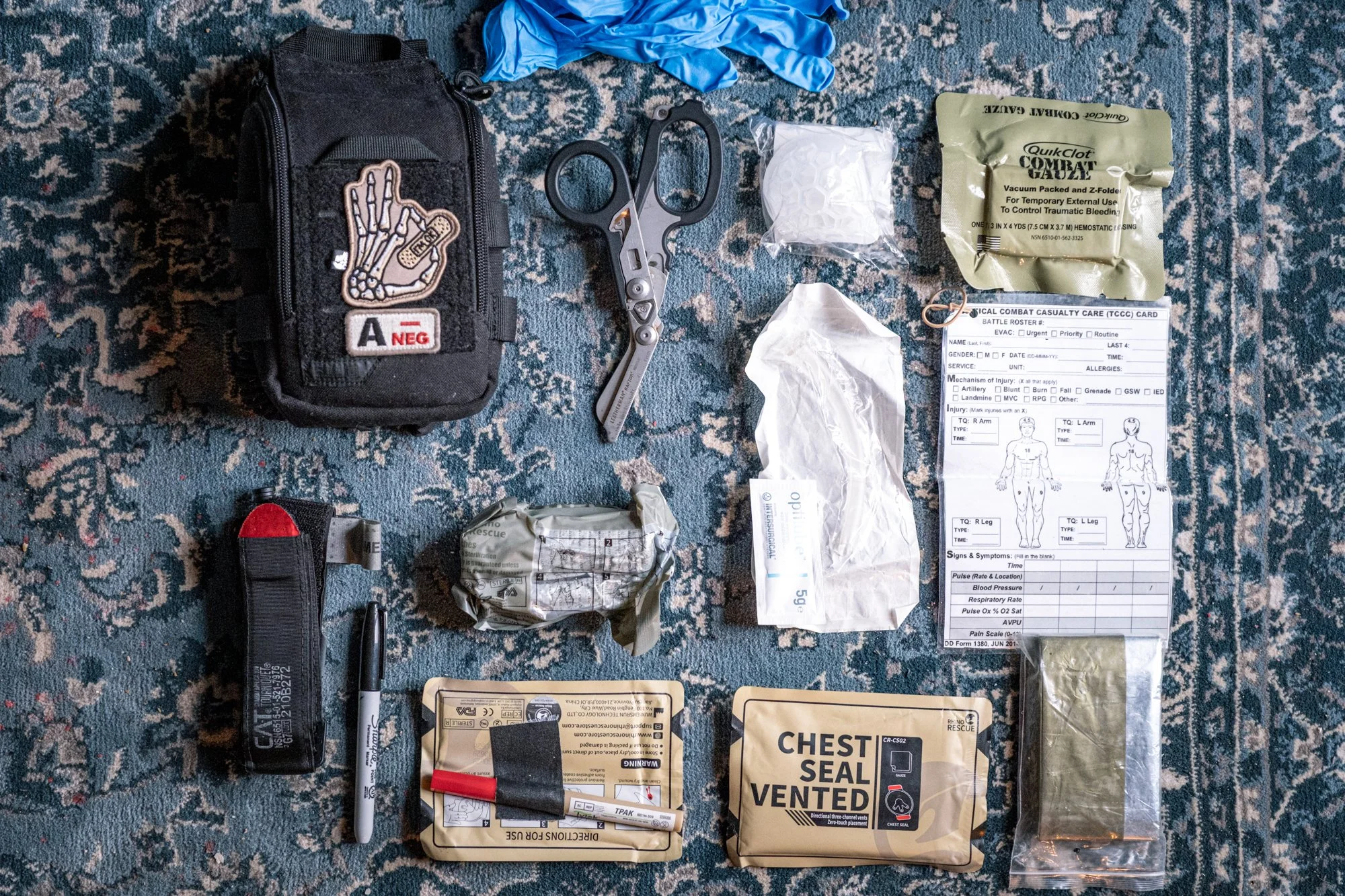
The IFAK (Individual First Aid Kit) is essential, but useless without training. Carrying medical gear does not mean being prepared. Knowing how to use it does. Tourniquets, bandages, and trauma supplies only matter if there is muscle memory, training, and situational awareness. Training matters more than equipment. Knowing what not to do is as important as knowing what to do. In war, pretending to be prepared is dangerous.
There is also a Fujifilm printer in the kit.
It is not a gadget. It is an ethical choice.
Photography, especially in crisis and conflict contexts, is often a one-way act: time is taken, images are taken, stories are taken — and then you leave. Bringing a printer means interrupting, at least in part, this dynamic. It means giving something back at the very moment documentation happens.
In many of these contexts, people have lost everything, or almost everything. Homes, belongings, family archives, photographs. Today, most memories exist only in digital form, inside a phone, a fragile device. Lose it, break it, run out of battery or connectivity, and nothing remains.
In Ukraine, in Syria, and in Turkey after the earthquake, I have seen this constantly. People who no longer have a single photograph of themselves, of their children, of their parents. Not because those moments never existed, but because everything was stored in a device that no longer exists.
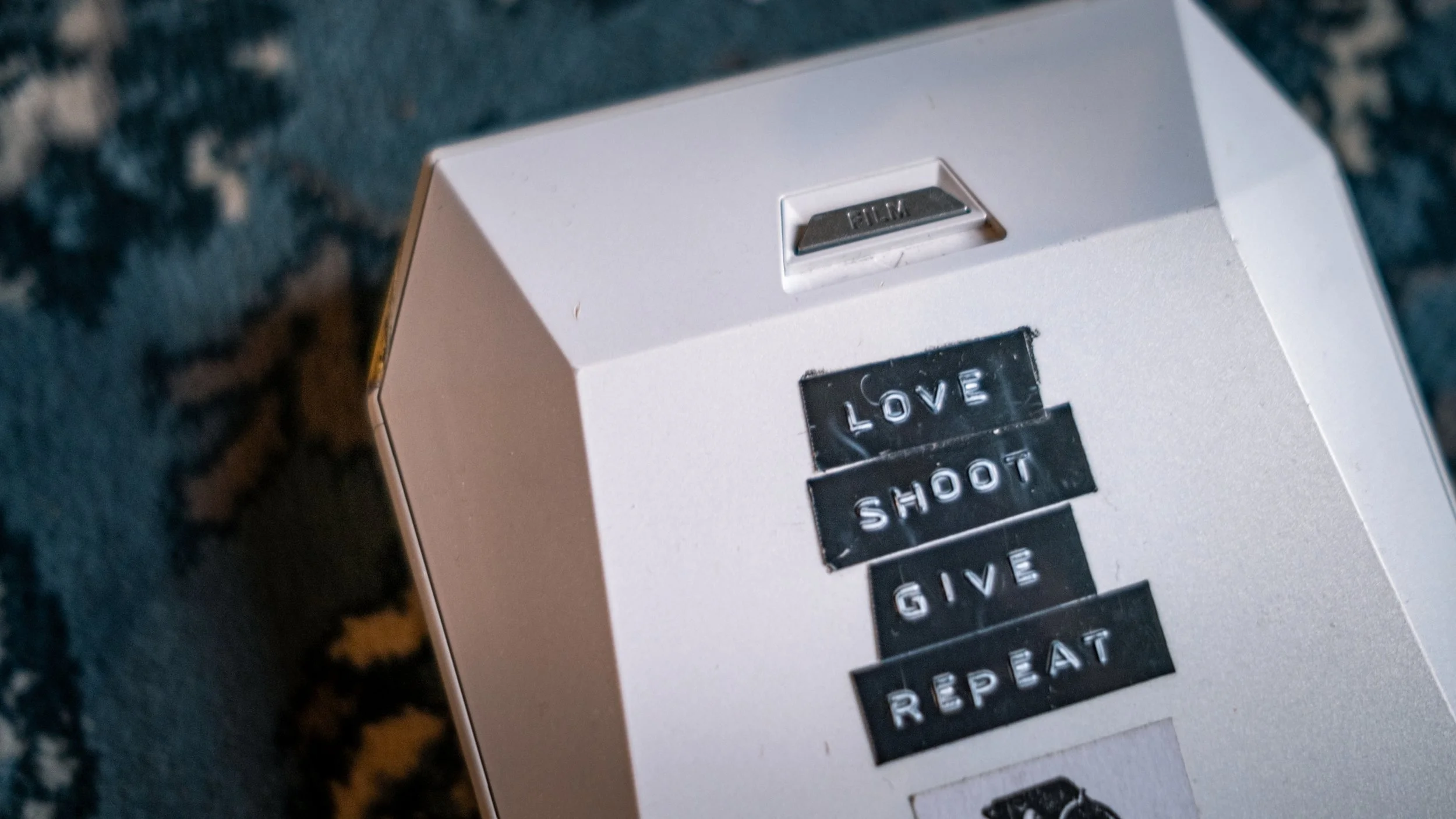
Printing a photograph in these contexts takes on a different meaning. It is not nostalgia, and it is not romanticism. It is giving physical form back to a memory, something that can be held, folded into a pocket, placed inside a document, carried away during sudden displacement. Something that does not depend on a network, a cloud, or a battery.
The reactions are often hard to describe. Sudden silence. Held-back smiles. Hands touching the paper carefully, as if it were fragile. People calling others to show the image.
Preparation is an ethical choice.
Training is an ethical choice.
Knowing your limits is an ethical choice.
This kit does not eliminate risk. War is never safe. But entering it unprepared is irresponsible, toward yourself and toward those working around you.
A war photography kit is not about courage.
It is about discipline.
Over time, it changes very little. I reduce weight, replace tools, optimize. The philosophy stays the same: carry only what has a clear purpose, know every item, never trust anything blindly.
Here, photography is not about collecting images.
It is about being present without becoming a burden.
This kit exists for that purpose.
Everything else is secondary.