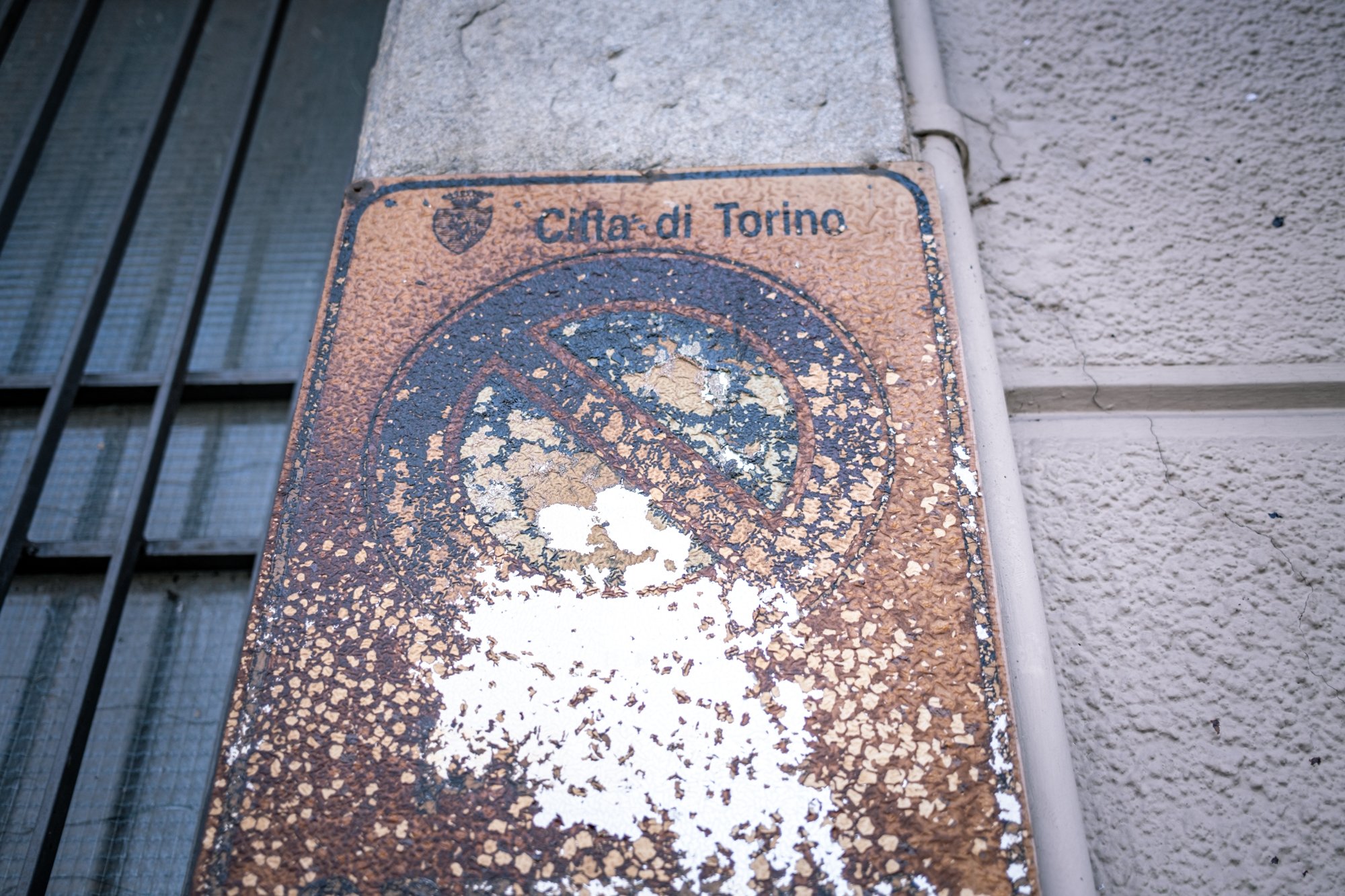
Askatasuna means freedom
Askatasuna It's a Basque word that means freedom, and it's also the name of a space that, for years, has been at the center of political and social conflicts in Turin.
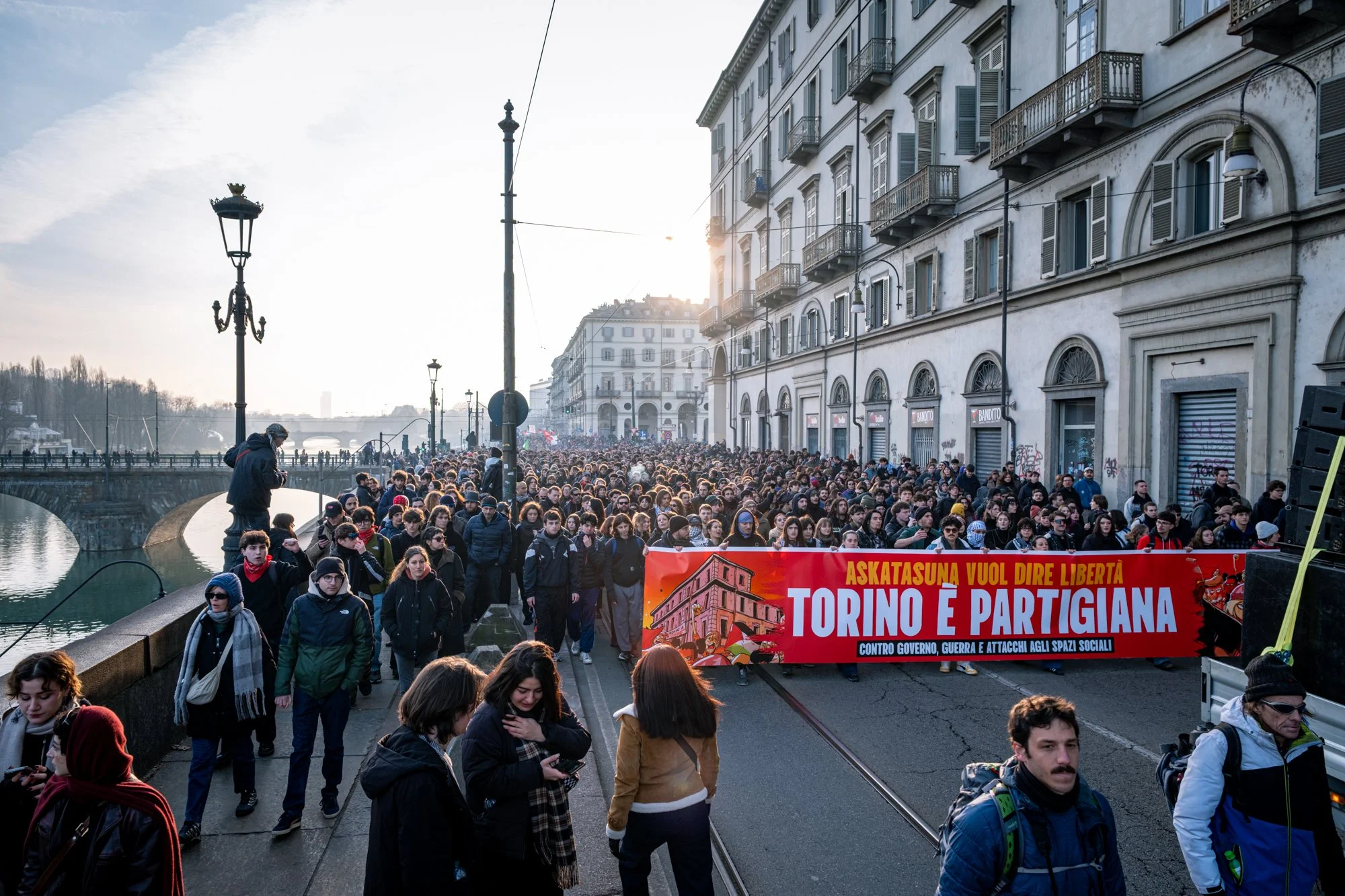
On January 31, 2026, thousands of people arrived in Turin from all over Italy to participate in the march organized in response to the eviction of the Askatasuna social center, which took place on December 18, 2025, at 47 Corso Regina Margherita.
The demonstration was born to defend the existence of self-managed spaces and to express dissent towards government policies, particularly against the so-called Security Bill, perceived as a further restriction of spaces for political action and protest.
The march started as a mass demonstration, well-attended and initially peaceful. Tens of thousands of people – the numbers speak of 50,000 present – crossed the city in an atmosphere that, at least at the beginning, had more the features of a collective celebration than an announced clash.
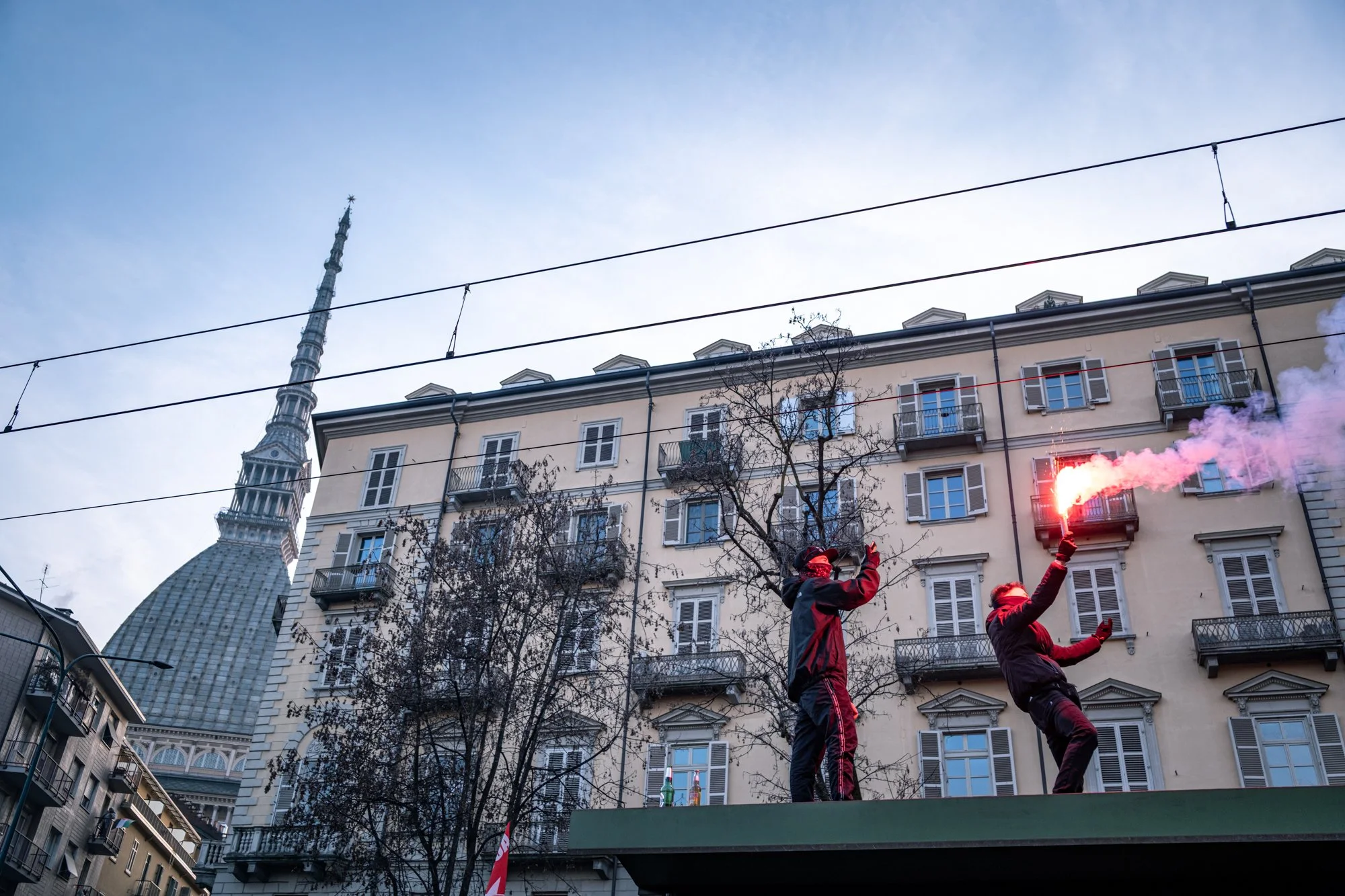
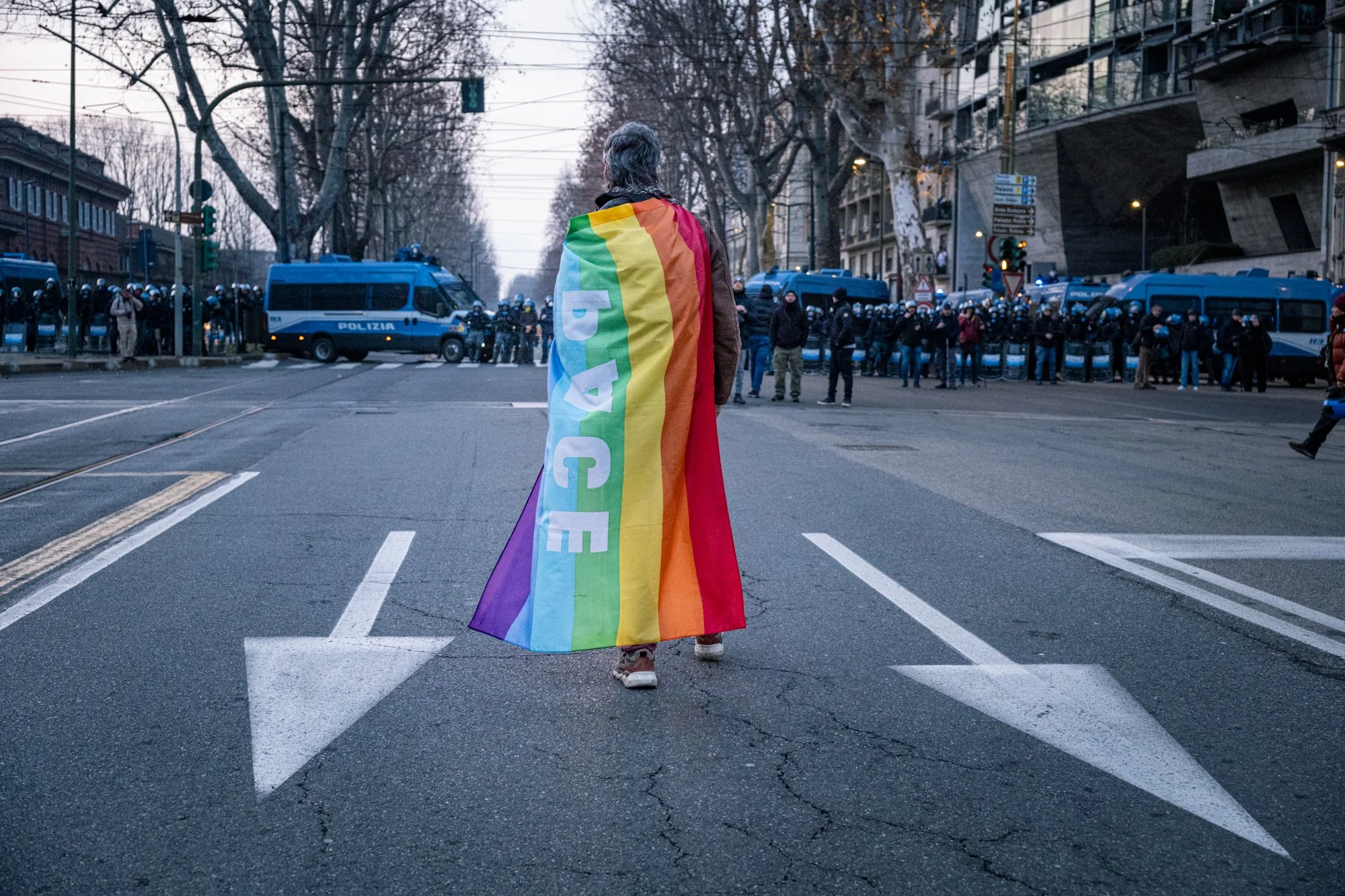
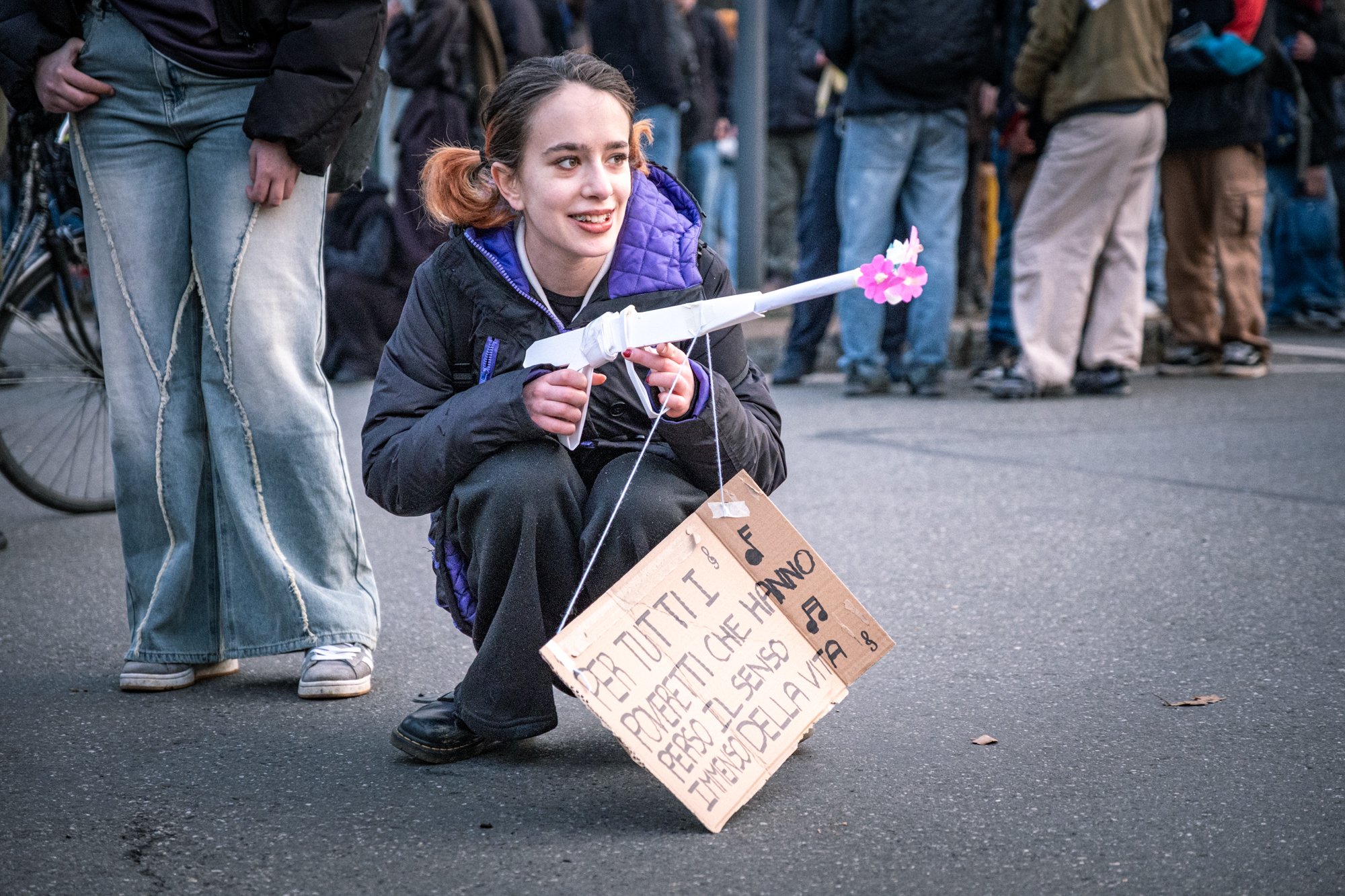
Then, when we reached Askatasuna, something changed.
Dozens and dozens of police officers were deployed in riot gear. Helmets, shields, full protection. Vans occupied the space in front of the building, flanked by heavier vehicles, including trucks equipped with water cannons, those used to spray water at high pressure. The arrangement left no room for doubt: the space was closed, compressed, controlled.
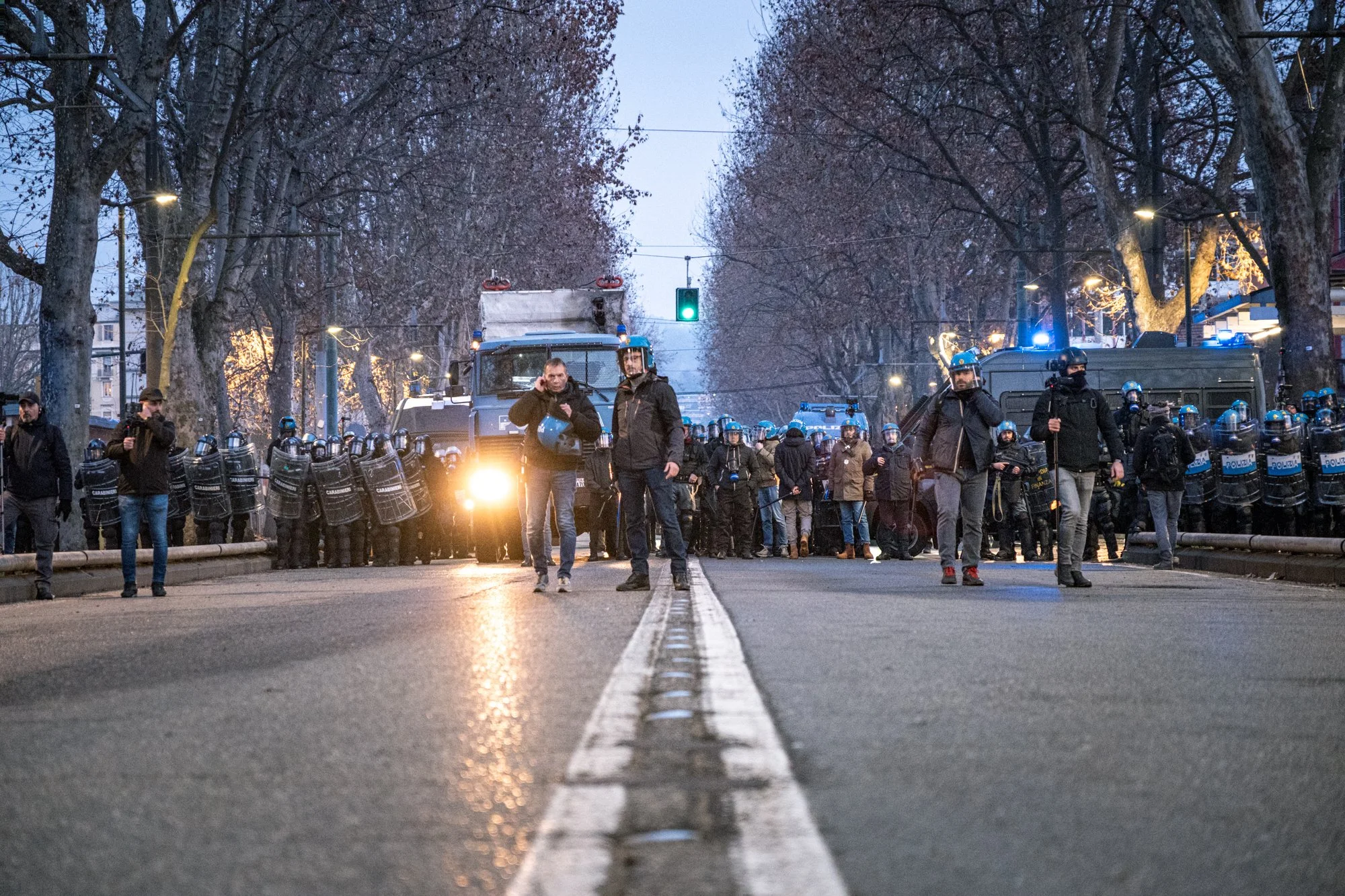
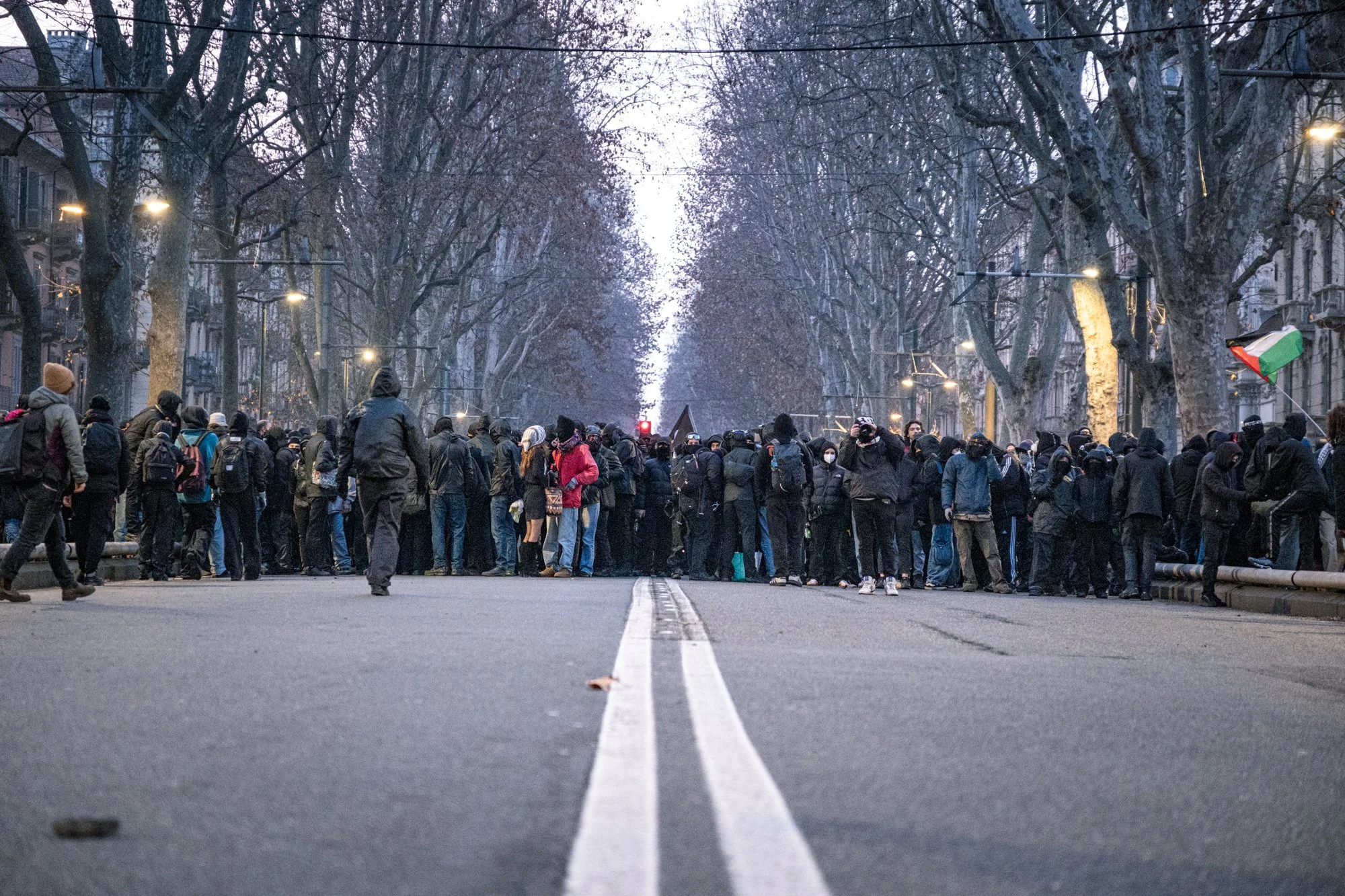
The change wasn't sudden, there was no single recognizable gesture. It was a change of rhythm. A compression of space. A tension that condensed in a few minutes.
Out of nowhere, hooded figures appeared, prepared, organized. They weren't part of the indistinct flow of the march. They were recognizable by their posture, movements, equipment. They had shields, helmets, improvised protection. They moved in a coordinated manner, with a logic that wasn't the spontaneous one of a crowd, but that of small structured groups. They didn't shout slogans, they didn't sing. They advanced.
The mass of the march, much larger and more heterogeneous, didn't even seem to immediately realize what was happening.
I was at the front of the march when it happened. About ten meters from the police cordon.
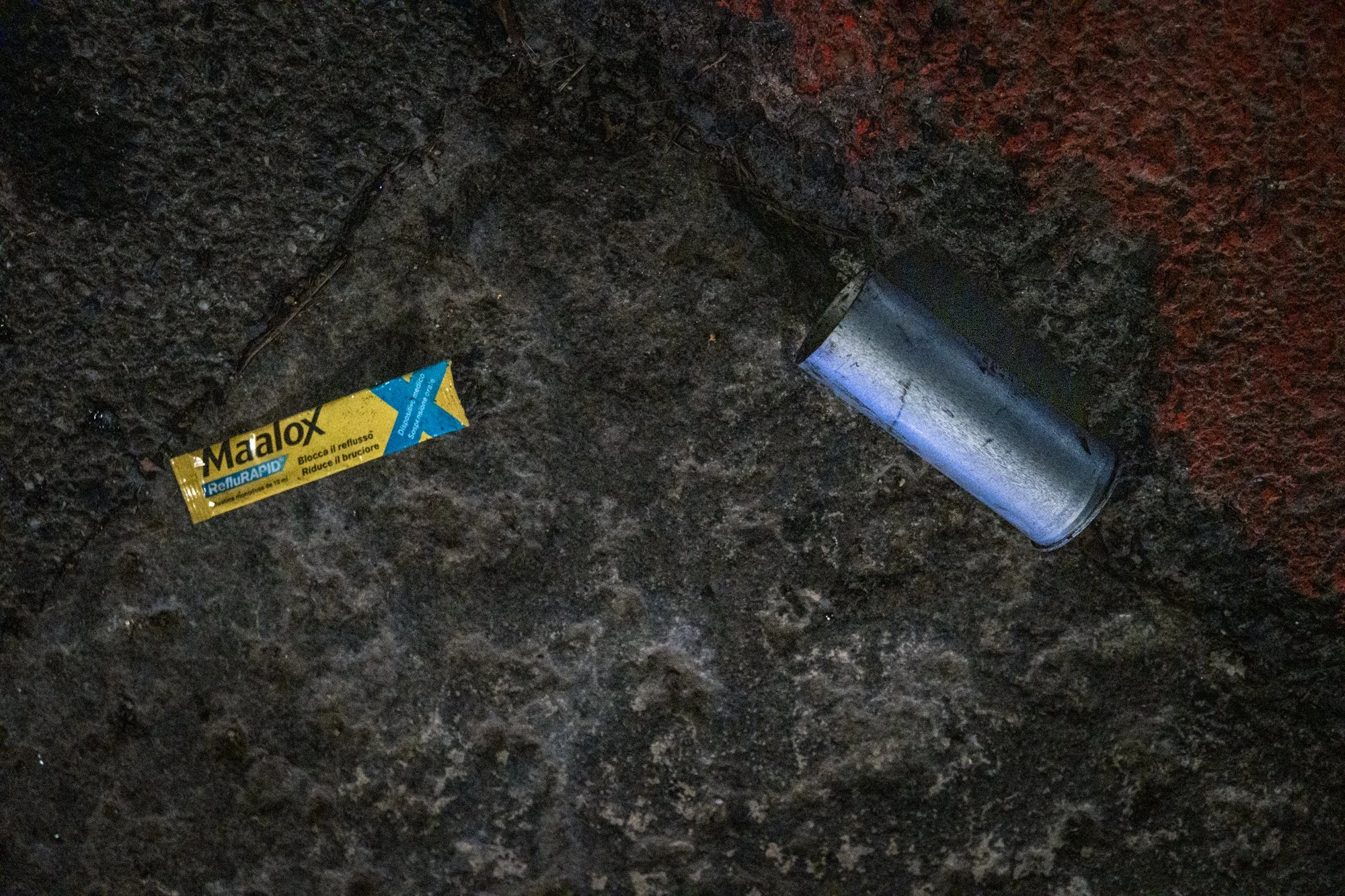
The first firecrackers came from the head of the march. Not one, not two. A dry, hammering rhythm. Immediately after, objects flew towards the police. The response was immediate and total: tear gas. Not a gradual barrier, not containment. Gas. A lot of it. Everywhere.
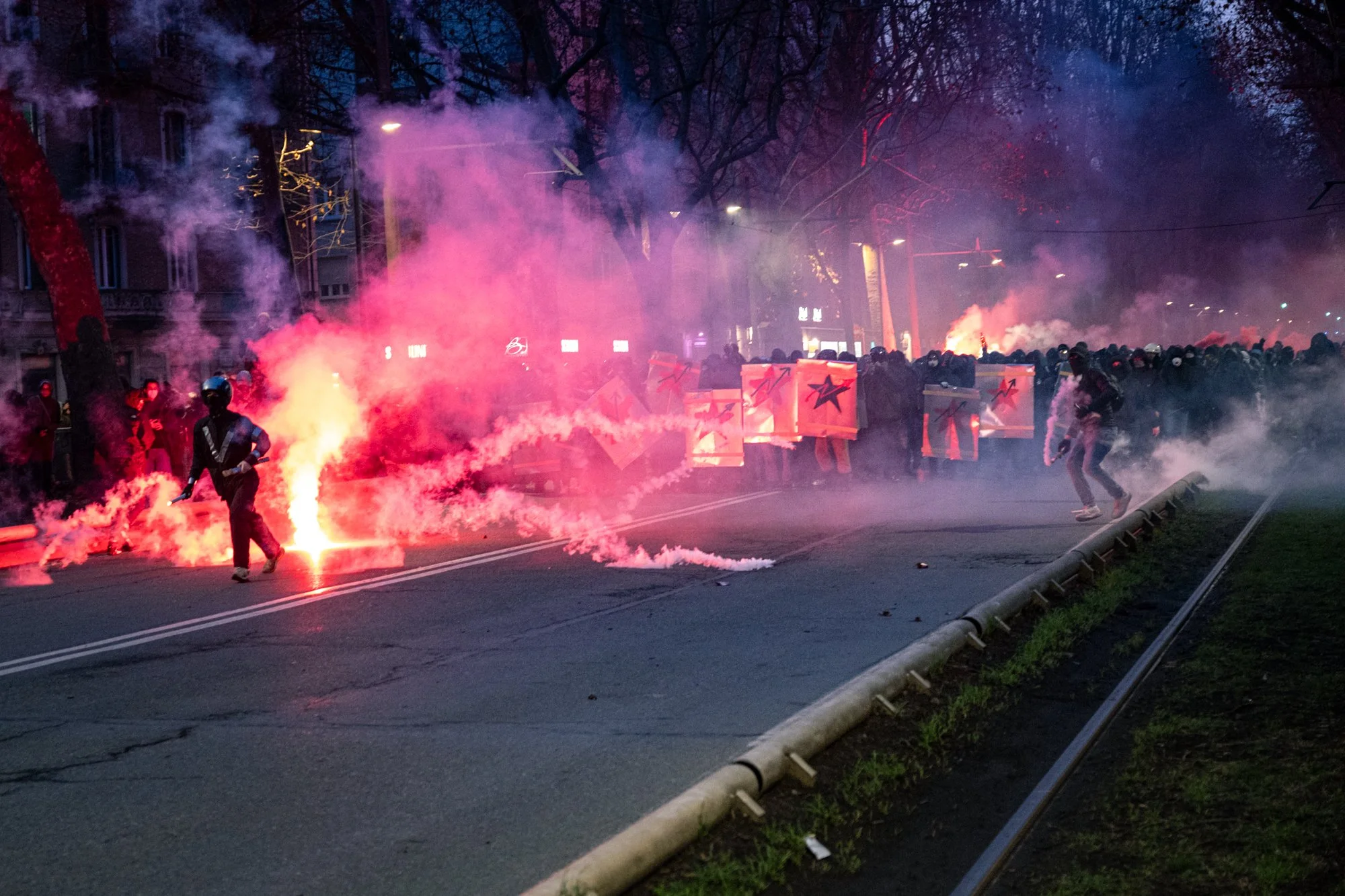
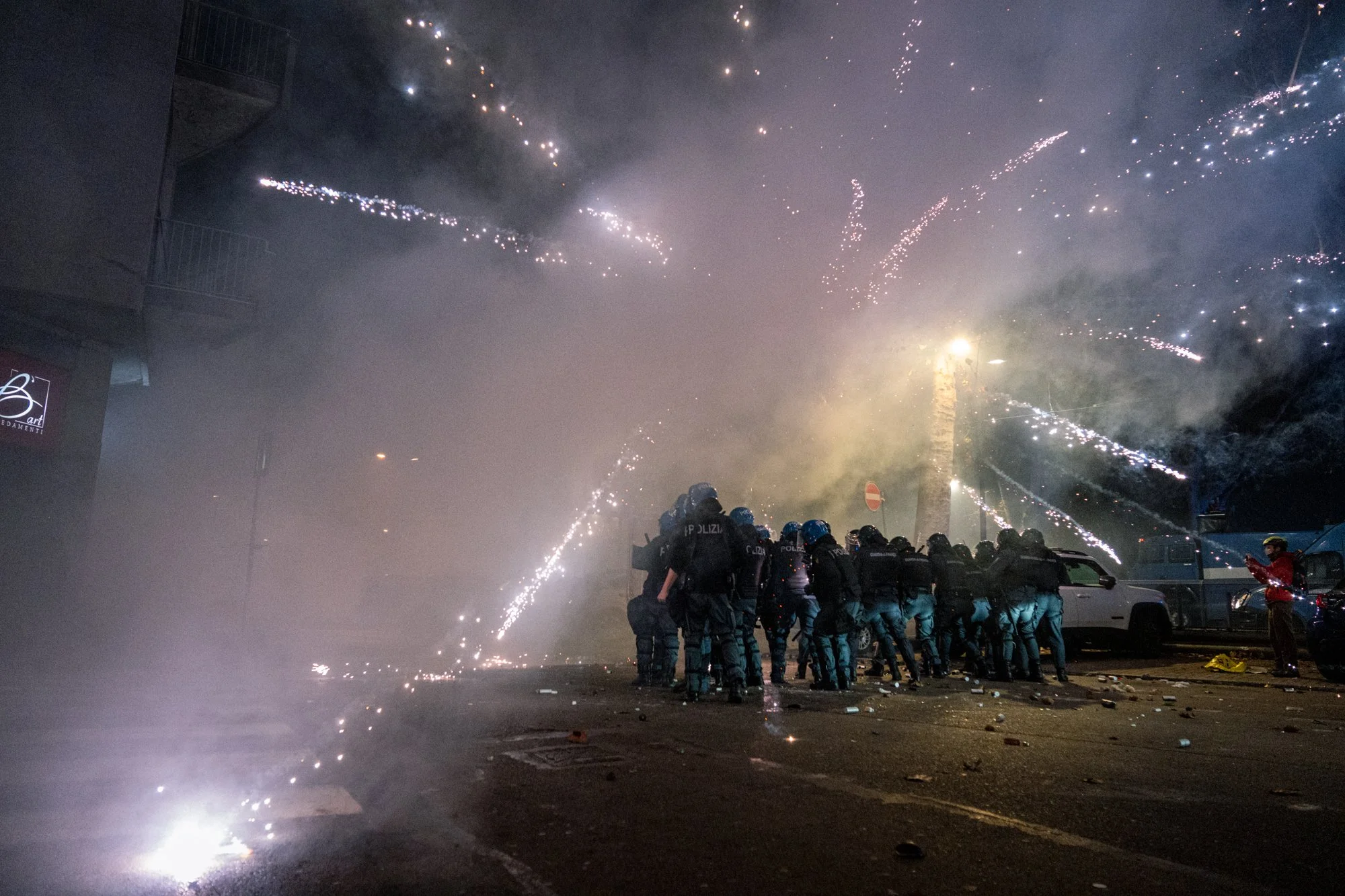
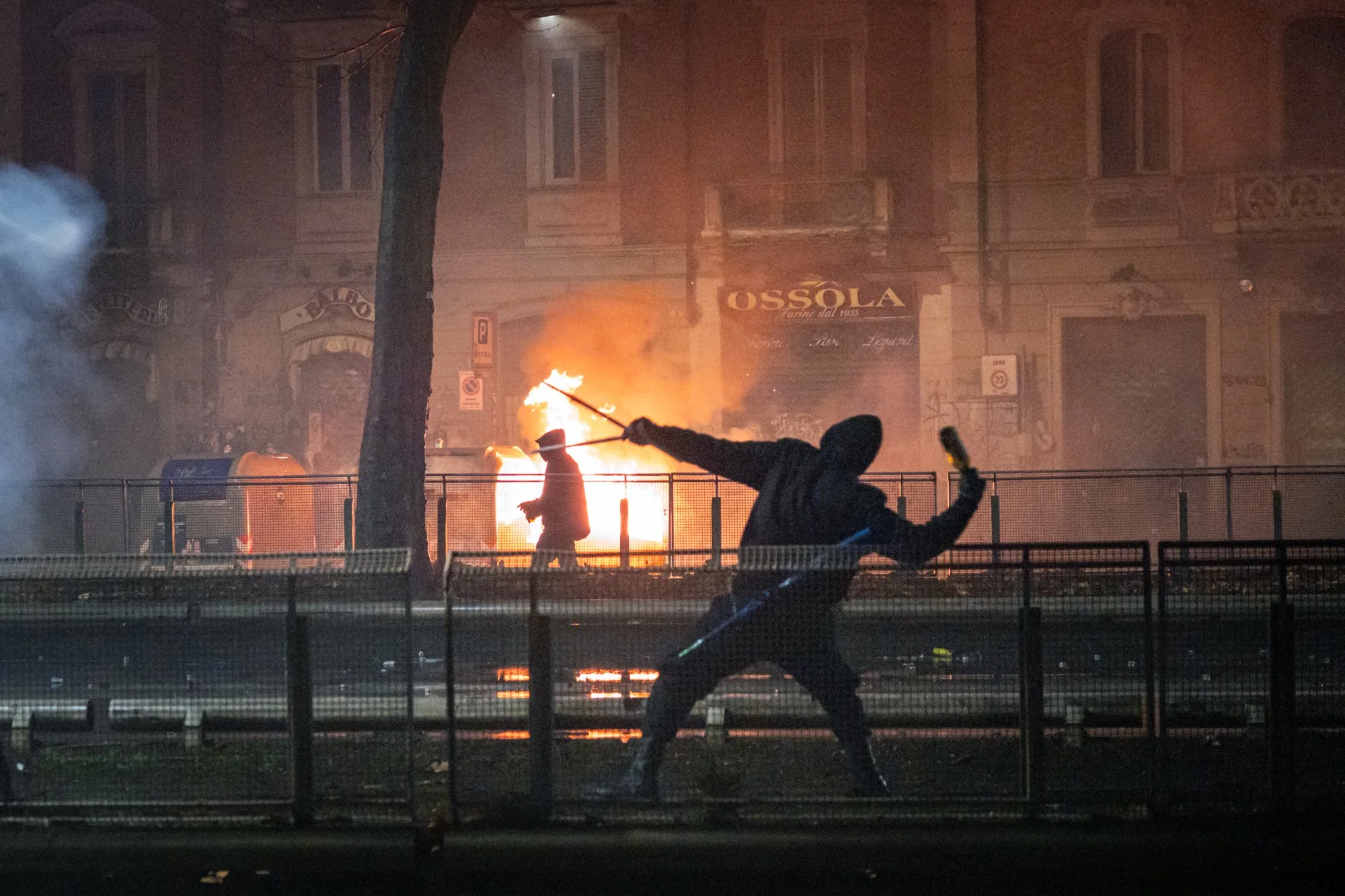
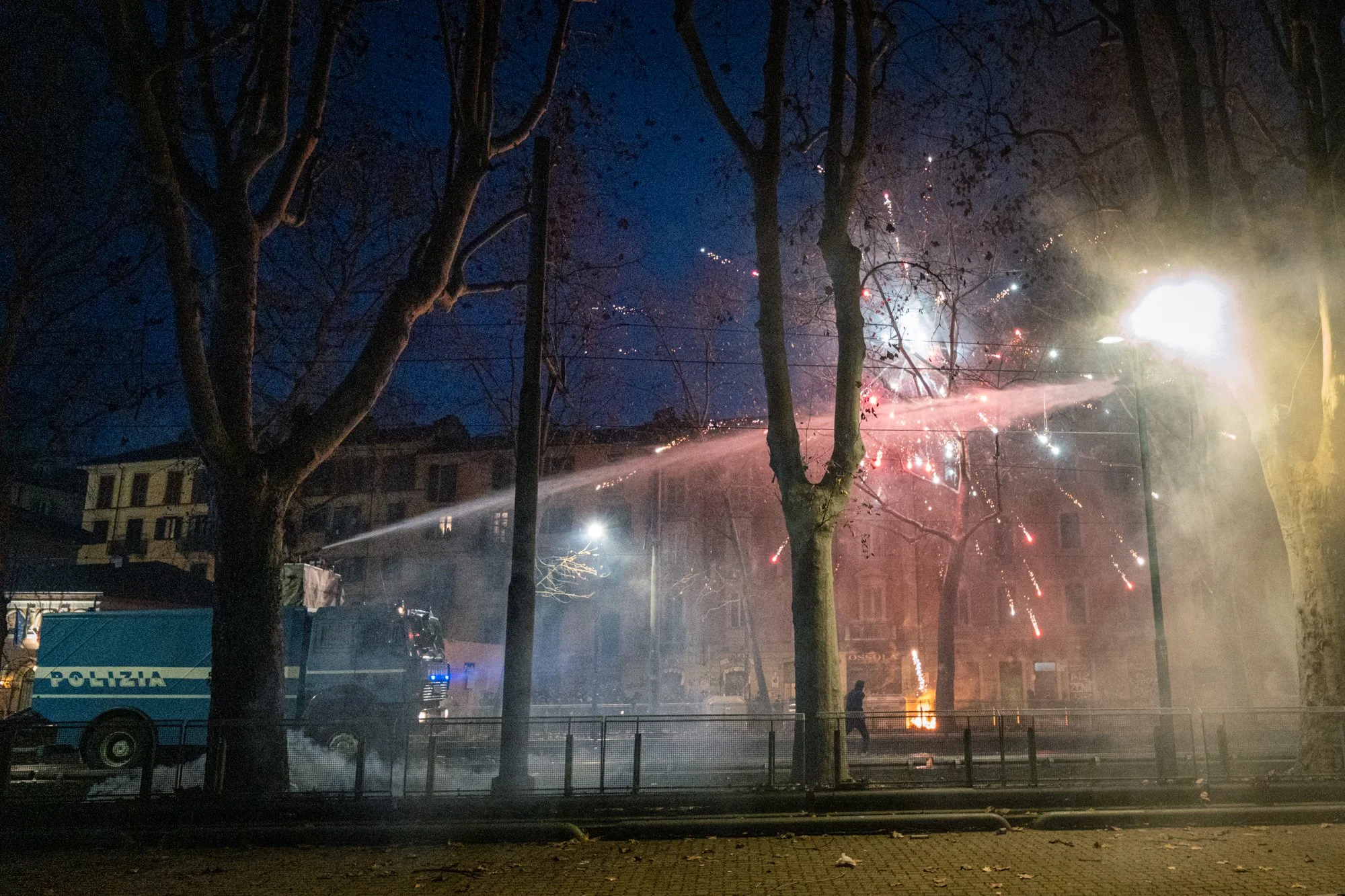
In a few seconds the air collapsed. Breathing became a technical problem, no longer an automatic gesture. Eyes burned, throats closed, chests rebelled. I immediately understood it wasn't a temporary situation. I put on my gas mask, protective goggles, helmet. Mechanical. Cold. Like in other places, in other countries. Except I was in Turin.
The noise was violent, continuous. The explosions of firecrackers bounced off buildings, tear gas hissed through the air and fell everywhere, even into the crowd. Visibility reduced to a few meters. Silhouettes appearing and disappearing in the cloud. Bodies running without knowing where. Screams that no longer had words.
It looked like guerrilla warfare. Not a metaphor. Real urban guerrilla warfare, dirty, confused. A civilian space transformed into a battleground. No clear line, no safe zone. Anyone there without protection was simply exposed.
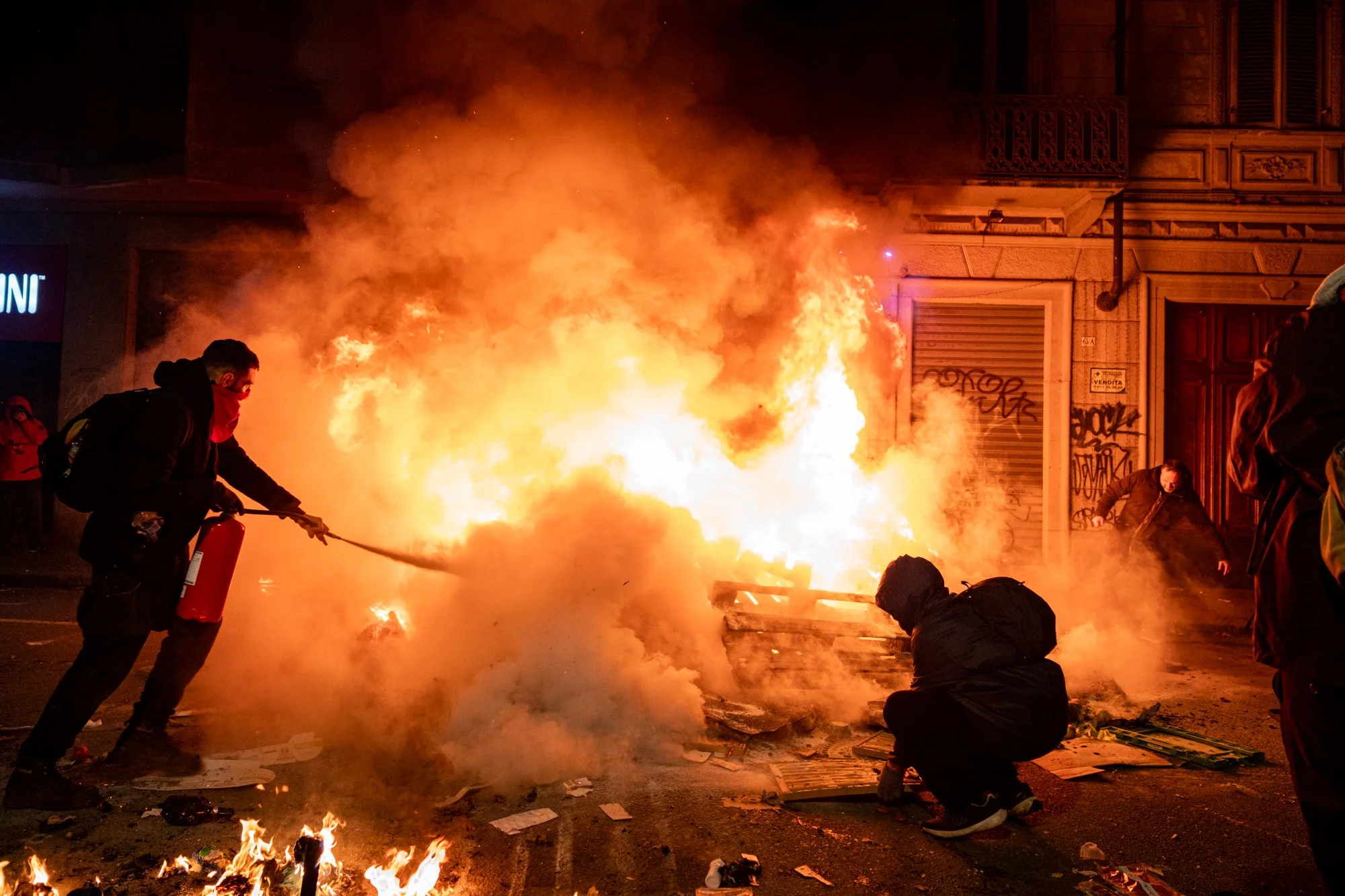
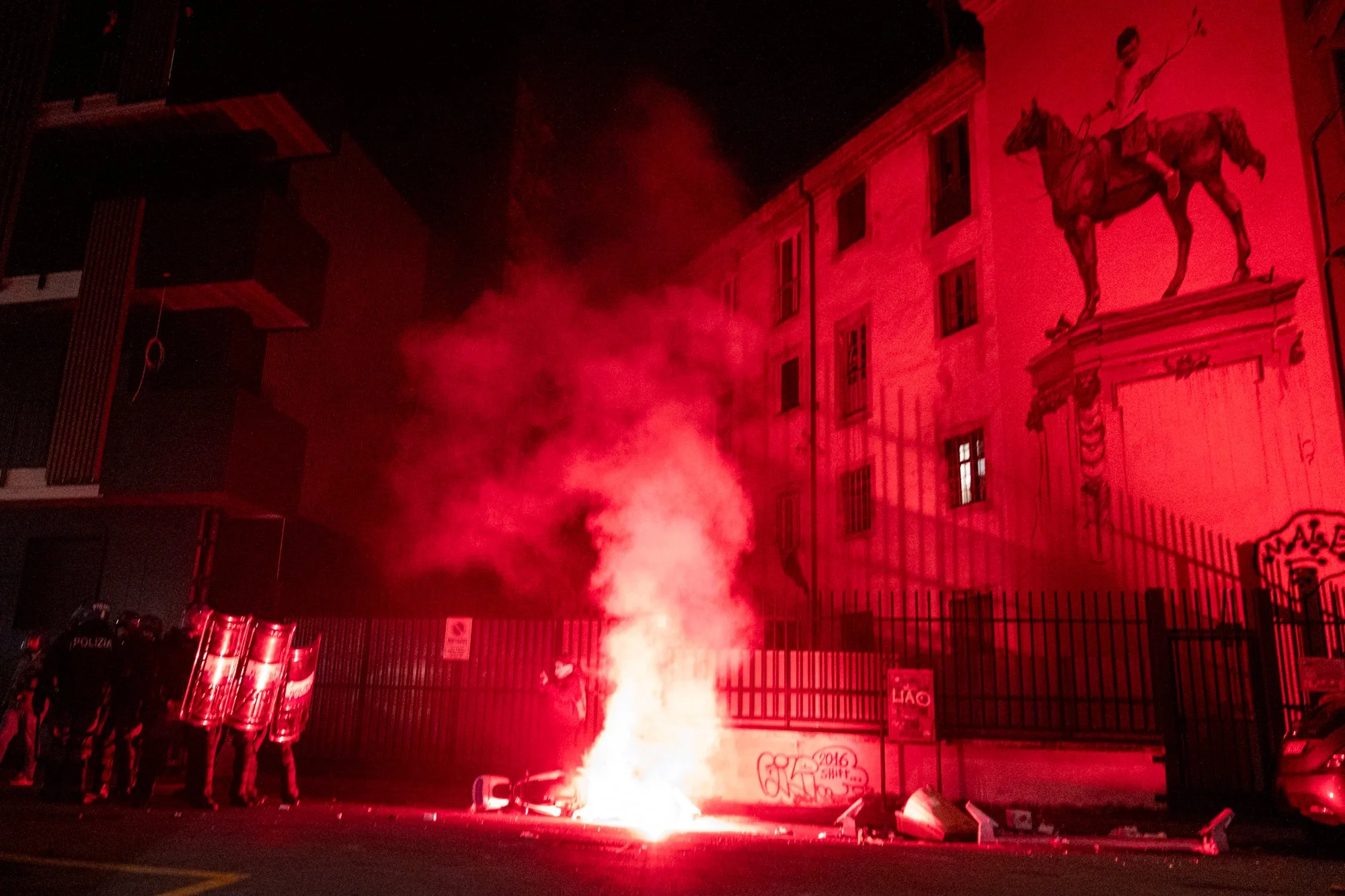
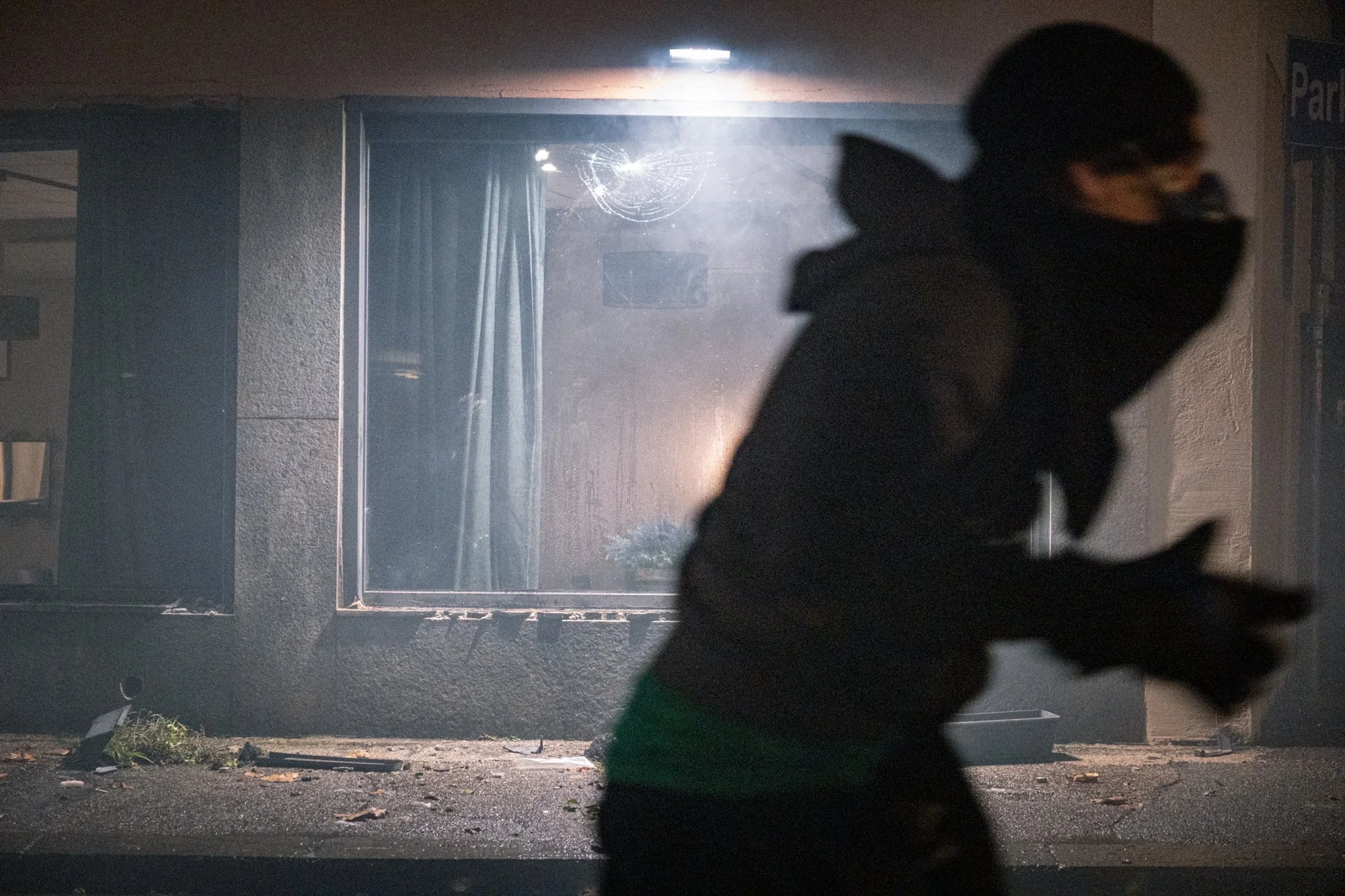
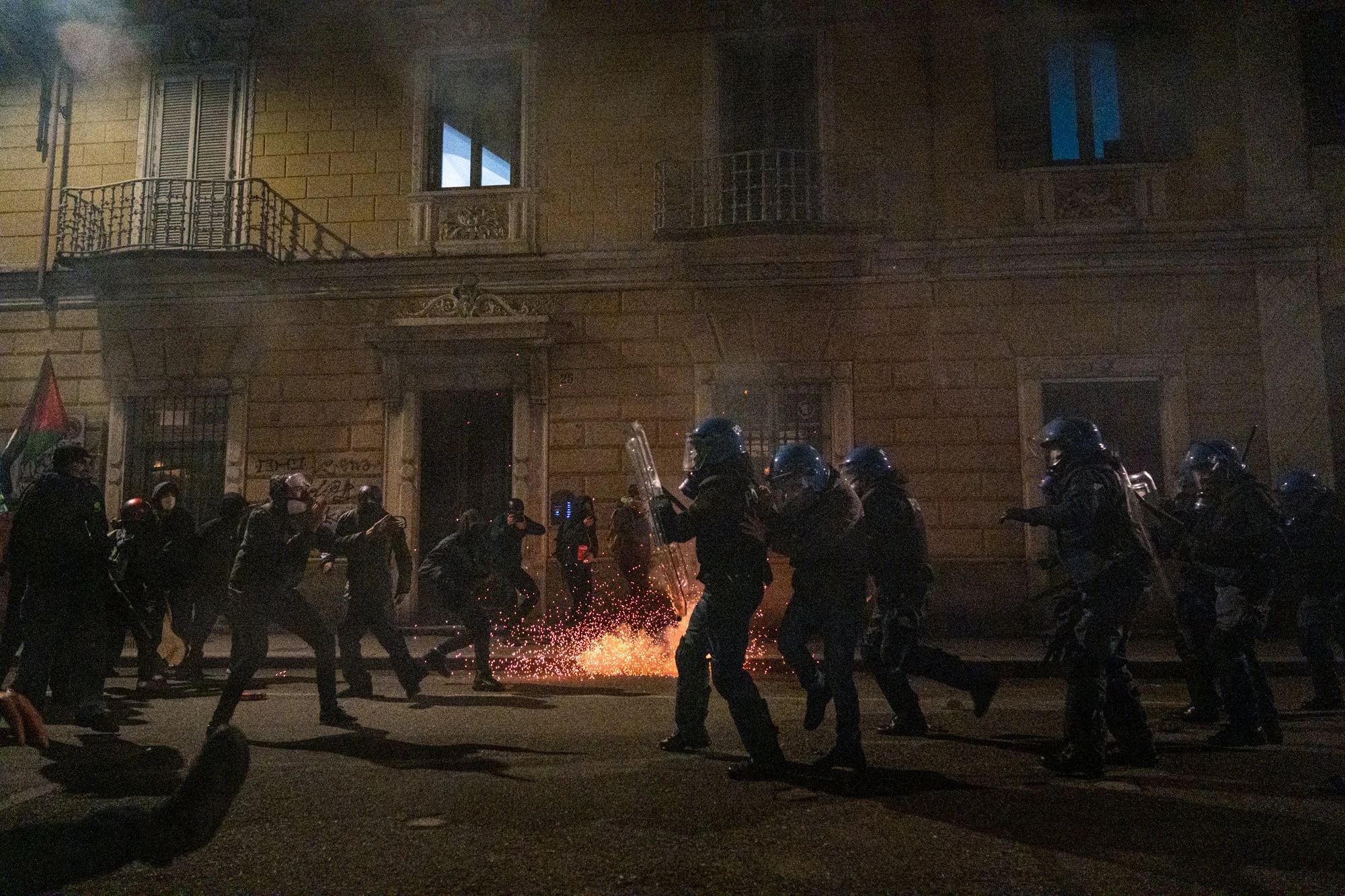
In the blanket of tear gas smoke, fired even at human height, I saw two figures. One was trying to support the other, but couldn't. The movements were uncoordinated, desperate.
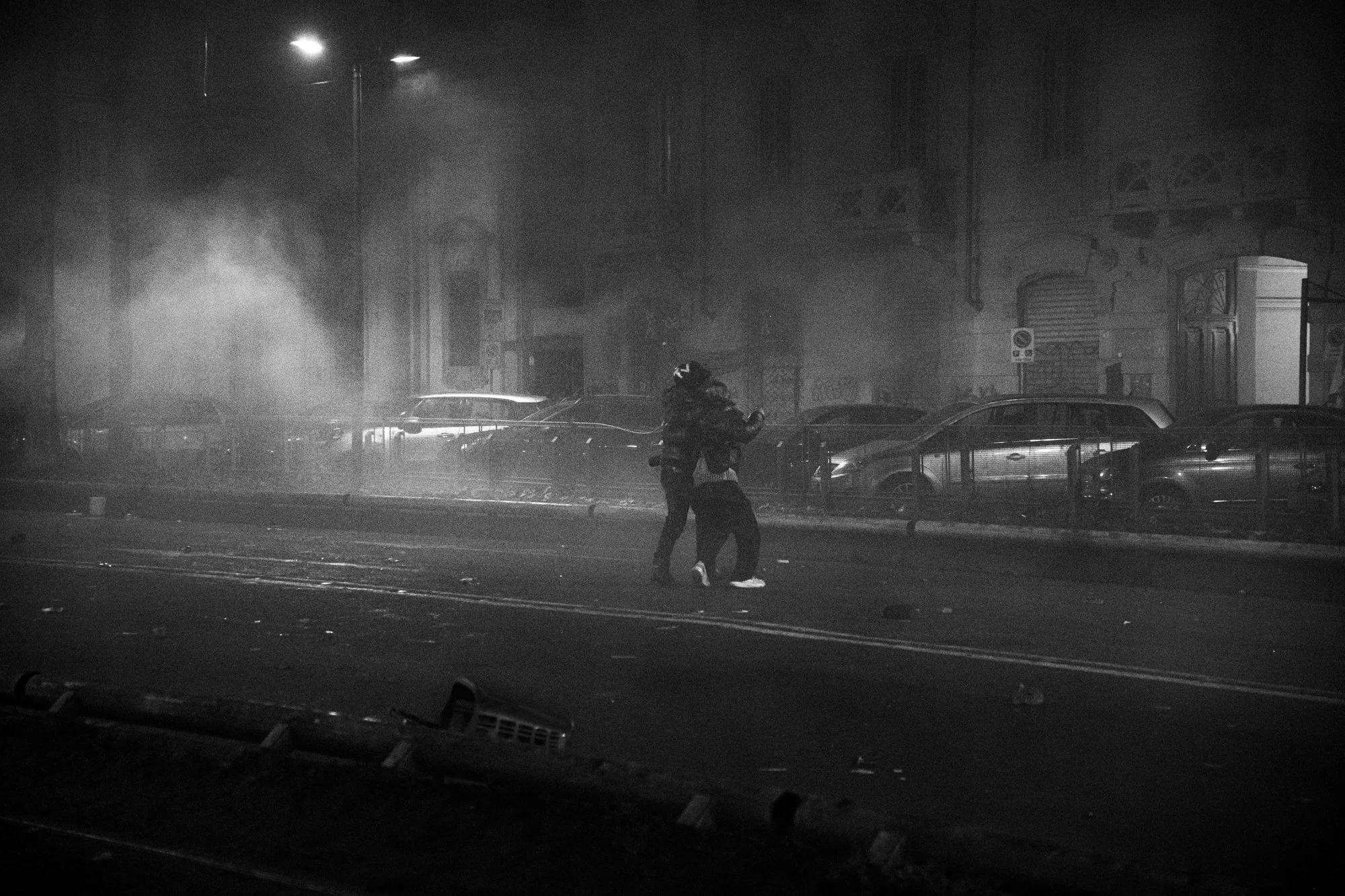
I ran immediately to help, because before being a photographer I'm a human being.
When I reached them I recognized Fabio Bucciarelli,
Fabio surrounded by police. He was supporting an elderly man. His face completely covered in blood. The man wasn't standing. He wasn't lucid. His gaze lost, his body limp, as if he could no longer obey.
I approached immediately. The man was in a confused state, had an obvious head wound. Blood flowed from his forehead, entered his eyes. I started to stanch it, to bandage him, while Fabio kept asking for help. Around us agents, shields, vans. No one really taking charge of the situation.
They told us they had called an ambulance. But I knew that there, in that situation, it could never arrive. The space was completely blocked, closed. No access route. No corridor. No real possibility of rescue.
I told one of the officers that the ambulance would never get there, and asked him to help me carry the man on our shoulders towards the checkpoint near Askatasuna. I thought there would be an ambulance there, or at least one could reach it.
During those meters the man barely spoke. Every now and then he tried to say something, but the words wouldn't come out. His body was heavy, not just from physical weight, but from everything that was happening around us. The clashes continued beside us, smoke bombs, objects being thrown.
When we arrived at the checkpoint we met an officer who introduced herself as a nurse. The man was made to sit at the tram stop and entrusted to her care. At that moment I thought I had done the right thing. That I had handed him over to someone who would take care of him.
This is the footage of what happened, recorded with my GoPro while everything was unfolding.
The next day I saw the video whereyou can see two police officers who, after we rescued the man, lay the man down and leave him on the ground, behind a tree. Alone. Wounded. Immobilized. Like an object to be moved out of the frame.
I felt anger. And I felt guilt.
You don't leave an injured person on the ground. Never. In any context. In any country.
I entrusted him to them. And seeing him treated like that hurt me. Because in that gesture there isn't just negligence. There's the normalization of violence. The idea that an injured body can be set aside, hidden, forgotten.
And that's what, more than anything else, I can't shake off.
I didn't expect to see this violence in Turin. And I don't say this naively. I say it as someone who has worked for years in contexts where the State no longer exists, or exists only in the form of armed force. I say it as someone who has seen what happens when power stops recognizing bodies as people.
What I saw on January 31 wasn't an "incident," nor a simple degeneration of the square. It was the effect of a precise political choice: to treat dissent as a public order problem, and people as obstacles to be managed. Push, compress, isolate. And then turn away when someone falls.
A State is judged by how it protects the most vulnerable, not by how it represses those who protest. And when a State accepts that an injured elderly person is left on the ground, behind a tree, then it has already crossed a line.
Violence isn't just the blow. It's also abandonment. It's normalization. It's the idea that all this is acceptable, as long as it happens away from the right eyes.
I've seen these scenes in war zones. I recognized them immediately. And it's precisely for this reason that I cannot accept them here. Not in Turin. Not in Italy. Not in a State that continues to define itself as democratic while it restricts, represses, and dehumanizes.
What happened on January 31 isn't a parenthesis. It's a signal.
And ignoring it, today, means accepting that tomorrow it becomes the norm.