Jin, Jiyan, Azadî
It is a Kurdish slogan that means “Woman, Life, Freedom.”
Three simple words that, over the years, have become the heart of the Kurdish movement, and especially of the fighters of the YPJ, the Women’s Protection Units. It is not only a political slogan. It is a vision of the world: the idea that the freedom of a society begins with the freedom of women.
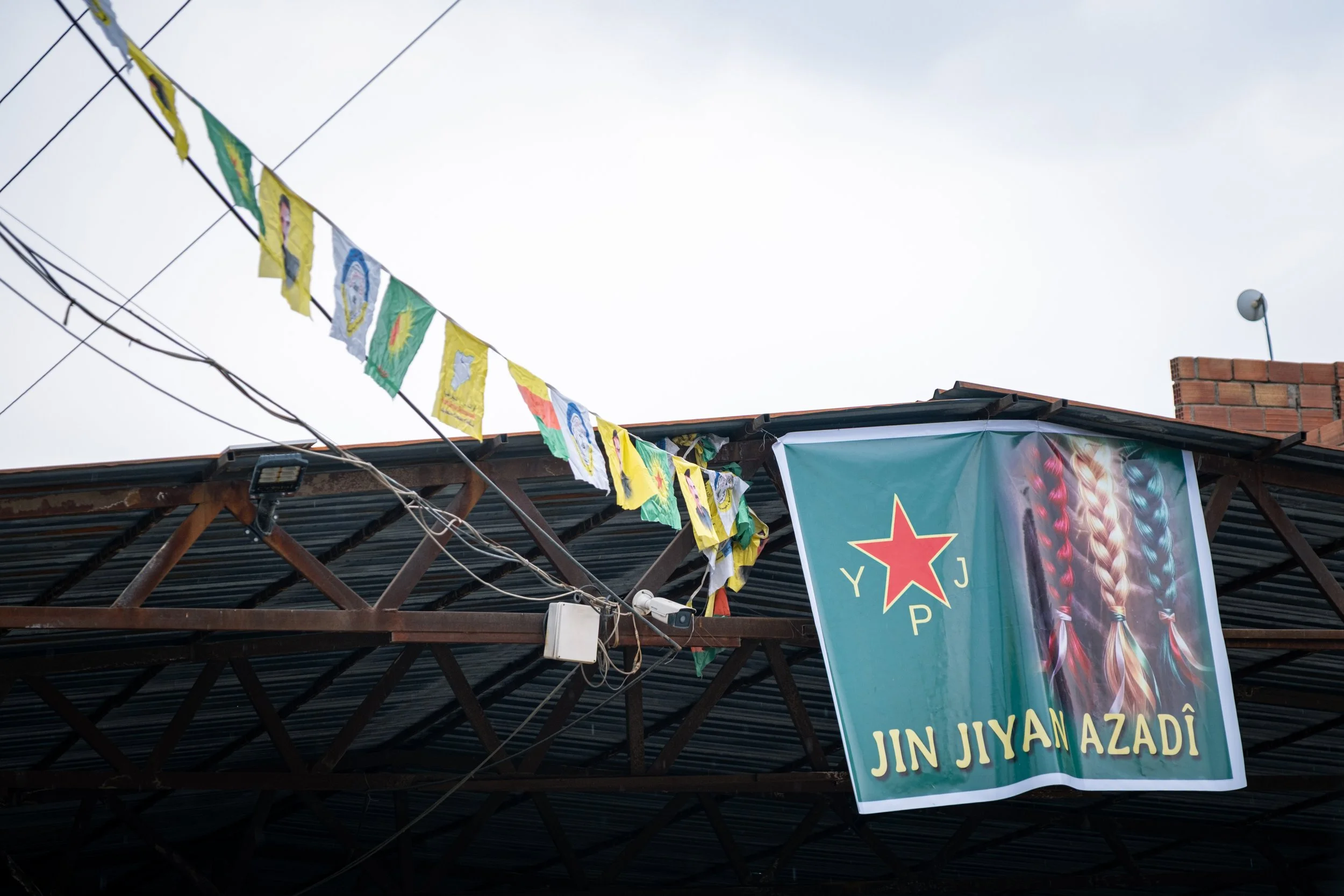
On the hills of Rojava these words are not written on walls or banners. They live in people. The wind moves slowly across the hills of Rojava.
Large dark rocks emerge from the grass like ancient bones. The sky is low, heavy with fog, and the valley below us opens toward a river that draws wide curves through the fields.
This is where we meet them.
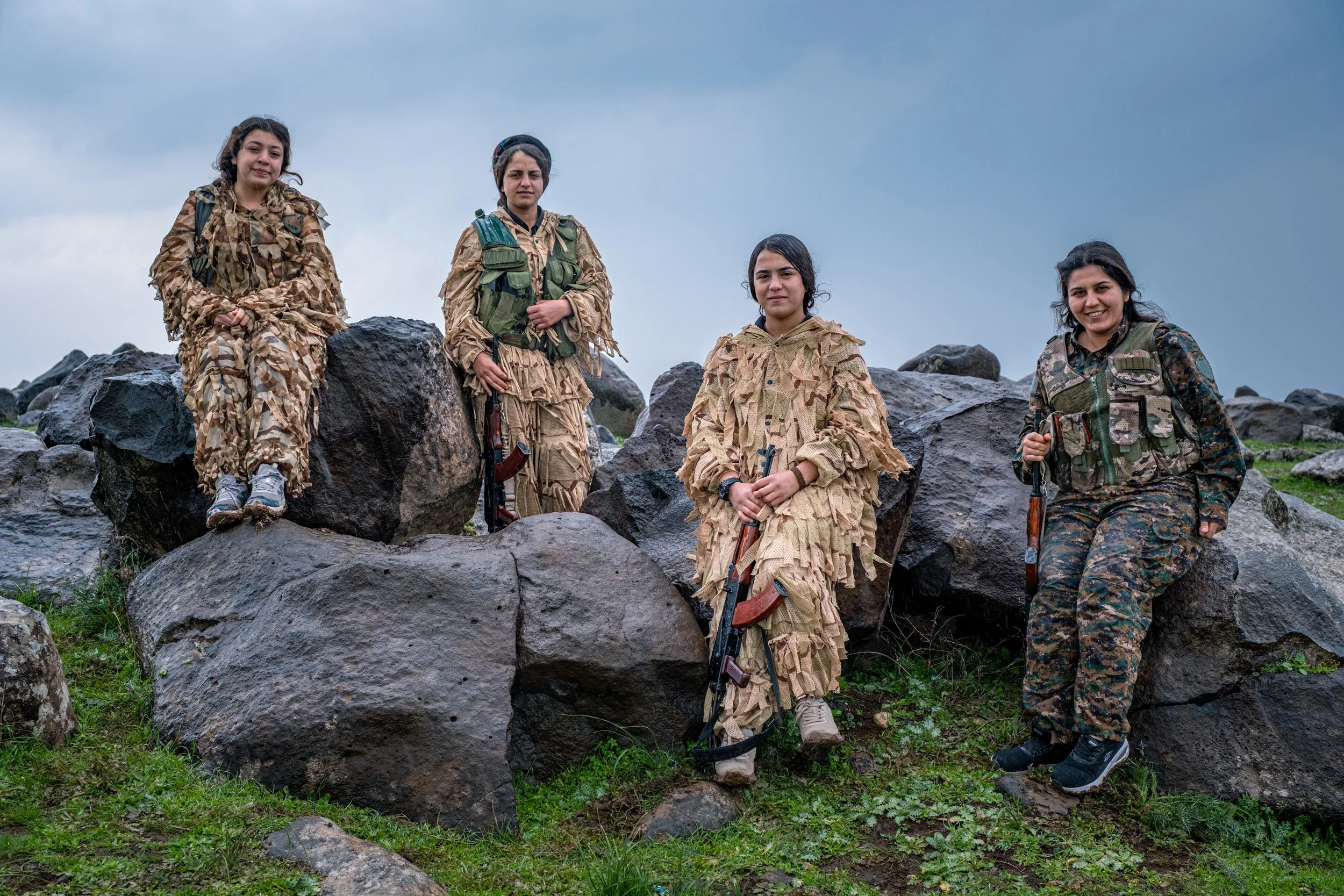
Four young women sitting on the stones, rifles resting on their knees.They are fighters of the YPJ, the Women's Protection Units, one of the Kurdish forces that emerged during the war in northern Syria.
From afar they are often turned into symbols. Posters, flags, stories of revolution, but when you stand in front of them, the reality is much more human.
They are young. Much younger than you would expect.
One of them is fifteen. Her name is Ezel.
She says she wants to become a sniper. She doesn't say it with arrogance, nor as a challenge. She says it with the calm of someone speaking about something she has already decided.
What she really wants, she explains, is to grow up in a city where people can live freely.
Her family did not want her to join the YPG. They know what war means. They know she could die.
But in the end, they accepted her decision.
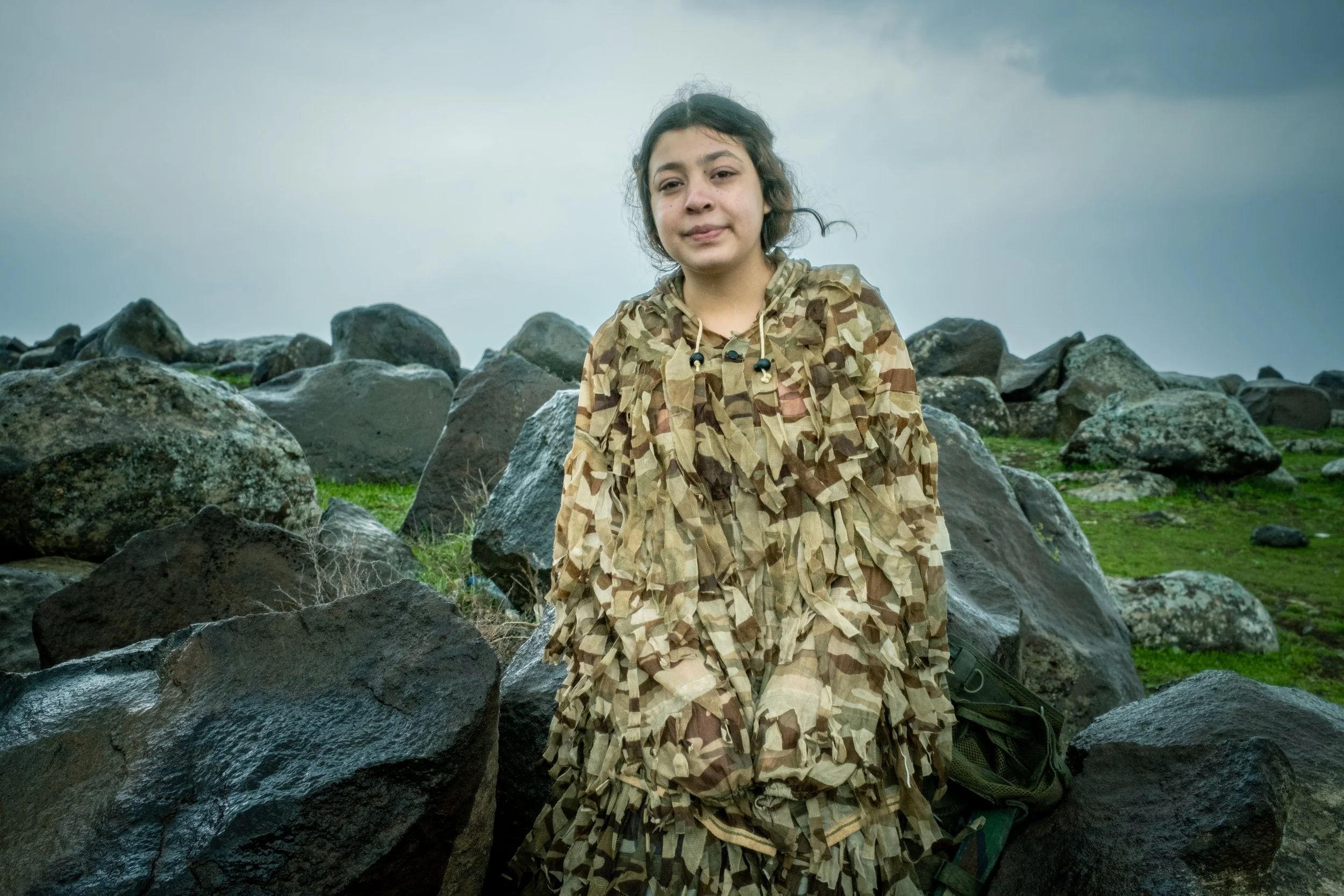
Ezel
Another fighter introduces herself as Kunal. She is eighteen and originally from Afrin, a city many Kurds were forced to leave during the conflict. She has a bright smile and talks about music before she talks about war. She likes the guitar. In another life, she says, she would probably spend her days learning how to play it.
Here she learned something different. She learned how to fight.
Her brothers and sisters are also in the YPG. For them, war is not an abstract concept or a newspaper headline, but a condition that runs through everyday life.
“We must fight to be free.”
She does not say it like a slogan, she says it like a fact.
Kunal
Then there is Chavari, twenty-four years old. She joined the YPG when she was eighteen, for the same reason that often returns in their stories: the freedom of her land. She remembers perfectly the first time she fired a weapon, she was afraid. Her hands were shaking, her heart beating too fast, the sound of the shot louder than she expected. War was not something she had grown up preparing for.
Now, she says, it has become normal.
She says it without pride. Without rhetoric. As if she were describing a change that life slowly forces you to accept.
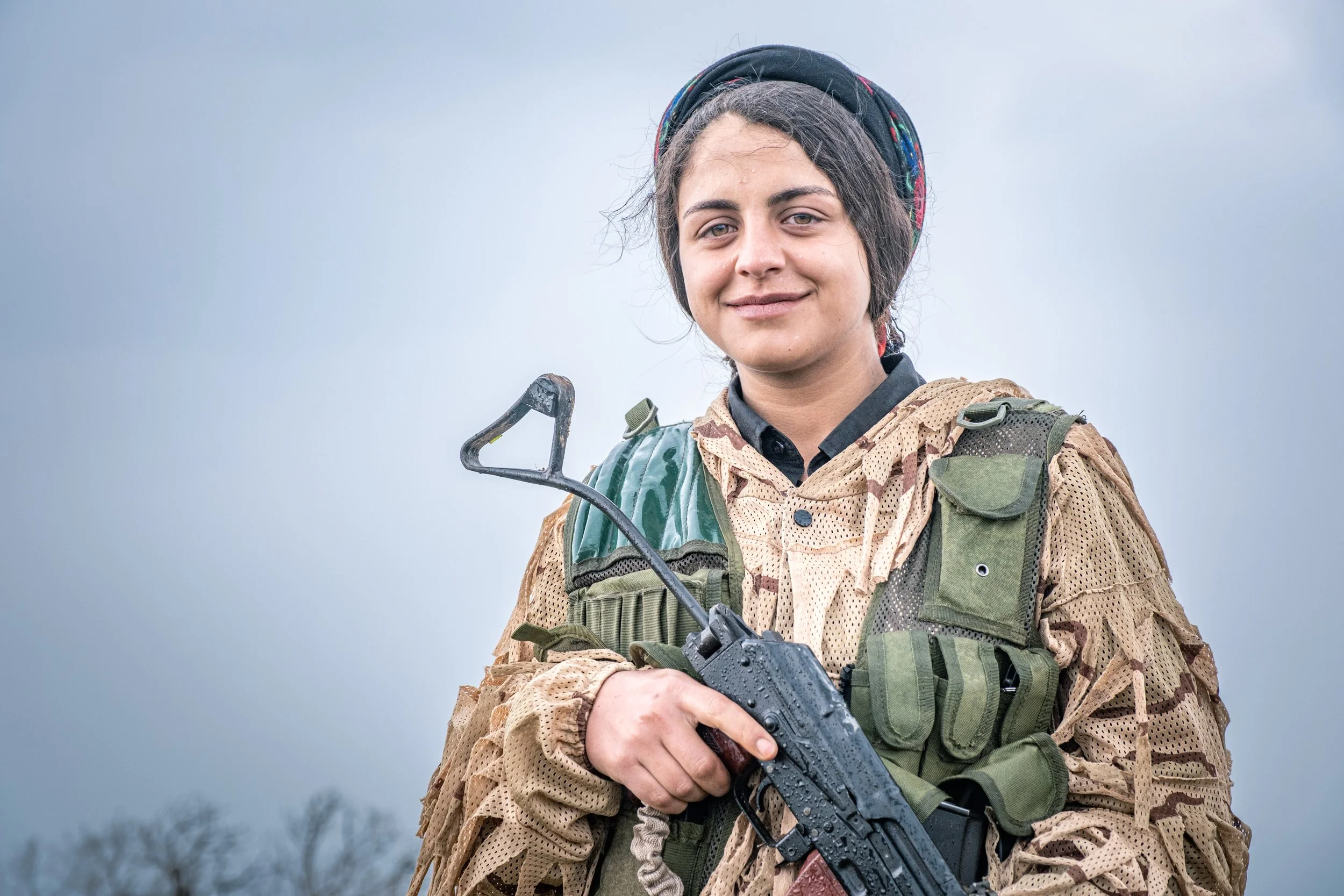
Chavari
The last fighter I speak with is called Berît. She is twenty-one.
She says she is here to protect women. Not only physically, but also to show that women can defend themselves, can fight, can protect their land. She likes playing volleyball but her dream is to see her land free.
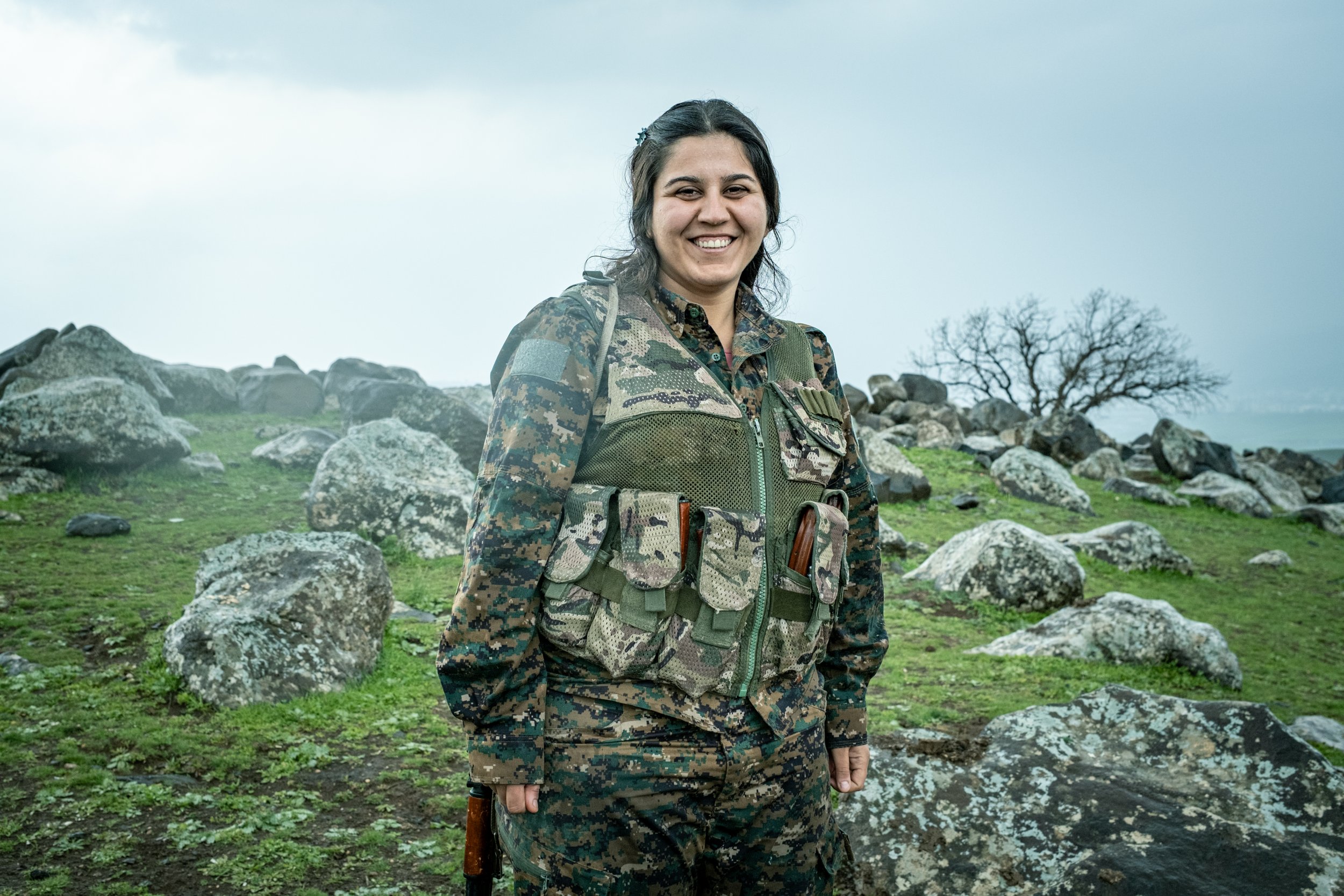
Berît
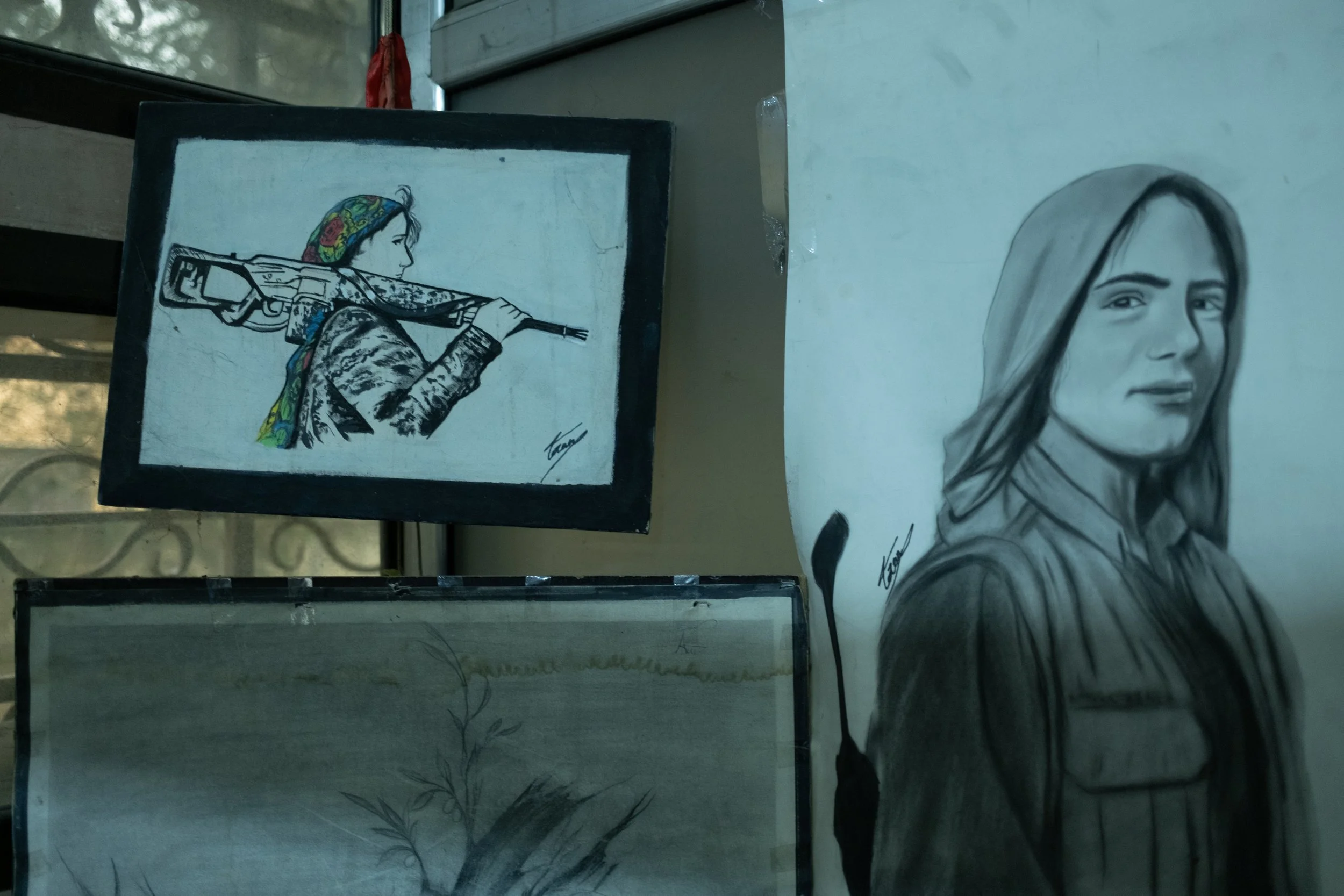
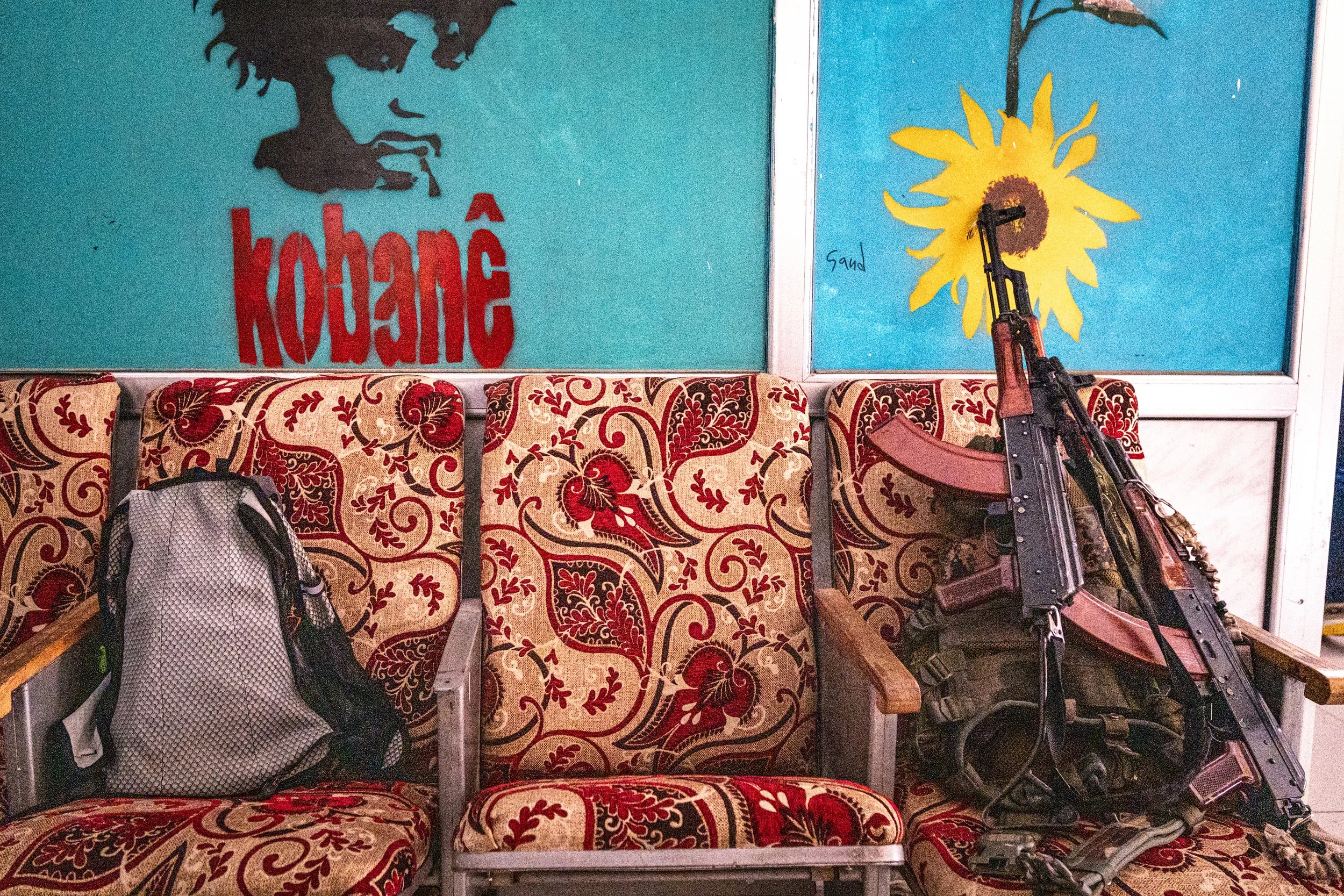
Later we enter a small room where they offer us tea. The Kalashnikovs are leaned against the chairs next to backpacks. On the walls there are drawings, posters from the battle of Kobane, portraits of fighters who died.
Memory is everywhere here. The war against ISIS, the battles to defend these lands, the resistance of Kobane. For those who live here these are not distant episodes of recent history.
They are names.
Friends.
Sisters.
Daughters.


When we step back outside onto the hills, the fog has grown thicker.
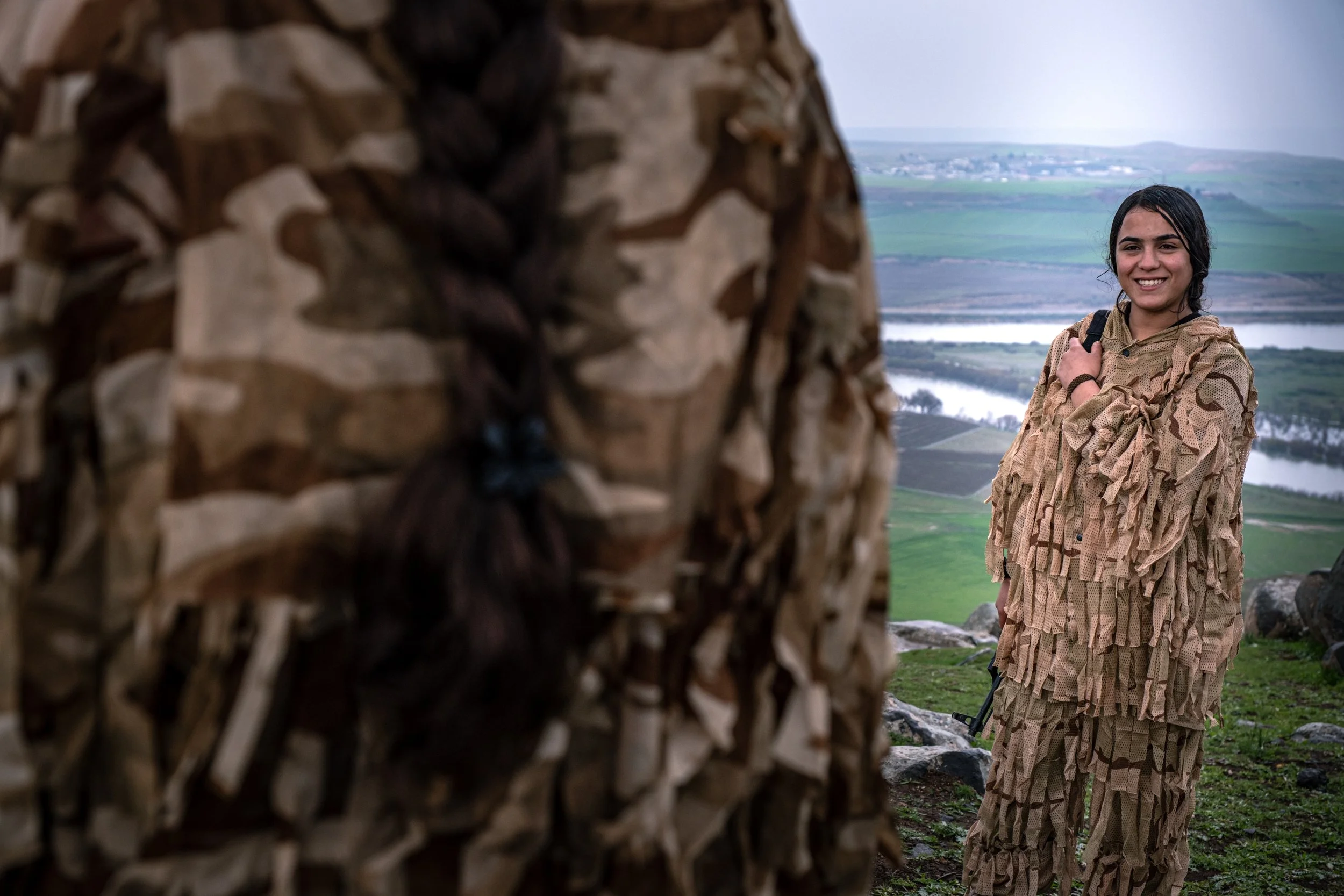
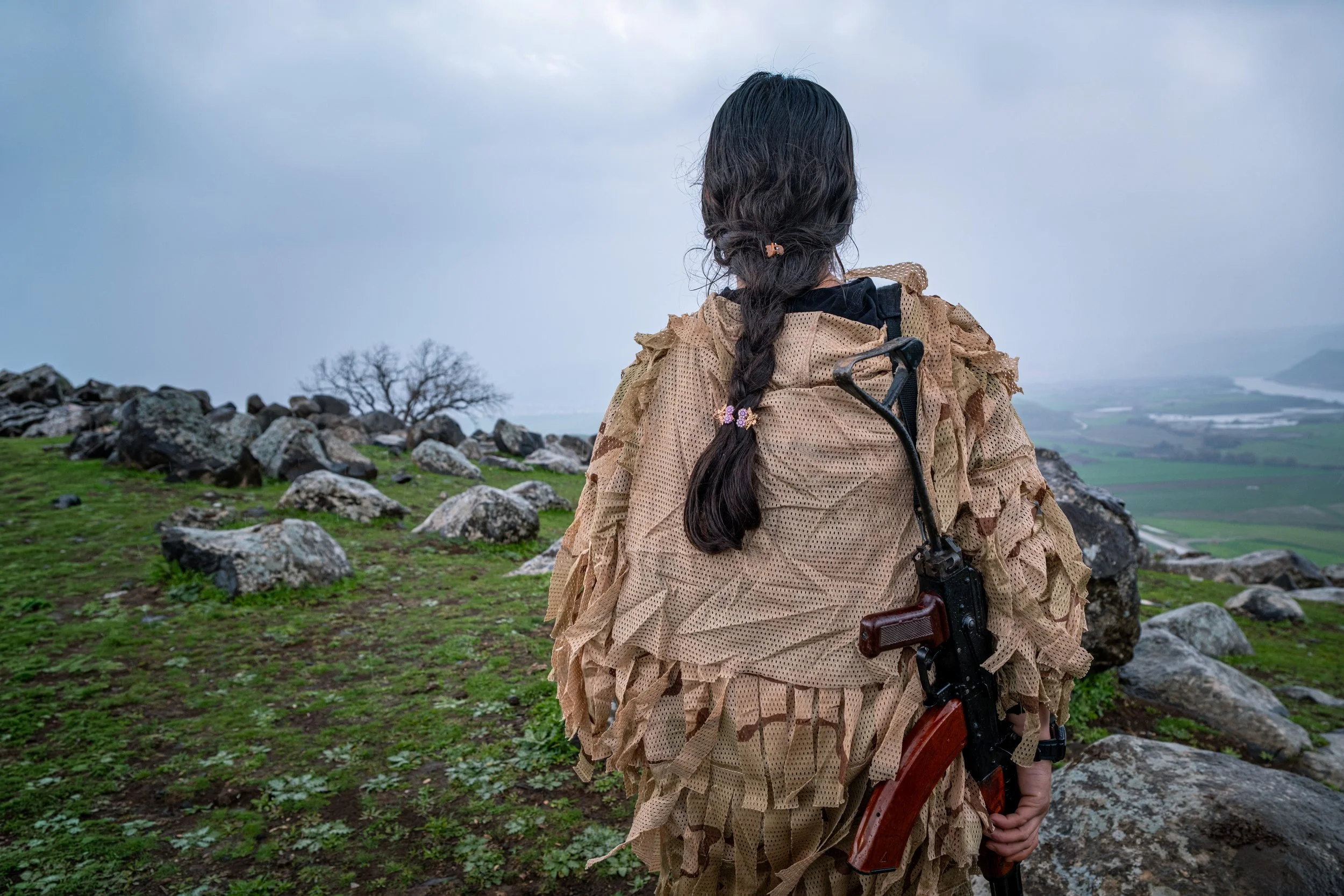
One of the fighters walks a few steps away from the group and looks out over the valley. Her dark braid falls down her back, the camouflage moving slightly in the wind.
For a moment the image becomes almost silent.
A girl on a hill.
A river in the distance.
A rifle hanging from her shoulder.
An image that contains two different lives.
The one she might have lived.
And the one history forced upon her.
From the outside, the YPJ are often described as a revolutionary symbol, a unique phenomenon in the Middle East: women fighting on the front lines, challenging military and social structures.
But here, among the rocks and the fog of these hills, that narrative feels incomplete.
Because before being symbols, they are people.
Young women growing up in a place where the line between adolescence and war disappears too early. Girls who talk about music and volleyball in the same conversation where they describe how they learned to shoot. Girls whose families accept the risk of losing them because the alternative would mean accepting a life without freedom.
This is what I will remember from this meeting.
Not the image of warriors.
But the quiet complexity of their presence.
Four young women sitting on a hill in Rojava, laughing, drinking tea, and holding rifles that weigh far more than their age.
And who, despite everything, continue to dream of something very simple.
Freedom.