Inside the Hospital That Cannot Be Named
Before entering this story, it is important to be clear about what it contains.
Some of the images and descriptions in this text are graphic. They reflect the reality of injuries and medical interventions in a war zone.
They are not included for impact, but because removing them would mean altering what this place actually is.
The hospital exists in a location that cannot be disclosed. Not for narrative effect, for survival. Here, visibility means exposure, and exposure can be lethal. What matters is not where it is, but that it continues to function. That it continues to save lives.
Outside, the russian drones keep striking. One hit just a few meters from us. Inside, day and night lose their meaning.
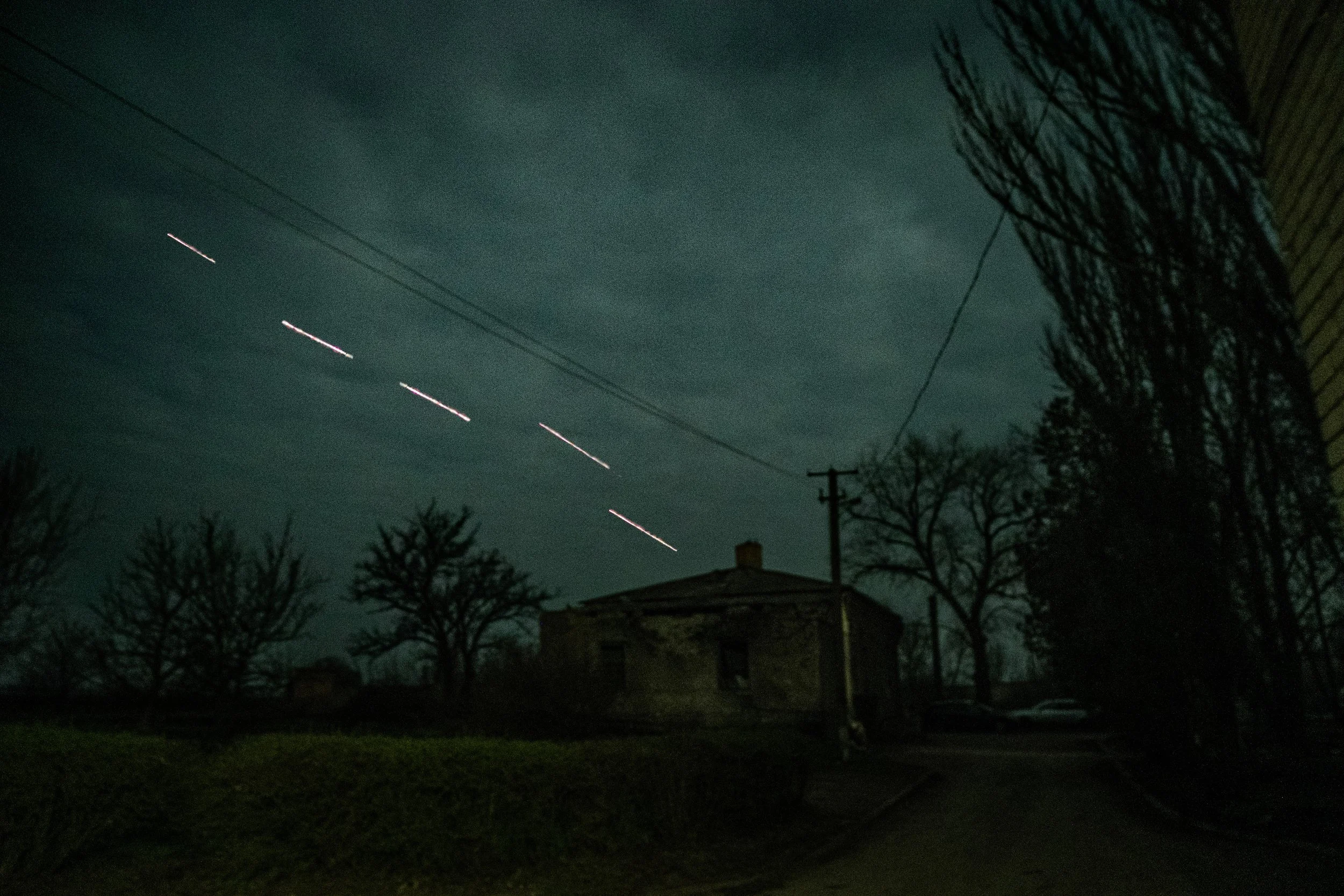
A Ukrainian anti-aircraft unit fires into the night, trying to bring down a Shahed drone
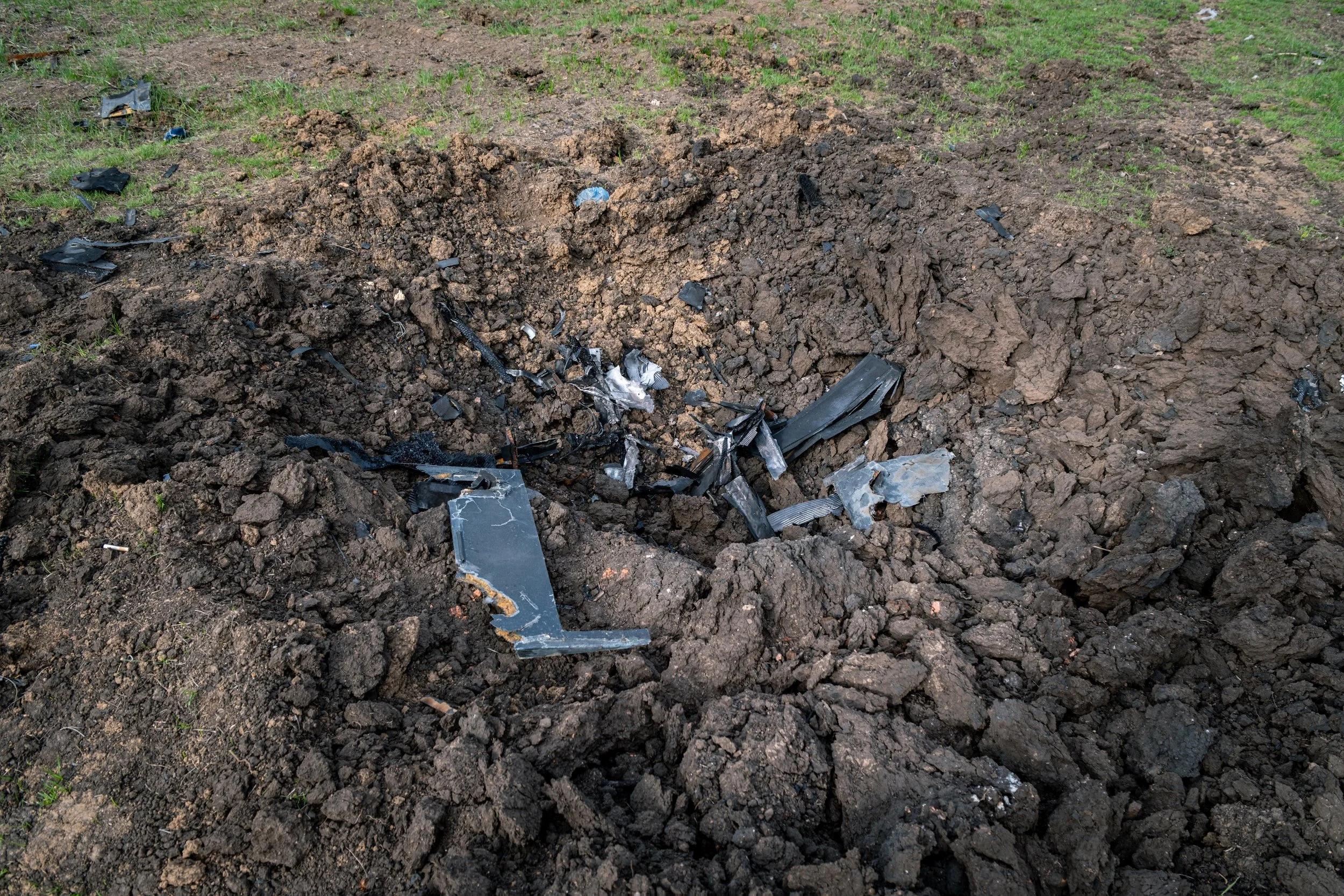
Fragments of a Shahed drone lie scattered in the crater it carved just outside the hospital.
The Rhythm of the War
During the day, there is something resembling normalcy. You rest. You walk a little outside, never too far, always ready to take cover. You wait.
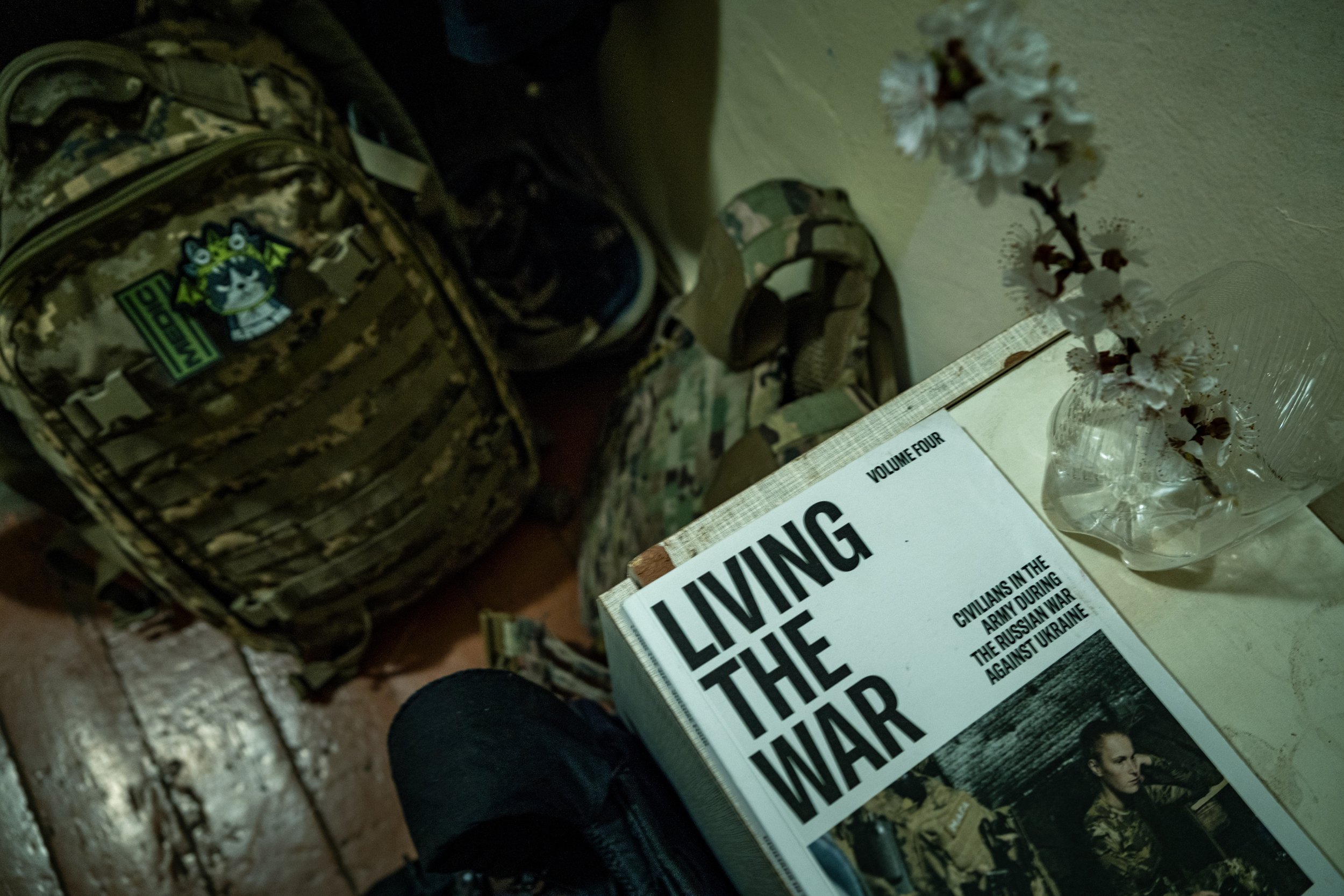
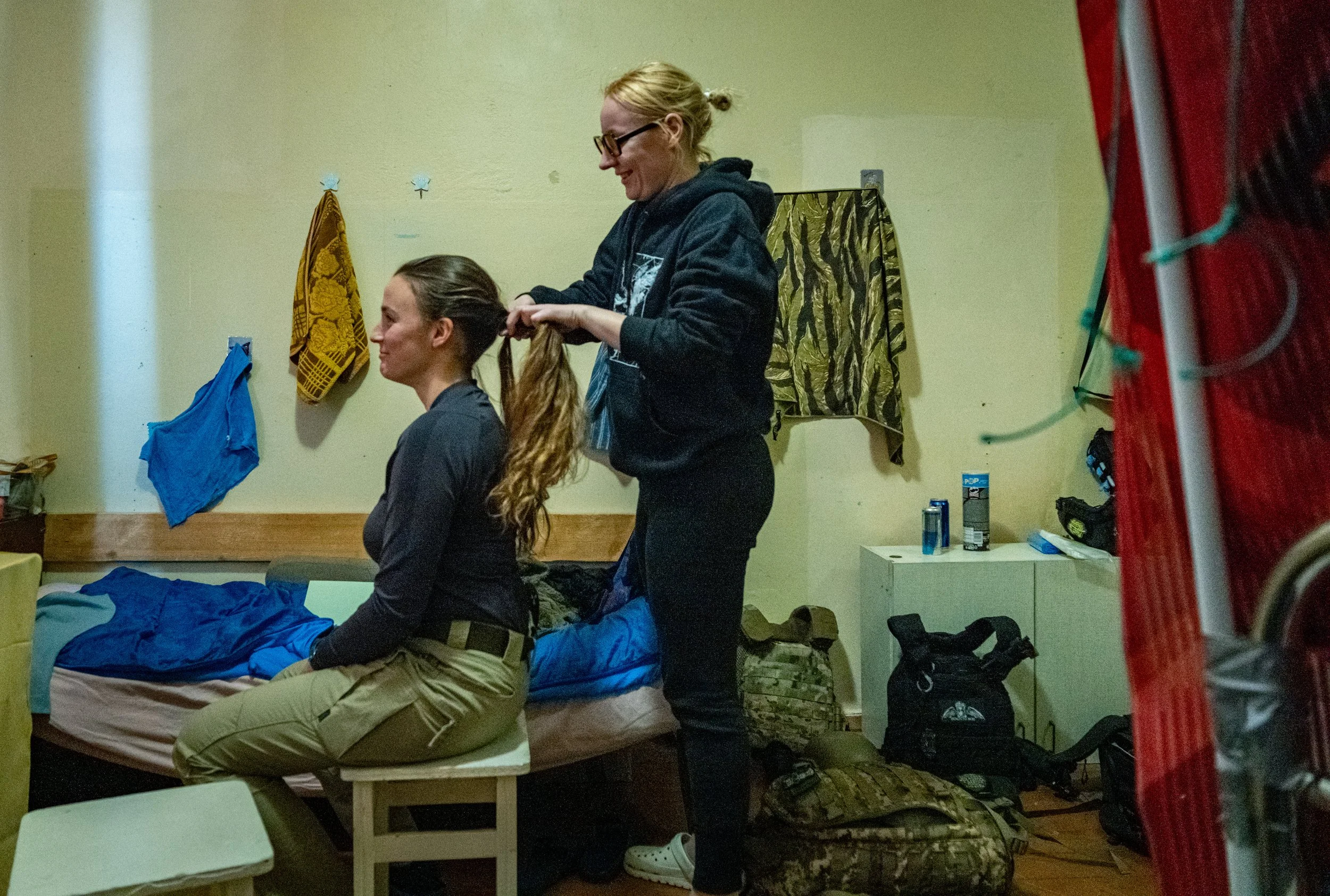
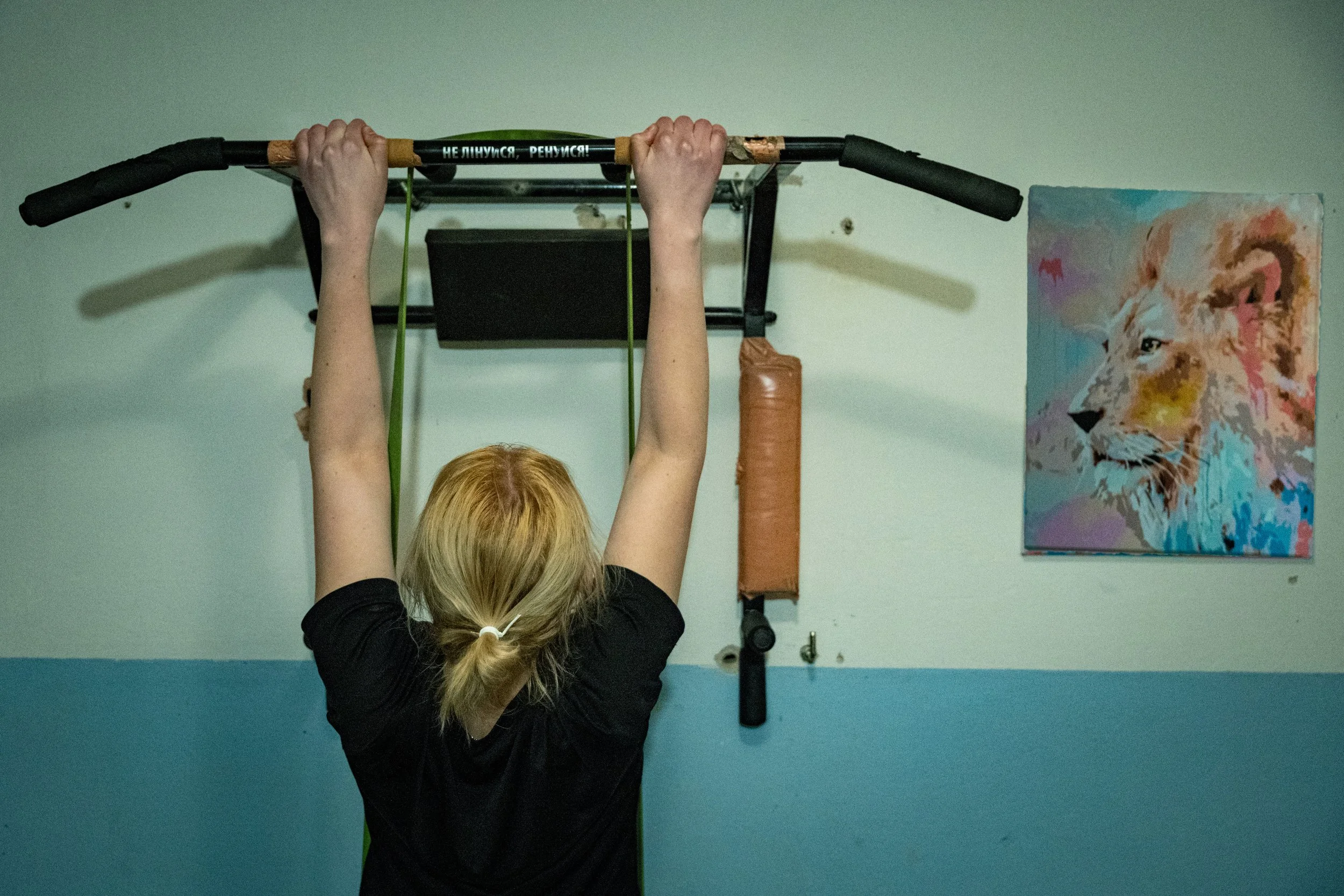
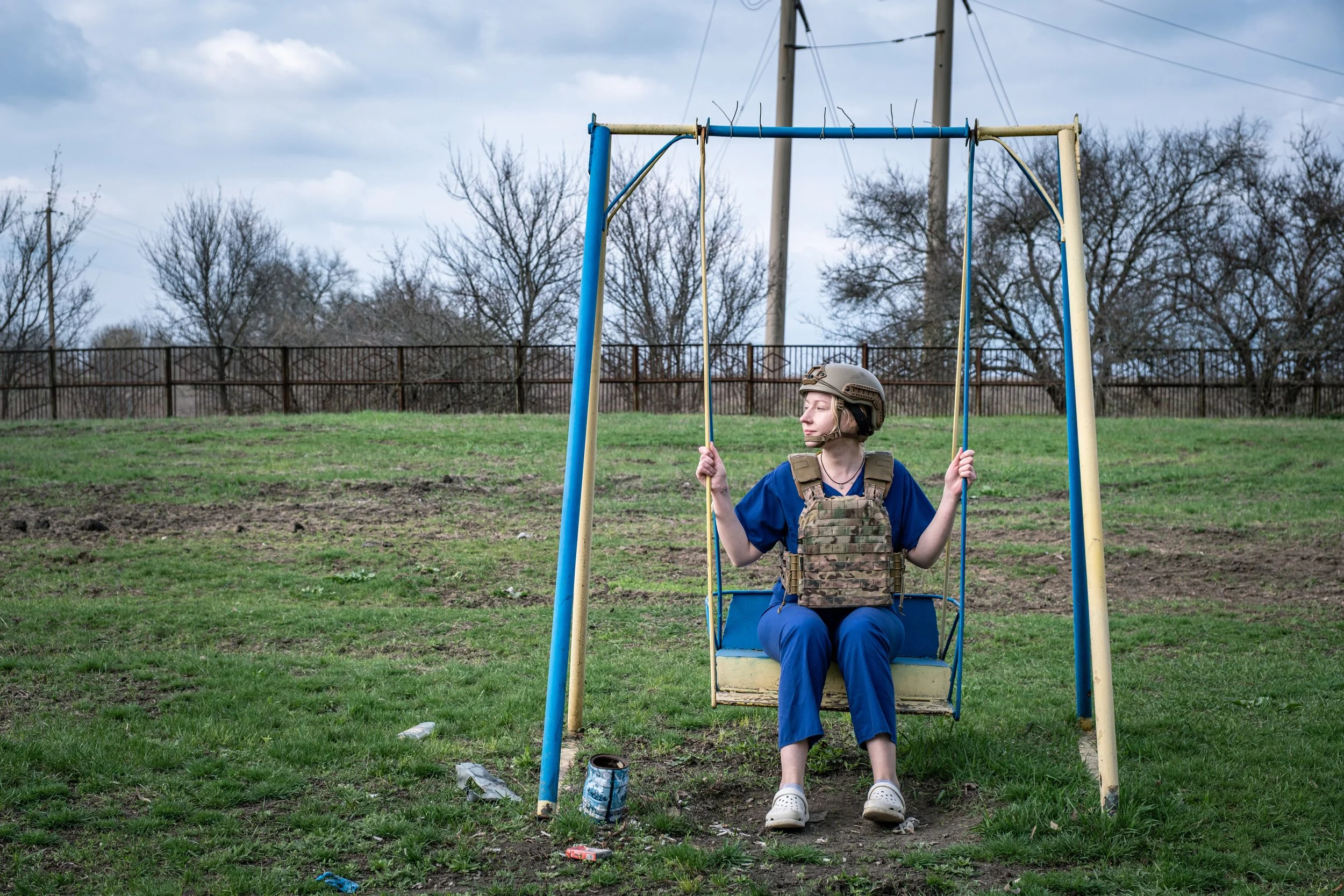
Then night comes, and with it, the drones attacks intensifies.
Patients arrive in darkness, or in the early hours before dawn. This is not coincidence. Strikes tend to happen when they are most exposed, when the drones are hardest to intercept. The timing follows a deliberate logic one that turns human vulnerability into tactical opportunity.
Some patients arrive within thirty minutes of being wounded. Others take eight hours, even when the distance between the strike site and the hospital is only a few kilometers. The journey has nothing to do with distance. It depends on everything standing in between: ongoing shelling, drones overhead, destroyed roads, the risk of becoming a target again while trying to evacuate.
Some arrive too late. For them, there is nothing left to be done.
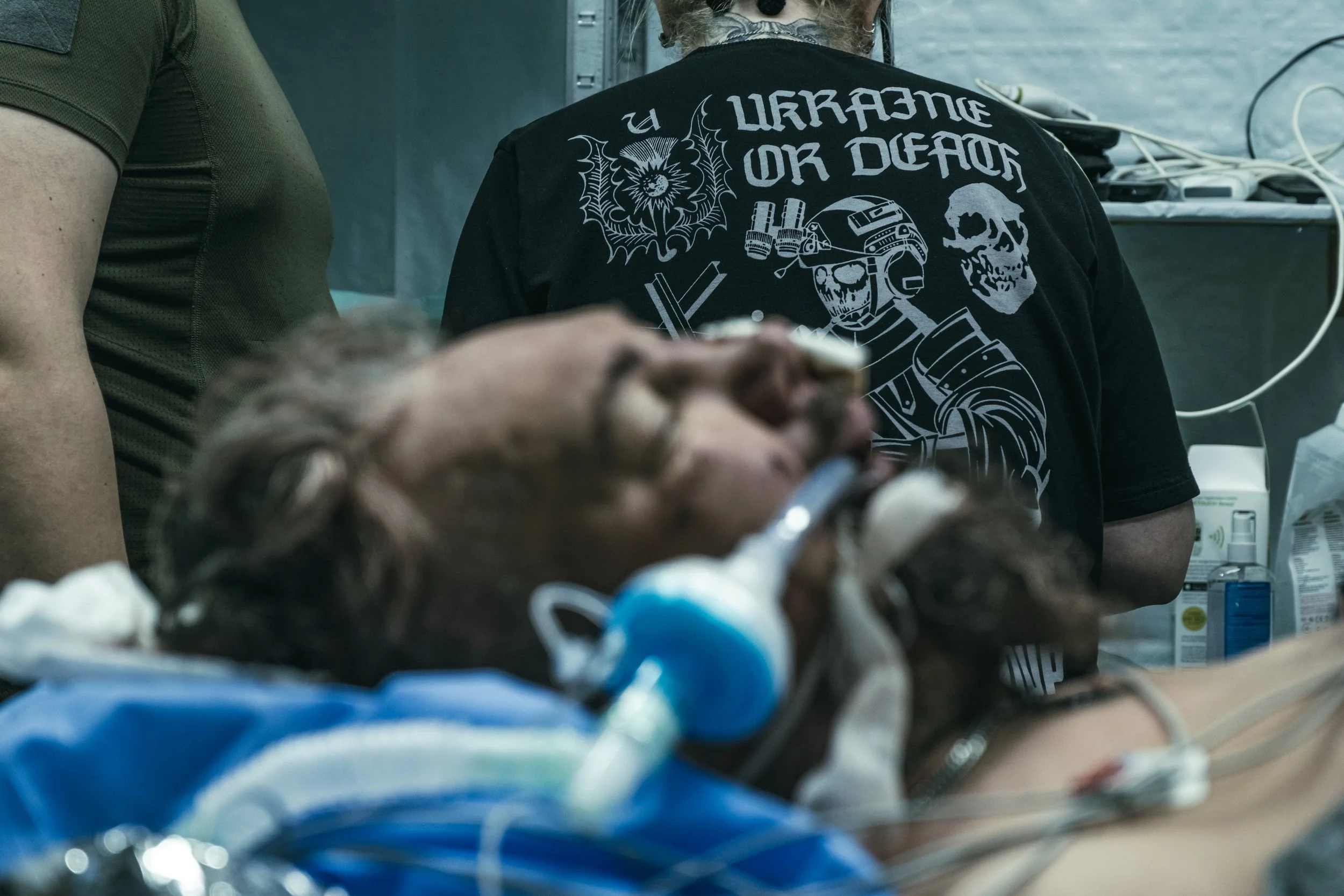
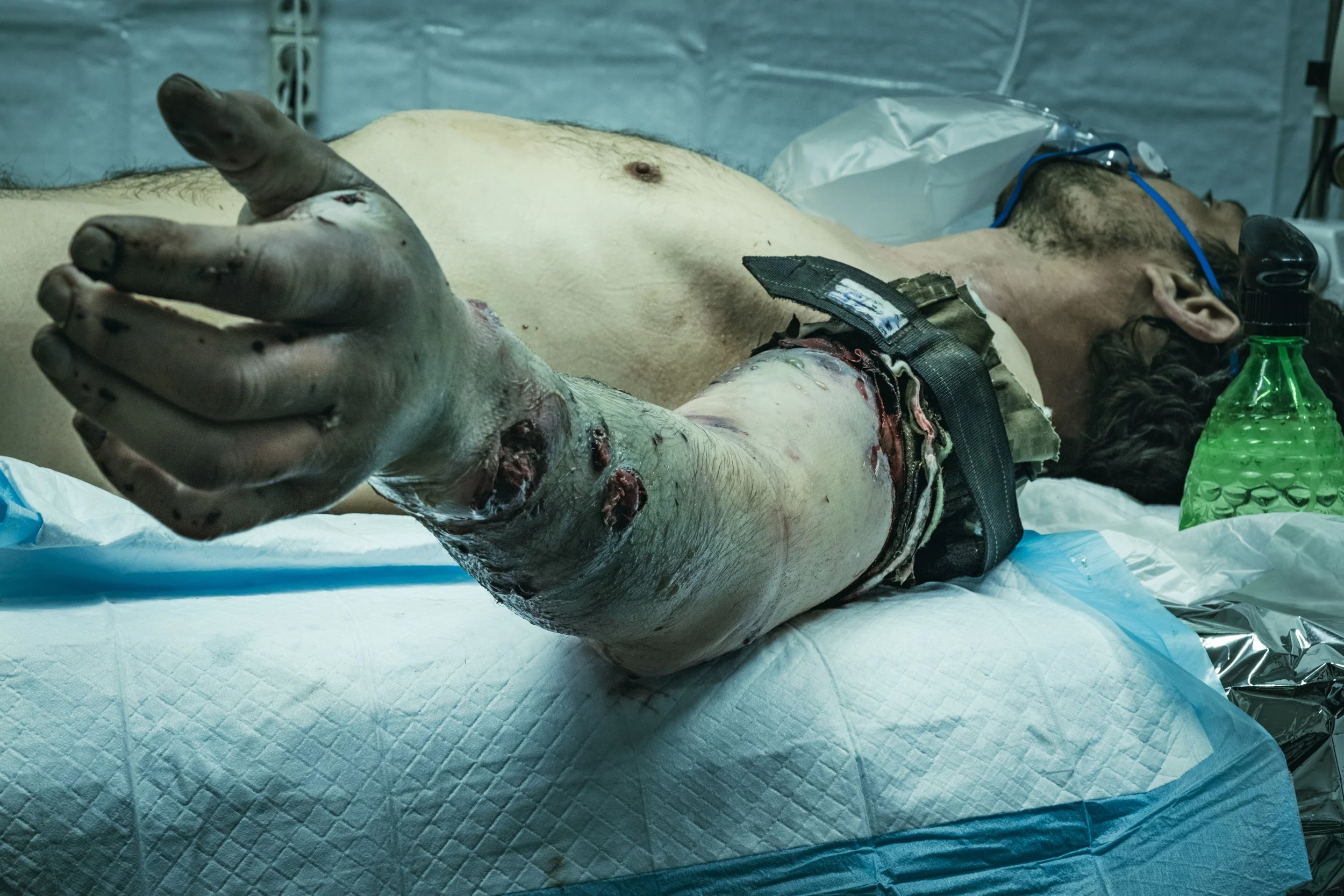
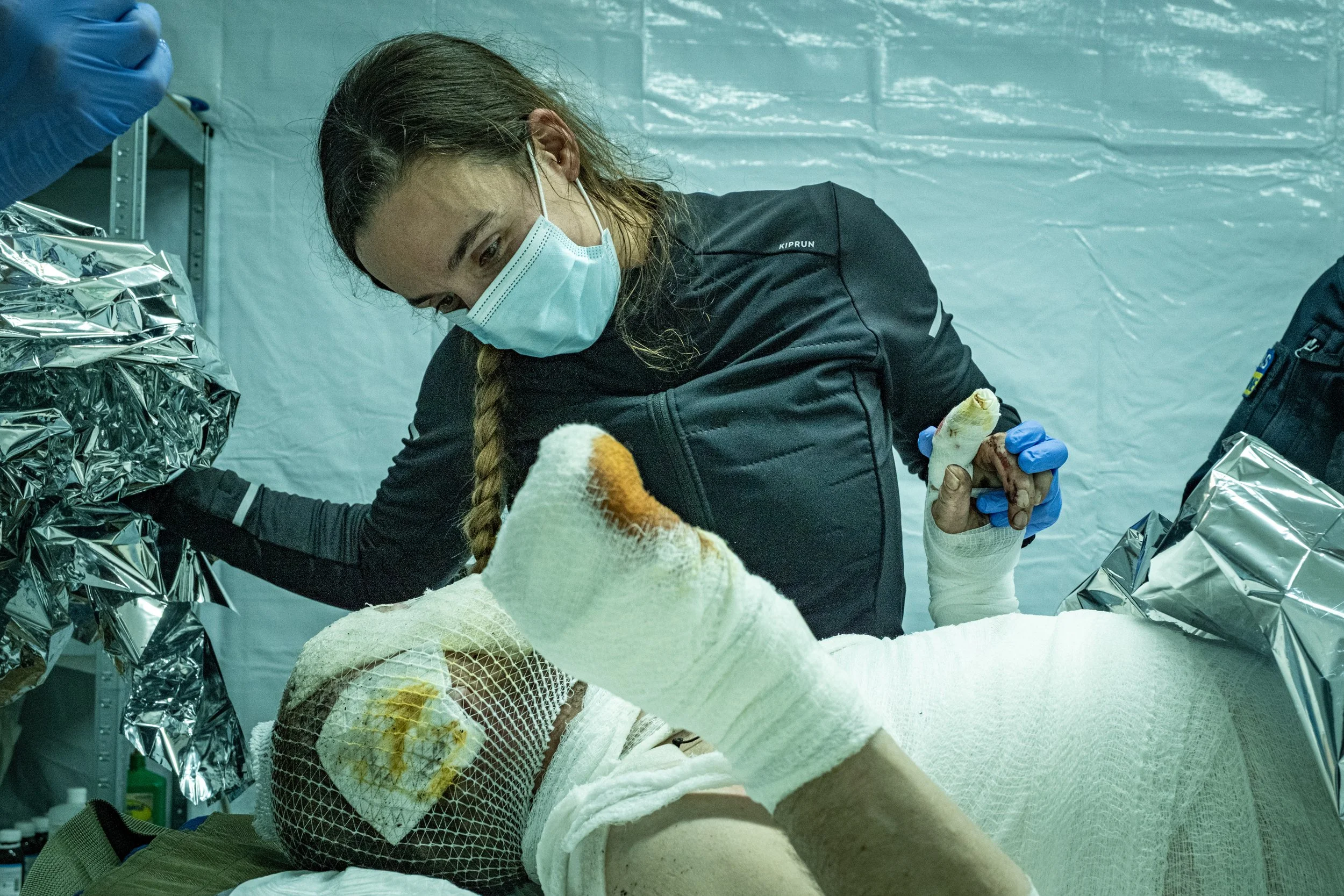
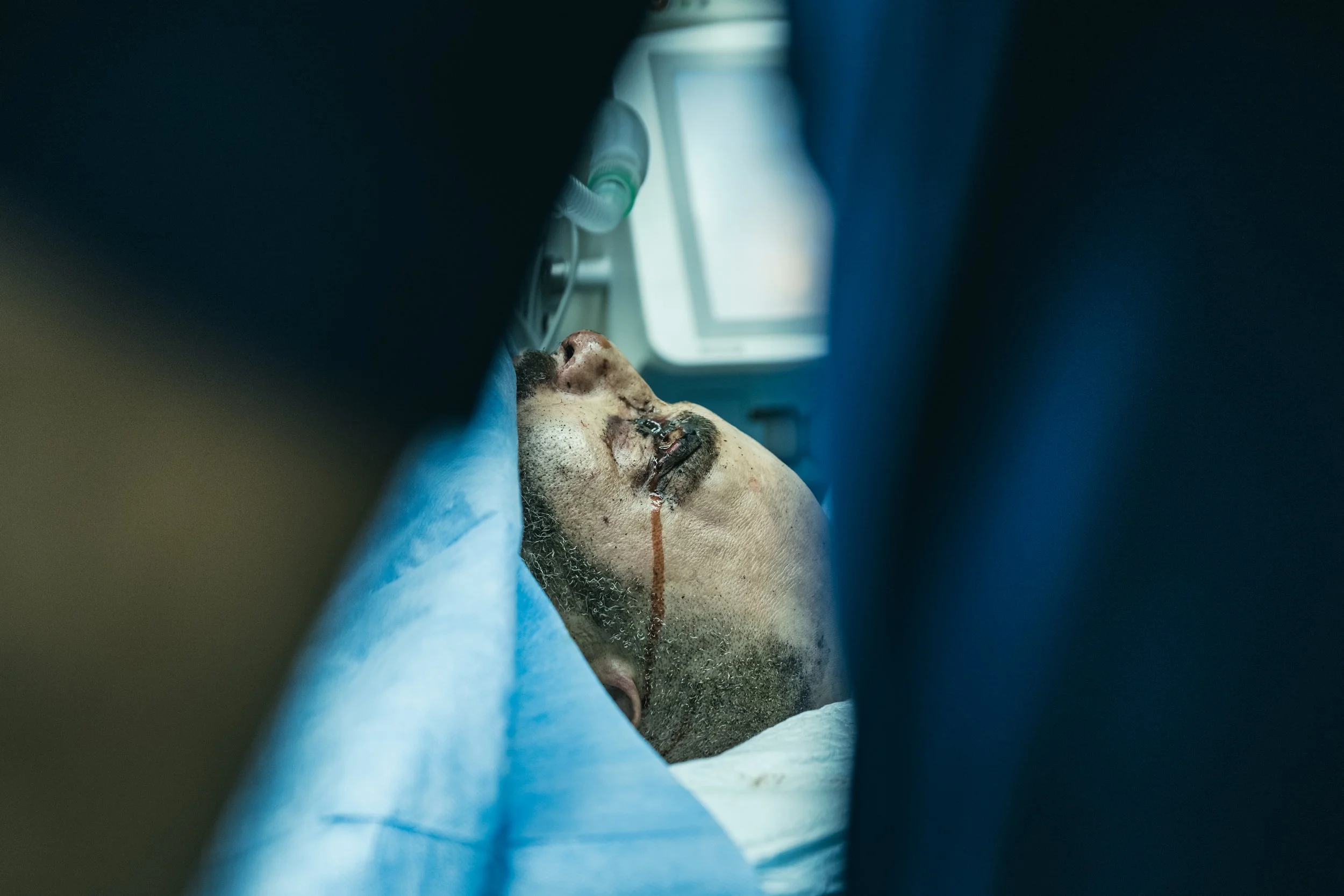
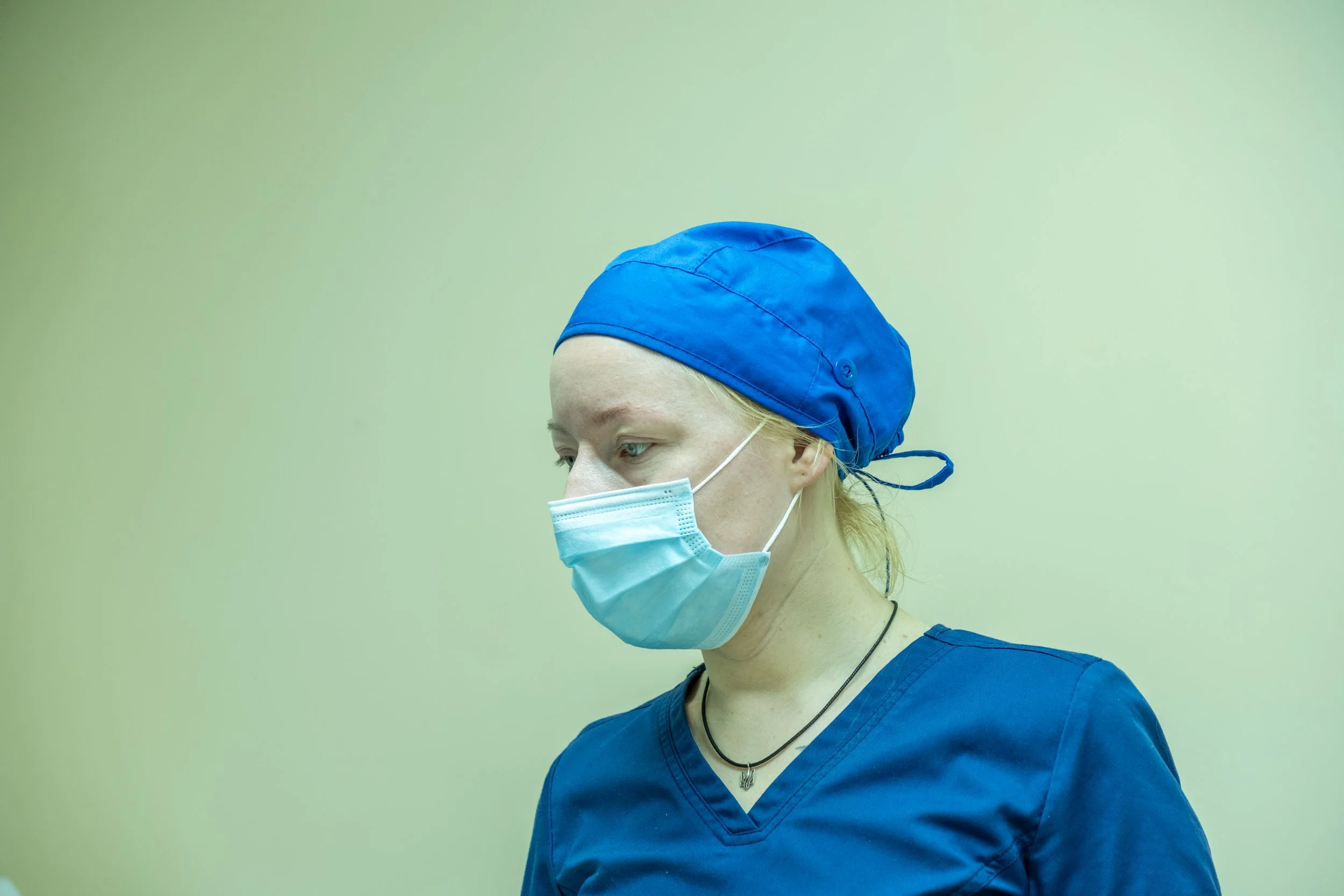
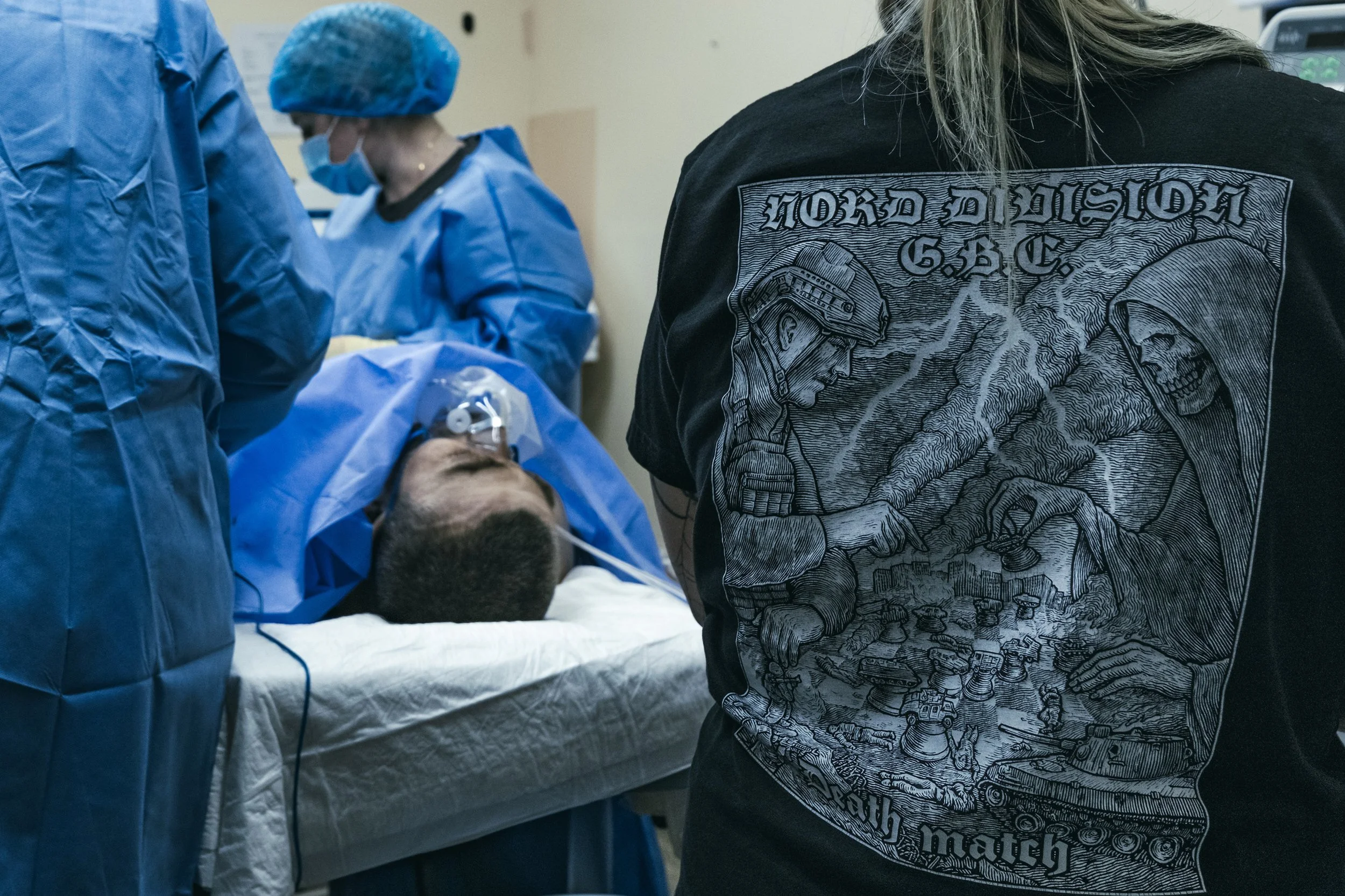
The volunteers of MMRescue https://www.instagram.com/mmrescueua/ and the medical staff of the 266th Brigade are the ones who receive them. Who look at them. Who make the call.
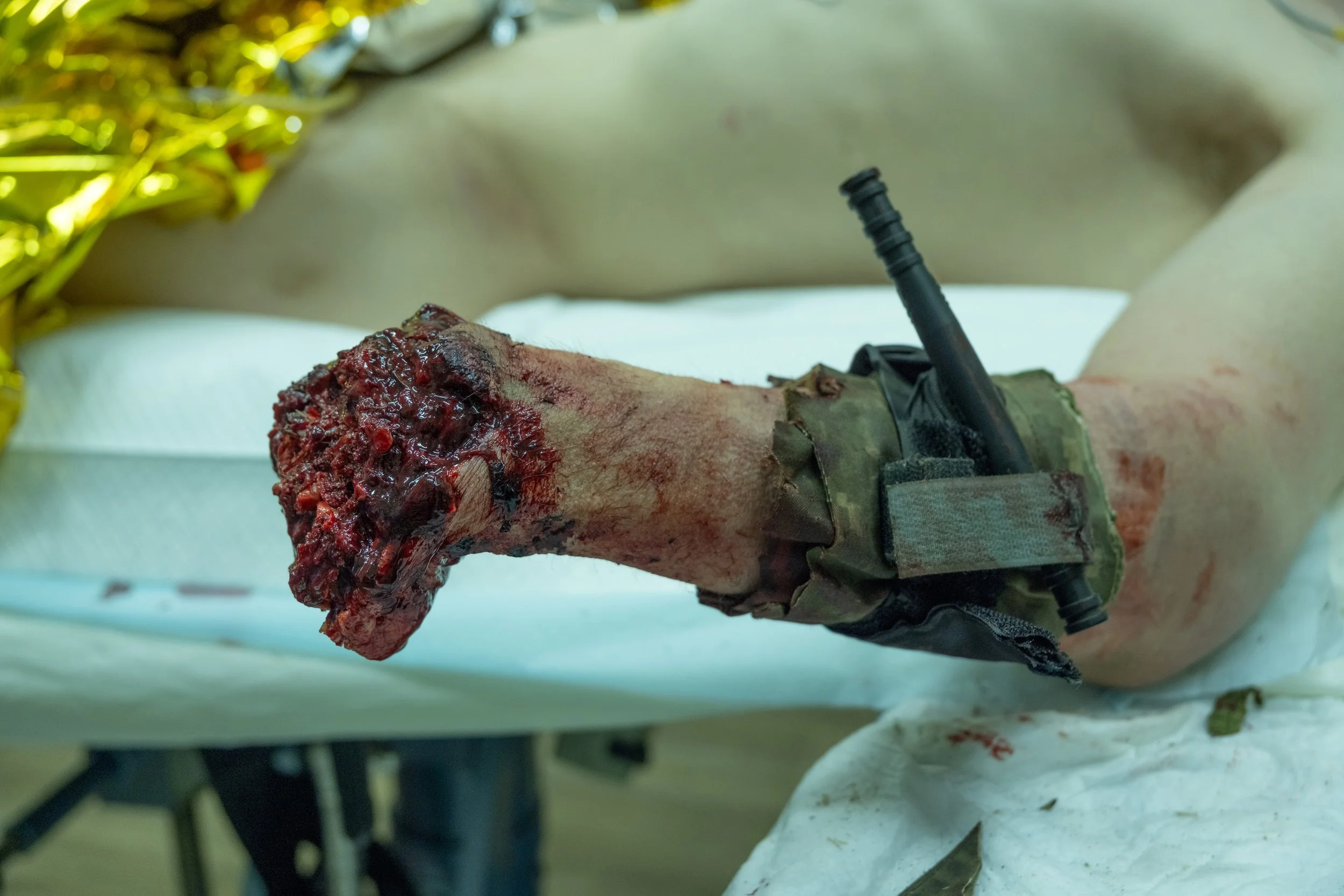
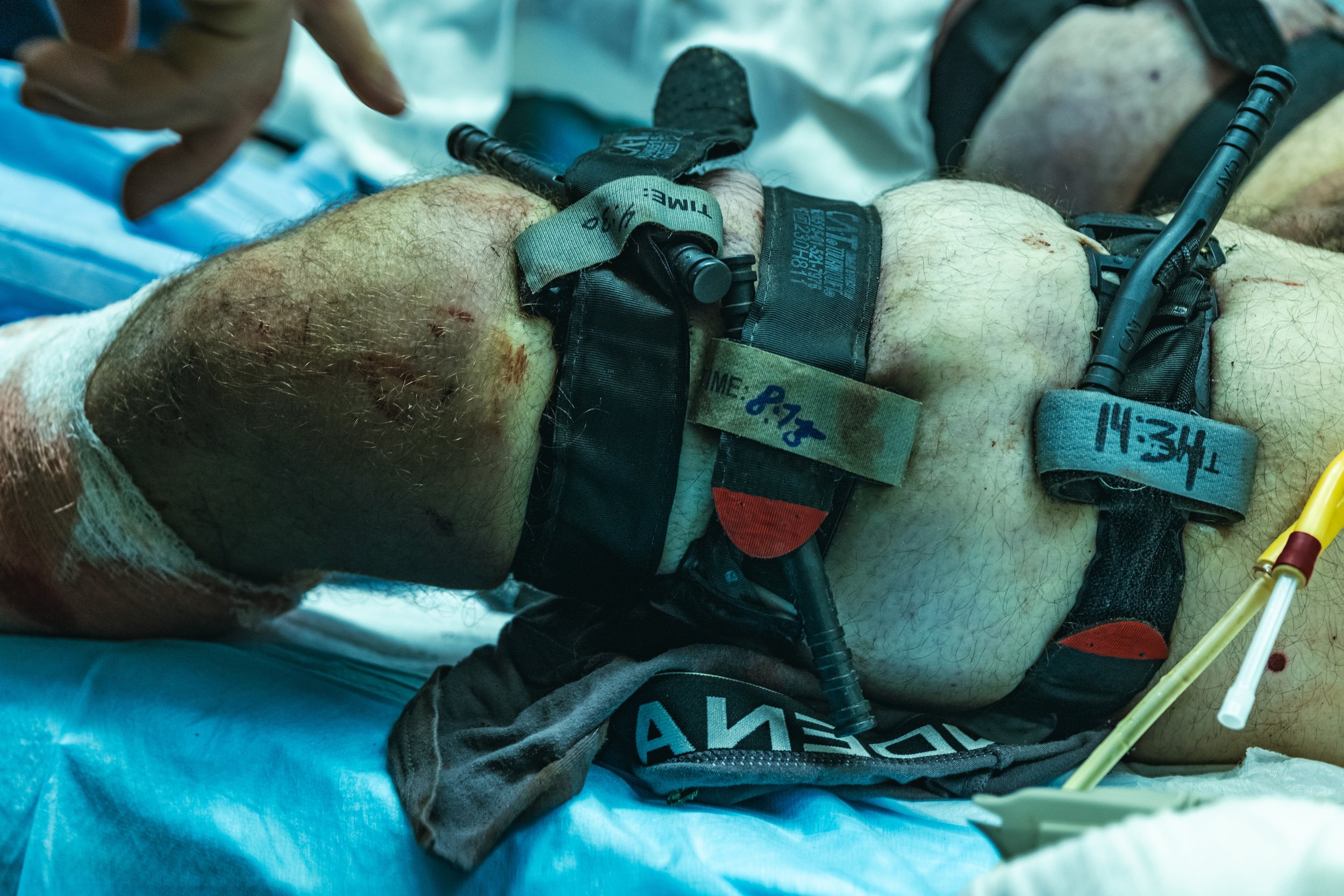
Night after night, they see things that cannot be unseen. Injuries that are the direct result of deliberate violence against human bodies. Young men. Sometimes very young. They see people die on the table despite everything, despite skill, despite effort, despite years of training. They see the moment when a person who arrived alive is no longer alive, and then they turn around and prepare for the next one.
The level of work inside this hospital is difficult to fully comprehend from the outside. It is not only a question of technical skill, though that skill is evident in every gesture. It is a question of endurance, of maintaining clarity under pressure, of making critical decisions in conditions that would paralyze most people. Patients arrive in waves, often with complex and serious injuries. Each case demands rapid assessment, clear priorities, and immediate intervention. There is no room for doubt, and no mistake without consequence.
He is twenty-five years old.
He is from Kyiv. His English is perfect, the kind you notice immediately, clear and precise, almost startling in this context.
He was hit by a Shahed drone.
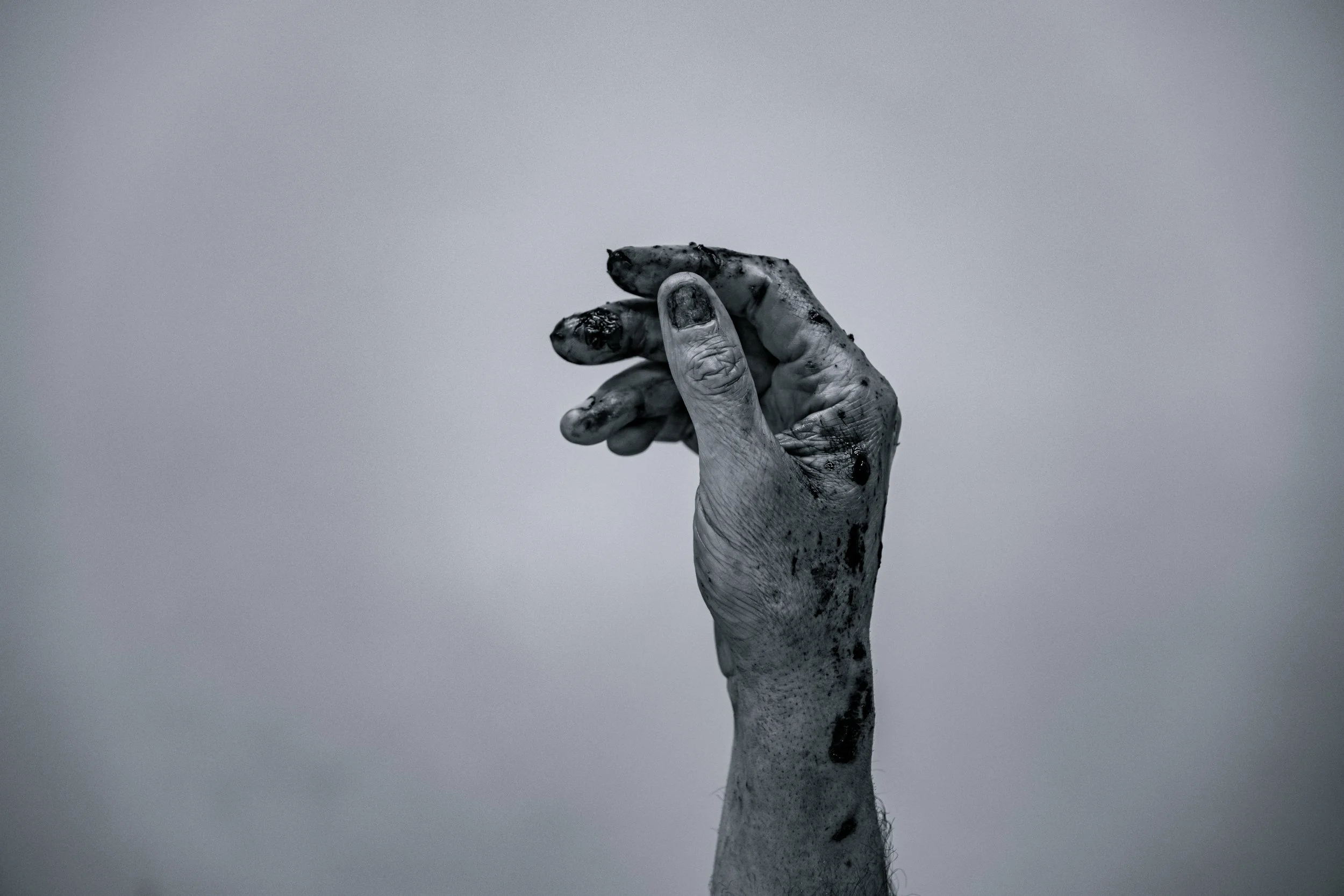
When he arrives, he is conscious. He is shaking violently, even though the room is warm. This is what third-degree burns do: they destroy the skin's ability to regulate body temperature, so the body loses heat it cannot recover. He is freezing from the inside, shaking under a thermal blanket that cannot fully help him, because what is supposed to keep the heat in has been taken away.
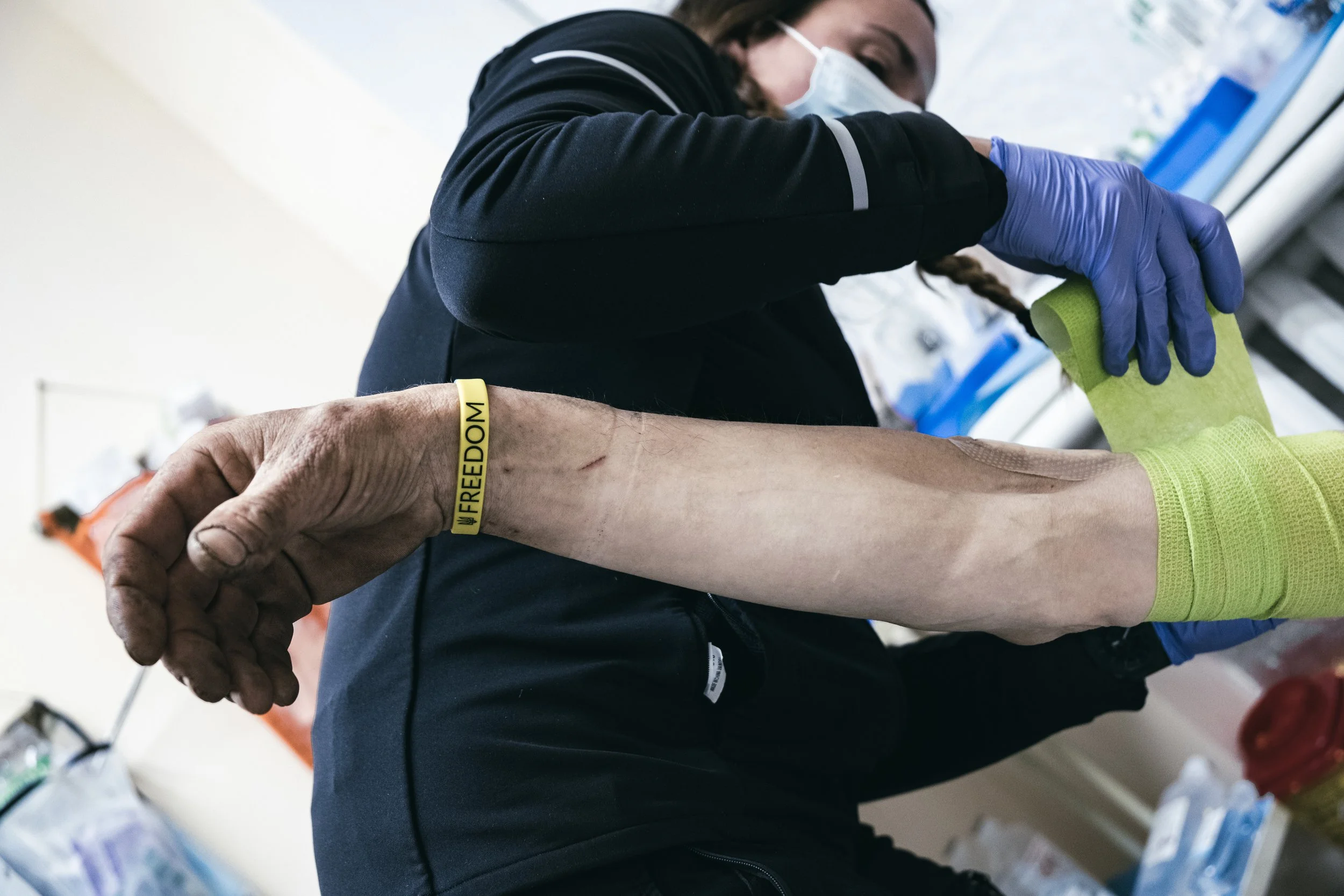
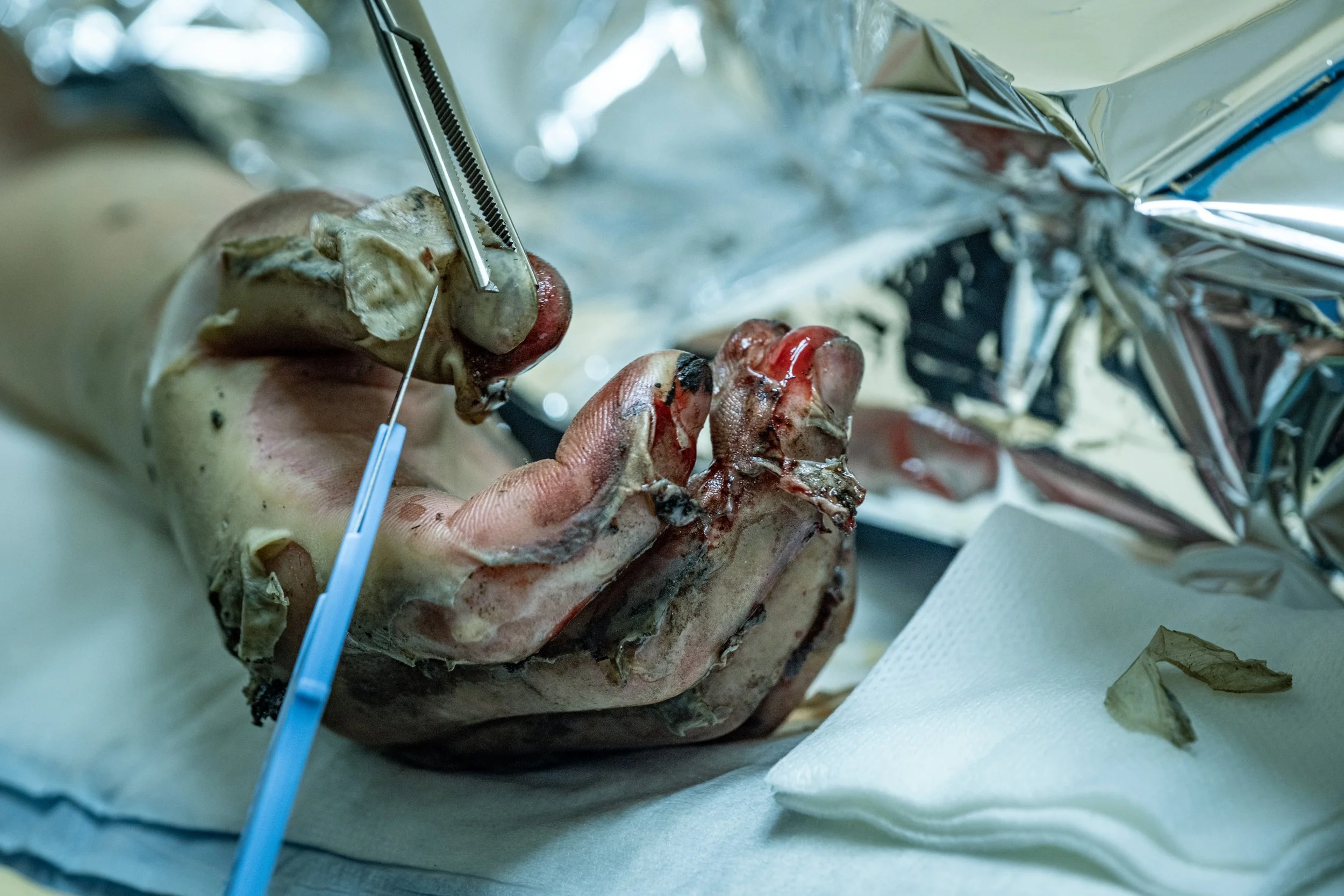
Amina and Jasmin give him painkillers. They explain what they are about to do. Then they begin to cut away the burned skin from his hands.
He screams.
There is nothing else to say about that moment. It is what it is: two people doing what must be done, and a twenty-five-year-old boy from Kyiv screaming in pain, because this, stripped of politics and strategy and every other frame we use to talk about war, is what war actually is.
When it is over, he is still. Exhausted. His hands are wrapped.
Those hands will never fully recover. He is twenty-five years old.
Amina and Jasmin move on to the next patient.
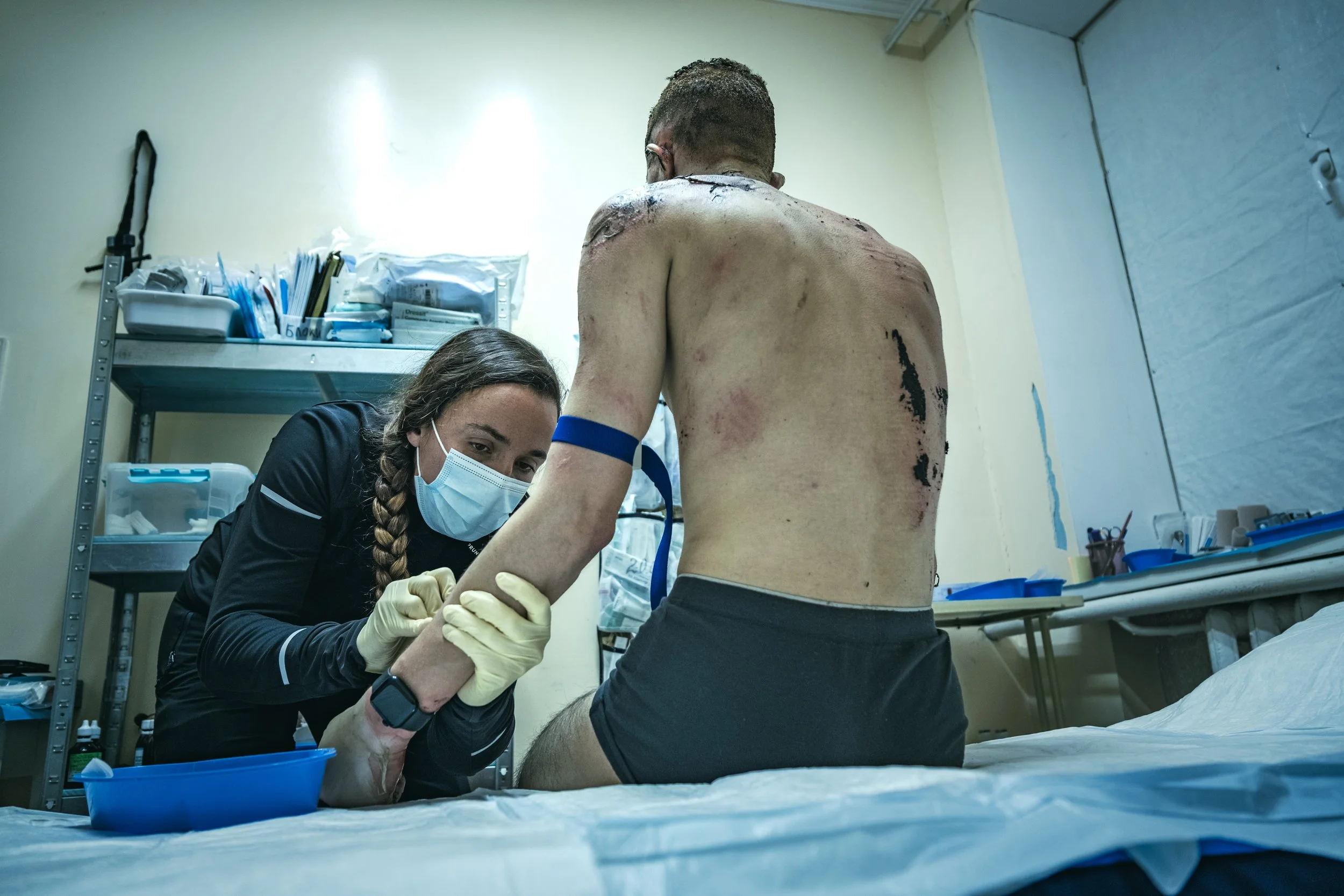
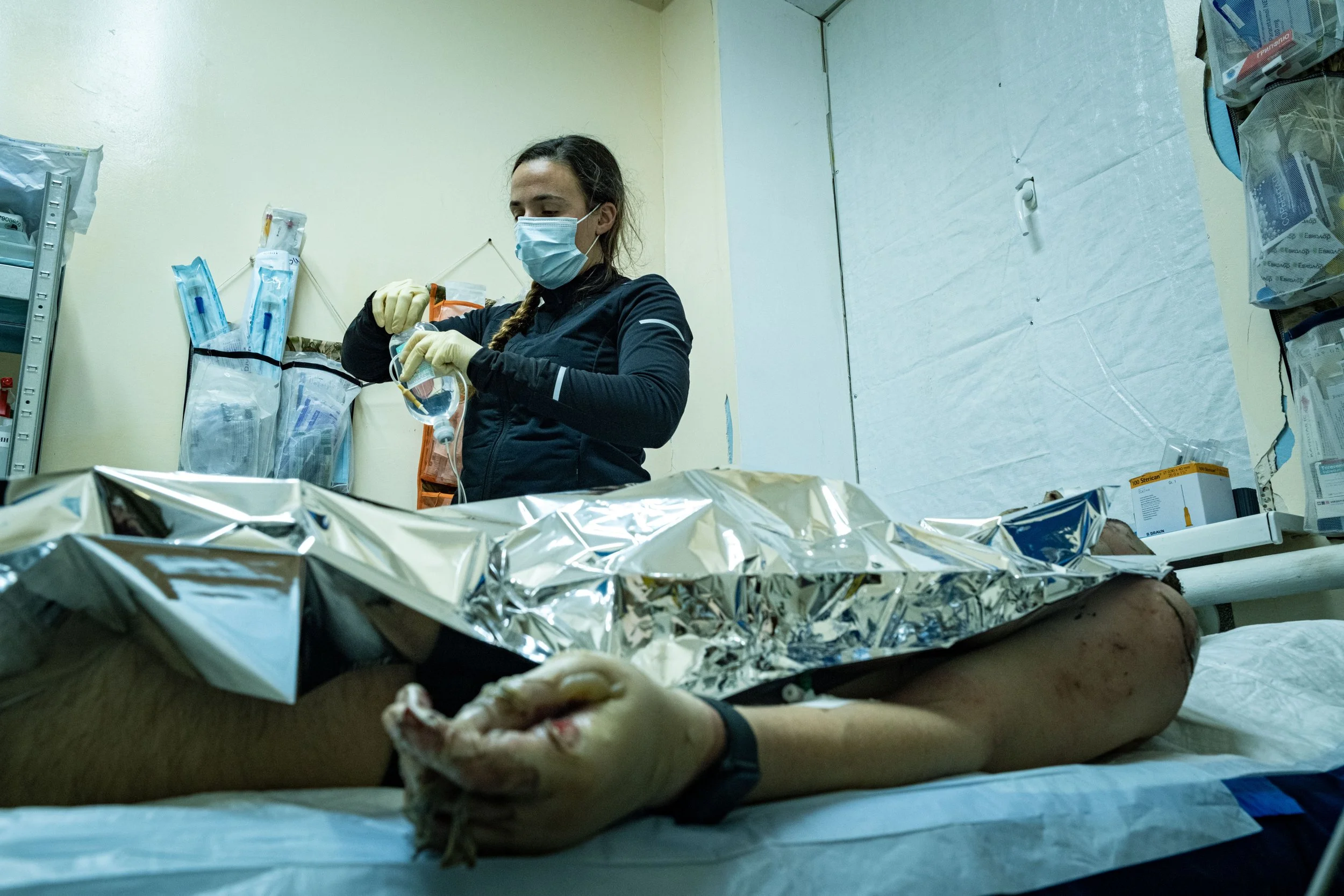
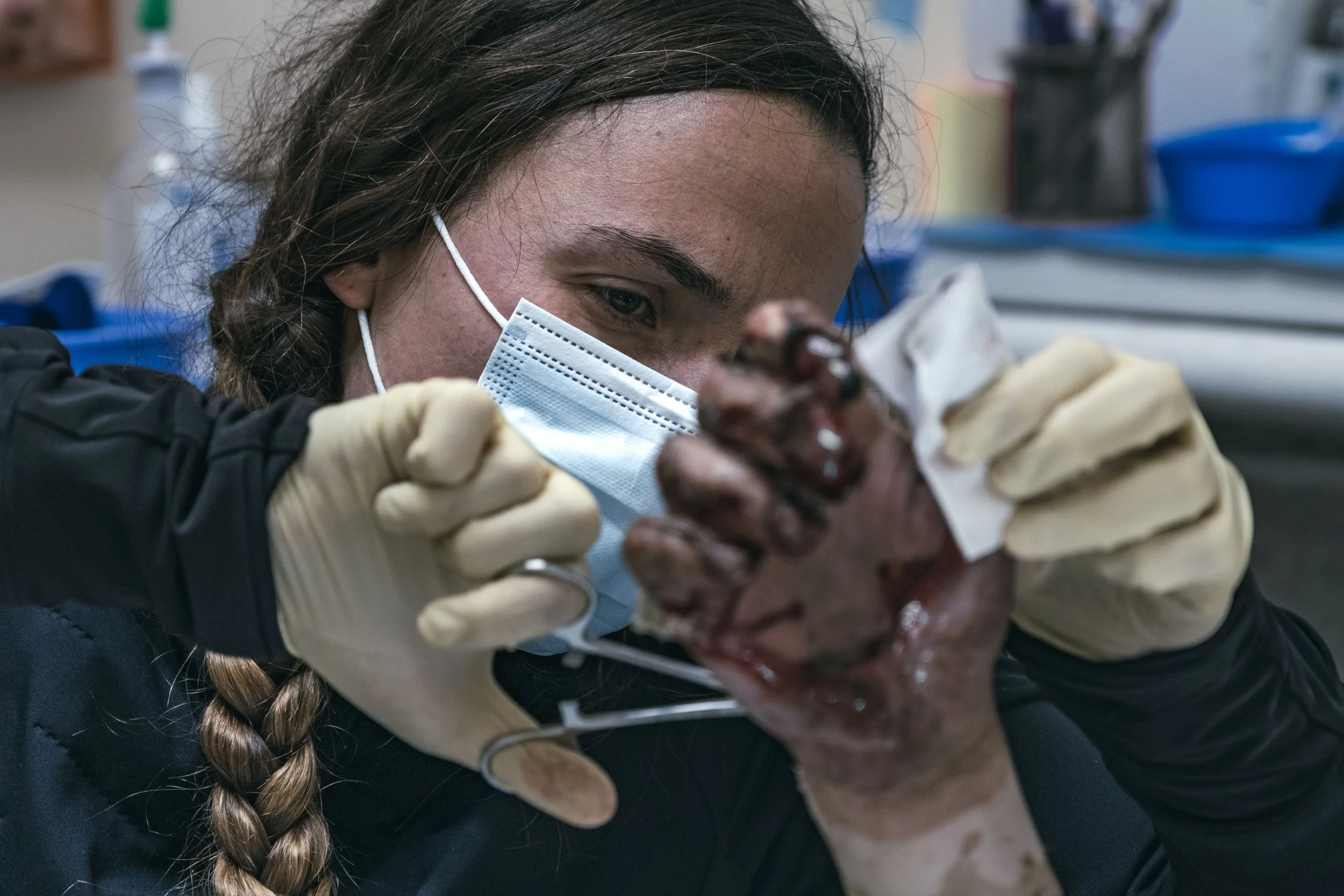
Every patient is treated with the same precision and the same attention, regardless of how many have come before or how many will come after. In the most critical moments, they work to preserve dignity, to make sure that no person is reduced to a wound, a case, a number. That line, even here, is not crossed.
What happens in this hospital is not an exceptional response to an emergency. It stopped being exceptional a long time ago. It is the texture of these people's lives, the work they have chosen to keep doing, year after year, in conditions that most of the world will never have to imagine.
Outside, the war imposes its rhythm. Inside, they absorb it, night after night, and they keep going.
The hospital continues to function because this people make it function.
And the people who arrive here, broken, frightened, sometimes barely alive, have a chance because of who is waiting for them inside.